R/8
08 /August/2020

SELF ASSESSMENT TEST
*General instructions:
1. Read the questions carefully.
2. Each answer is of one mark.
3. Click on the submit button after completing the test.
4.The test must be completed in 30 minutes.
5.The test will start at 3:00 pm and end at 3:30 pm.
5.The test will start at 3:00 pm and end at 3:30 pm.
Note: It is mandatory to write your name and four digit registration number.
~The Link to attempt the SAT will be sent to you on whatsapp before 3:00 pm i.e 11/8/2020. You only have one attempt and must complete the test in 30 minutes.
27/07/2020 - 07/08/2020
CHAPTER - 9 SOUND

Topics to be covered..
• Introduction
• Vibration motion
• How sound is produced by Humans
• Propagation of Sound
• Human ear
• Frequency
• Loudness of Sound
→ Higher amplitude
→ Pitch
→ High frequency
→ Audible sound
• Noise
• Noise pollution
→ Measures to control noise pollution
MAIN TEACHING
Oral and Explanation Online with some written work and slides.
Introduction to Sound
1. Introduction to waves
The sound is produced by vibrating objects. They travel from one place to another in the form of waves. Hence, the name sound waves.

• Mechanical waves that travel through a material medium.
• It is of two types: depending on the direction of motion of the particle of the medium and the wave propagation:
*Transverse
*Longitudinal

Particle motion is to perpendicular the direction of wave motion.
This type of wave is a mechanical wave called a transverse wave. E.g.: Light, or even Mexican wave in a stadium.
ii) Longitudinal waves
When the particles of the medium travel parallel to the direction of the wave motion by means of successive compression or rarefaction.
It is also a mechanical wave.
Example: a slinky

– Sound needs a medium to propagate. The matter or material through which sounds propagates is called a medium.
– Sound cannot travel in a vacuum. The moon does not have an atmosphere, hence, you can hear on the moon.
4. How sound is produced by Humans
The sound produced in the voice box called larynx located at the upper end of the windpipe.
• Two vocal cords get stretched across in the voice box. Has a slit, through which air is forced out by the lungs.
• Muscles attached to the vocal cords make it tight or loose.

Human ear
• Outer ear = pinna: collects sound from the surroundings.
• Sound passes through a tube called an auditory canal.
• Eardrum (tympanic membrane) → vibrates when the incident of the sound.
• Vibrations are sent to the inner ear, from there it goes to the brain as signals via the auditory nerve.
HUMAN EAR

6. Amplitude, frequency and time period of vibrations
• The magnitude of disturbance in the medium on either side of the mean value is called as Amplitude(A). Larger the amplitude, louder the sound.
• The number of oscillations per second is called frequency. Expressed in Hertz (Hz). Time taken for one complete oscillation to travel across a point. T = 1/f. (Seconds)

• Volume or loudness of a sound depends on the amplitude. The force with which an object is made to vibrate gives the loudness.
• The number of oscillations per unit time. Directly proportional to frequency.

8. Audible and inaudible sounds
~Audible range= 20Hz to 20kHz known as the Sonic range.
~Below 20 Hz (inaudible) → Infrasonic range
~Above 20 kHz (inaudible) → Ultrasonic range
9. Noise Pollution
• Noise and music – Sounds with the same pitch and loudness can be distinguished based on the quality. Music is pleasant to the ears while noise is not.
– Unpleasant sounds are called as noise.

– Presence of excessive unwanted noise in our surroundings is called as noise pollution.
– Can cause hearing impairment, sleeplessness and also hypertension.
– Must be minimized by reducing noisy operations and honking in residential areas. Planting trees along roads also cut down the noise.
NOW WATCH THE VIDEOS
Video01
Video02
Video03
Video04
Video05
Video06
Video07
ASSIGNMENTS
Complete all the questions given below in your OCB (Online Ex-books)
A) Choose the correct option:-
a. Sound producing organ
b. Skeletal system
c. Hearing organ
d. Reproductive organ
2. The hearing range of the human ear is
a. 20 Hz to 20,000 Hz
b. Less than 20 Hz
c. More than 20,000 Hz
d. 20 Hz to 25,000 Hz
3. The voice box is called:
a. Stomach
b. Heart
c. Larynx
d. Mouth
4. Large amplitude of sound vibrations will produce:
a. Loud sound
b. Meak sound
c. Slow sound
d. Shreak
5. The pitch of sound depends on
a. frequency
b. amplitude
c. both of these
d. none of these
6. Sound is kind of
a. Work
b. Energy
c. Force
d. None
7. To an fro motion of an object is called
a. Waves
b. Amplitude
c. Vibration
d. All of the above
8. Voice box or larynx of the human process
a. Sound
b. Wind
c. Loudness
d. None
9. Sound propagates maximum in
a. Gas
b. Liquid
c. Solid
d. All
10. Noise pollution is harmful for
a. Human
b. Cat
c. Bird
d. All
B) Answer the following questions
1. Do all bodies produce sound?
2. Touch the bell when it stops producing sound. Can you feel the vibration? What do you understand by this?
3. Name the sound producing organ.
4. Can sound travel through vacuum?
5. Why is the sound of the baby feeble?
6. Explain that sound travels in liquids as well.
7. Name some musical parts and their vibrating parts
8. How does shrillness or pitch affected by frequency?
9. What do you mean by vibrations?
10. What is the other name for larynx?
11. Do all animals produce sound by vocal chords?
12. Write the unit of frequency.
13. What do you mean by noise pollution?
14. Explain importance of sound in our daily life. C) Long Answer type Questions:-
Q.1 State the differences between ultrasonic sound and infrasonic sound.
Q.2 What are the methods to control noise pollution?
Q.3 Differentiate between musical sound and noise.
R/6
22/06/2020 - 04/07/2020
Links
CHAPTER-13 OUR UNIVERSE
When we look at the sky, we see different kinds of natural bodies like the sun, the stars, the moon and so on. The natural bodies in the sky are called celestial bodies or heavenly bodies. They are the part of our universe. The universe is a huge space which contains everything that exists. The vast expanse of space that contains everything in it is known as the universe. It includes the sun, the planets, the Milky Way galaxy and all the other galaxies. The universe is continually expanding. Nobody knows how big the universe is. It is impossible to even have shown that the universe is getting bigger and bigger, like a balloon being blown up. The branch of science that deals with the study of heavenly bodies is called astronomy. People who study the universe are called astronomers. The most important instrument used by the astronomers is the telescope.
Topics :-
• The Moon
→ Moon's Surface
• The Stars
• Constellations
• The Solar System
→ Planets
• Other members of the Solar System
Asteroids
Comets
Meteors and Meteorites
Artificial Satellite
EXPLAINED
1. What is a light year?
2. How is a star different from a planet?
3. What are constellations?
4. Other members of the Solar System.
2. How is a star different from a planet?
3. What are constellations?
4. Other members of the Solar System.
MAIN TEACHING
Oral and Explanation Online with some written work and slides.
1.The Stars:
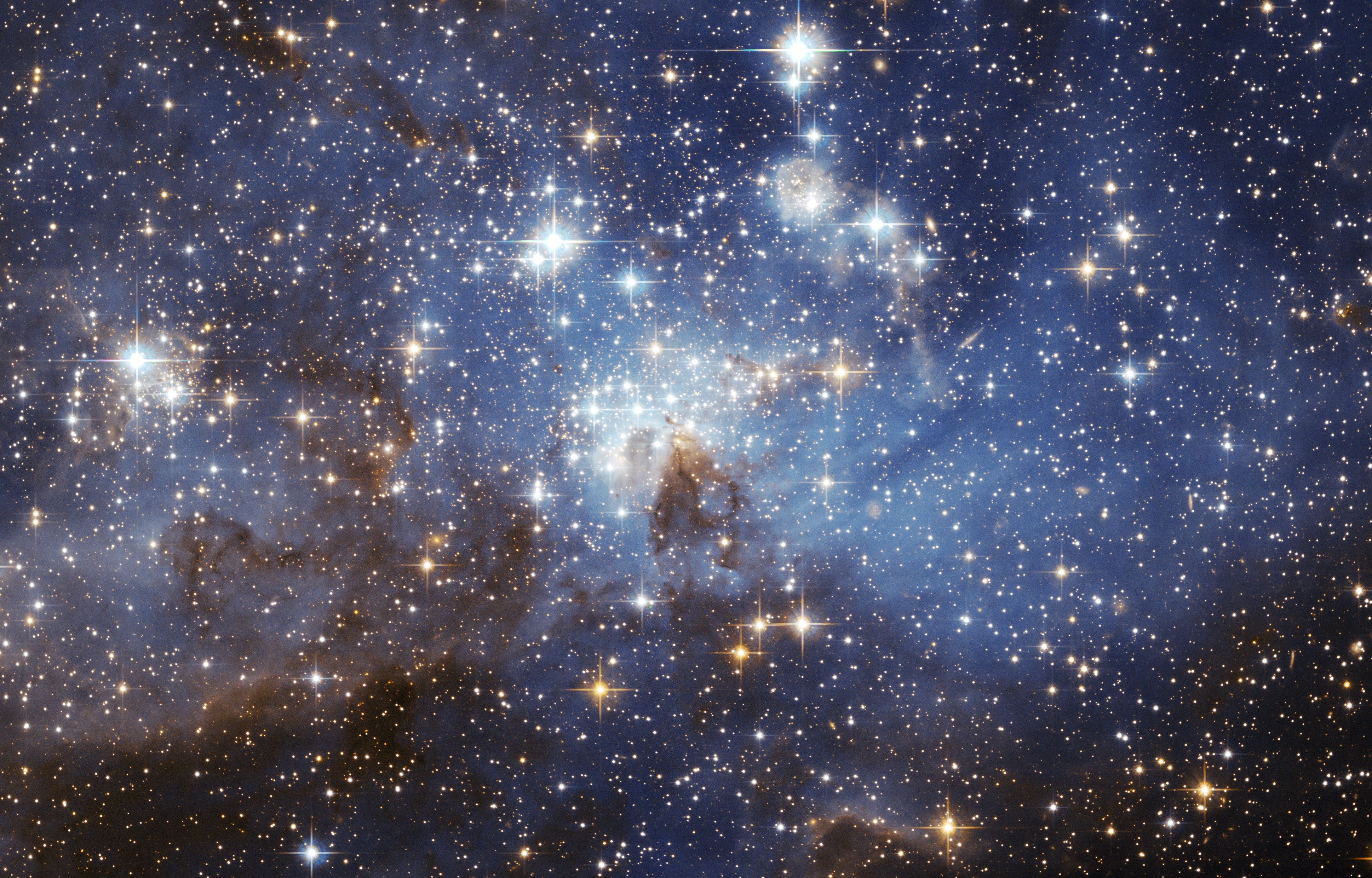
(i) These are objects which twinkle in the sky at night.
(ii) Sun is the nearest star to our planet which is approx 150 million km away from Earth.
2. Light year
(i) It is defined as the distance travelled by light in one year. And it is the unit to measure large distances.
(ii) The speed of light is about 300,000 km per second.
(iii) The distance of the Sun from the Earth may be said to be about 8 light minutes.
Pole Star: It is the star which is situated in the direction of the earth’s axis.
 3. Constellations:
The different known shapes that are formed by a group of stars, is known as a constellation.

4. The Solar System:
1. It consists of the Sun and other celestial objects present in space revolving around the sun. The gravitational attraction between the Sun and these objects keeps them revolving around it. The various entities like planets, meteors, comets, etc. are part of our solar system.
2. The eight planets in their order of distance from the Sun are: Mercury, Venus, Earth, Mars, Jupiter, Saturn, Uranus and Neptune.
 Phases of the moon
These eight phases are, in order, new moon, waxing crescent, first quarter, waxing gibbous, full moon, waning gibbous, third quarter and waning crescent.
 NOW WATCH THE VIDEOS.
ASSIGNMENTS
Complete all the questions given below in OCB (Online Class Ex-books)
Oral and Explanation Online with some written work and slides.
1.The Stars:(i) These are objects which twinkle in the sky at night.
(ii) Sun is the nearest star to our planet which is approx 150 million km away from Earth.

2. Light year
(i) It is defined as the distance travelled by light in one year. And it is the unit to measure large distances.
(ii) The speed of light is about 300,000 km per second.
(iii) The distance of the Sun from the Earth may be said to be about 8 light minutes.
Pole Star: It is the star which is situated in the direction of the earth’s axis.
The different known shapes that are formed by a group of stars, is known as a constellation.

4. The Solar System:
1. It consists of the Sun and other celestial objects present in space revolving around the sun. The gravitational attraction between the Sun and these objects keeps them revolving around it. The various entities like planets, meteors, comets, etc. are part of our solar system.
2. The eight planets in their order of distance from the Sun are: Mercury, Venus, Earth, Mars, Jupiter, Saturn, Uranus and Neptune.
These eight phases are, in order, new moon, waxing crescent, first quarter, waxing gibbous, full moon, waning gibbous, third quarter and waning crescent.

ASSIGNMENTS
Complete all the questions given below in OCB (Online Class Ex-books)
Q1. Define a light year.
Q2. What is a pole star?
Q3. What are stars? Give examples.
Q4. What are satellites?
Q5. Write the uses of artificial satellites.
Q6. What is a galaxy?
Q7. What are constellations?
Q8. What are comets?
Q9. Which two planets have asteroids between them?
Q10. Name the planet having a well-developed system of rings around it
Q11. Name the planet which rotates from east to west.
Q12. Name one natural and one artificial satellite.
Q13. Name the first satellite launched by India.
Q14. What name is given to the celestial body which revolves around a planet?
B) SHORT ANSWER QUESTIONS:-
Q1. Why are the stars not visible during daytime?
Q2. What is the total number of planets in our solar system? Name them.
Q3. Why does the pole star appear to be stationary in the sky?
Q4. Why is it difficult to observe the planet, Mercury?
Q5. State ways in which the planets can be distinguished from the stars in the night sky.
Q6. Why can we never see the back side of the moon from the earth?
Q7. Name the planets in their order of distance from the sun.
Q8. When does a comet visible to us?
Q9. Name the constellation which appears to have the shape of:
(a) big bear
(b) a distorted W or M
(c) a hunter
(d) a big lion
Q10. Name two constellations which are visible in the sky.
Q11. Name the reactions that allow the sun to emit heat and light energy.
C) LONG ANSWER QUESTIONS:-
Q1. Draw a labelled diagram showing the phases of the moon and explain them.
Q2. Differentiate between meteors and meteorites.
Q3. Define constellations. Draw and explain any four constellations.
Links
Ch-2 THE CELL
The bodies of all organisms are made up of very small units called cells. A cell is capable of independent existence and can carry out all the functions which are necessary for a living being. Unicellular organisms are capable of independent existence which shows a cell’s capability to exist independently like in amoeba. Due to this, a cell is called the fundamental, structural and functional unit of living organisms and the basic unit of life.

The bodies of all organisms are made up of very small units called cells. A cell is capable of independent existence and can carry out all the functions which are necessary for a living being. Unicellular organisms are capable of independent existence which shows a cell’s capability to exist independently like in amoeba. Due to this, a cell is called the fundamental, structural and functional unit of living organisms and the basic unit of life.

Topics: Introduction to a cell, Discovery of a cell, types of cells, cell structure and its function
EXPLAINED
NOW WATCH THE VIDEOS
Topics: Introduction to a cell, Discovery of a cell, types of cells, cell structure and its function
• The cell theory
• Types of organisms
• Types of cells
• Differentiate between Animal cell and Plant cell
• Cell:- The components of a cell
• Cell organelles and their functions
• Tissues
• Plant Tissues
• Animal Tissues
NOW WATCH THE VIDEOS
MAIN TEACHING
2. Types of organisms- Unicellular and Multicellular
3. Types of Cells- Prokaryotic and Eukaryotic Cells
4. Cell organelles and their functions
STUDENTS TAKE AWAY
1. What is Cell?
2. The Cell Theory
3. Who discovered cell and how?
4. Types of Plant Tissues
5. Types of Animal Tissues
ASSIGNMENTS
Complete all the questions given below in OCB
A) Multiple choice Questions
1. The power house of cell is called
a) Cell wall
b) Mitochondria
c) Ribosomes
d) Nucleus
2. The kitchen of the cell is called
a) Cell wall
b) Nucleus
c) Vacuoles
d) Plastids
3. The functional unit of life is called
a) Cell
b) Egg
c) Nucleus
d) None of these
4. Chloroplast is found in
a) Plant cell only
b) Animal cell only
c) Both of these
d) None of these
5. The control unit of cell is
a) Nucleus
b) Cell wall
c) Cytoplasm
d) All of these
6. Single celled organisms are called
a) Unicellular
b) Multi-cellular
c) Both of these
d) None of these
7. Tissue is a
a) Group of organs
b) Group of cells
c) Group of tissues
d) Group of organisms
8. Cell is discovered by
a) Robert Brown
b) Robert Hooke
c) John Mendal
d) Charse Darwin
9. The calls capable of changing shapes are
a) Amoeba cell
b) WBC
c) Both of these
d) None of these
10. Hen’s egg is a
a) Tissue
b) Organ
c) Organ system
d) cell
B)Short Answer Type Questions:-
1. Who discovered cell and how?
2. Why is the cell called the structural and functional unit of life?
3. How do substances like CO2 and water move in and out of the cell? Discuss.
4. Why is the plasma membrane called a selectively permeable membrane?
5. Can you name the two organelles that contain their own genetic material?
6. If the organization of a cell is destroyed due to some physical or chemical influence, what will happen?
7. Why are lysosomes known as suicide bags?
8. Where are proteins synthesized inside the cell?
C)Long Answer type Questions:-
1. Make a comparison and write down ways in which plant cells are different from
animal cells.
2. How is a prokaryotic cell different from a eukaryotic cell?
3. What would happen if the plasma membrane ruptures or breaks down?
4. What would happen to the life of a cell if there was no Golgi apparatus?
R/4
MAIN TEACHING
Online Oral Explanation and some written work
1. Definition of a Cell and Cell discovery
2. Types of organisms- Unicellular and Multicellular
3. Types of Cells- Prokaryotic and Eukaryotic Cells
4. Cell organelles and their functions2. Types of organisms- Unicellular and Multicellular
3. Types of Cells- Prokaryotic and Eukaryotic Cells
STUDENTS TAKE AWAY
1. What is Cell?
2. The Cell Theory
3. Who discovered cell and how?
4. Types of Plant Tissues
5. Types of Animal Tissues
2. The Cell Theory
3. Who discovered cell and how?
4. Types of Plant Tissues
5. Types of Animal Tissues
ASSIGNMENTS
Complete all the questions given below in OCB
A) Multiple choice Questions
a) Cell wall
b) Mitochondria
c) Ribosomes
d) Nucleus
2. The kitchen of the cell is called
a) Cell wall
b) Nucleus
c) Vacuoles
d) Plastids
3. The functional unit of life is called
a) Cell
b) Egg
c) Nucleus
d) None of these
4. Chloroplast is found in
a) Plant cell only
b) Animal cell only
c) Both of these
d) None of these
5. The control unit of cell is
a) Nucleus
b) Cell wall
c) Cytoplasm
d) All of these
6. Single celled organisms are called
a) Unicellular
b) Multi-cellular
c) Both of these
d) None of these
7. Tissue is a
a) Group of organs
b) Group of cells
c) Group of tissues
d) Group of organisms
8. Cell is discovered by
a) Robert Brown
b) Robert Hooke
c) John Mendal
d) Charse Darwin
9. The calls capable of changing shapes are
a) Amoeba cell
b) WBC
c) Both of these
d) None of these
10. Hen’s egg is a
a) Tissue
b) Organ
c) Organ system
d) cell
B)Short Answer Type Questions:-
1. Who discovered cell and how?
2. Why is the cell called the structural and functional unit of life?
3. How do substances like CO2 and water move in and out of the cell? Discuss.
4. Why is the plasma membrane called a selectively permeable membrane?
5. Can you name the two organelles that contain their own genetic material?
6. If the organization of a cell is destroyed due to some physical or chemical influence, what will happen?
7. Why are lysosomes known as suicide bags?
8. Where are proteins synthesized inside the cell?
3. How do substances like CO2 and water move in and out of the cell? Discuss.
4. Why is the plasma membrane called a selectively permeable membrane?
5. Can you name the two organelles that contain their own genetic material?
6. If the organization of a cell is destroyed due to some physical or chemical influence, what will happen?
7. Why are lysosomes known as suicide bags?
8. Where are proteins synthesized inside the cell?
C)Long Answer type Questions:-
1. Make a comparison and write down ways in which plant cells are different from
animal cells.
2. How is a prokaryotic cell different from a eukaryotic cell?
3. What would happen if the plasma membrane ruptures or breaks down?
4. What would happen to the life of a cell if there was no Golgi apparatus?
Ch-8 FORCE AND PRESSURE
Topics to be covered.
•Introduction
• Force
•Types of Forces
• Muscular Force
• Friction
• Magnetic Force
• Gravitational Force
• Pressure
• Fluid
• Atmospheric Pressure
Force:- A push or pull on an object is called a force.• Push: When an object is moving away from the applier of force.• Pull: When an object is moving towards the applier of force.→ Force is a push or a pull which changes or tends to change the state of rest or of a uniform motion, or direction of motion or the shape or size of a body.
•Actions like picking, opening, shutting, kicking, hitting, lifting, flicking, pushing, pulling are often used to describe certain tasks .Each of theses actions usually results in some kind of change in the motion of an object.

EXPLAINED
1. Introduction to Force
2. What is Force?
3. Types of Forces.
4. What is Frictional force?
5. What is atmospheric Pressure?
MUST WATCH FOR BETTER UNDERSTANDING
1. Introduction to Force
2. What is Force?
3. Types of Forces.
4. What is Frictional force?
5. What is atmospheric Pressure?
MUST WATCH FOR BETTER UNDERSTANDING
1. Introduction to Force
2. Effect of Force on the object
3. Types of Forces
4. Atmospheric Pressure
MAIN TEACHING
Oral and Explanation Online with some written work and slides.
1. Define Force.
2. What does a Force do?
3. What are the types of Forces?
4. What is Gravitational Force?
STUDENTS TAKE AWAY
1. What is Force?
2. What is meant by atmospheric pressure?
3. How do fluids exert pressure?
4. What is force? State the difference between contact force and non-contact force.
ASSIGNMENTS
Complete all the questions given below:-
A) Multiple Choice Questions
Q1: Which force is being applied by a vendor when he is pushing the pushcart?
i. Muscular force
ii. Magnetic force
iii. Friction
iv. Electrostatic force
Q2: What will happen to the speed of a car when the driver applies brakes?
i. Speed increases
ii. Speed decreases
ii. No change in speed
iv. Change in direction
Q3: Which force always opposes motion?
i. Magnetic force
ii. Electrostatic force
iii. Friction
iv. Muscular force
Q4: When your friend pushes your bike from behind, what will happen to the speed of the bike?
i. Speed decreases
ii. Speed increases
iii. No change
iv. Non of the above
Q5: Which of the following possess gravitation?
i. Earth
ii. Venus
iii. Saturn
iv. All of the above
Q6: How much weight of air is always over your head?
i. 1000 kg
ii. 100 kg
iii. 10 kg
iv. 1 kg
Q7: Which force causes a charged balloon to attract another balloon?
i. Muscular force
ii. Electrostatic force
iii. Magnetic force
iv. Gravitational force
Q8: A dropper to fill ink works because of which of the following?
i. Friction
ii. Magnetic force
iii. Air pressure
iv. Electrostatic force
Q9: What is the SI unit of force?
i. Newton
ii. Galileo
iii. Einstein
iv. Faraday
Q10: Which animal can easily walk in the desert?
i. Lion
ii. Zebra
iii. Giraffe
iv. Camel
B) Very short Answer Type Questions
Question 1: What is force?
Question 2: What is a contact force?
Question 3: What is a non-contact force?
Question 4: What is muscular force?
Question 5: What is friction?
Question 6: What is magnetic force?
Question 7: What is electrostatic force?
Question 8: What is gravitational force?
Question 9: What is pressure?
Question 10: What is atmospheric pressure?
C) Short Answer Type Questions
1. How can we decide whether an object is moving faster than the other.
2. What is required for a force to come into play?
3. What happens when two forces act in the same direction?
4. A ball is in rest. When it is pushed, why it starts moving?
5. What is role of force on the speed of moving object?
6. Is the gravity a property of earth only?
7. Does liquids and gases also exert pressure?
8. What is atmosphere?
9. How to feel force in daily life?
10. What is electrostatic force? Why is it called non-contact force?
11. We observe that the wheels of buses and trucks are heavier than the wheels of car or scooters. Why?
12. What are the examples of muscular force?
13. Give two examples of a situation in which applied force causes a change in the shape of an object.
14. How to change the speed and the direction of a moving body?
15. What are the effects of force?
1. Define Force.
2. What does a Force do?
3. What are the types of Forces?
4. What is Gravitational Force?
STUDENTS TAKE AWAY
1. What is Force?
2. What is meant by atmospheric pressure?
3. How do fluids exert pressure?
4. What is force? State the difference between contact force and non-contact force.
ASSIGNMENTS
Complete all the questions given below:-A) Multiple Choice Questions
Q1: Which force is being applied by a vendor when he is pushing the pushcart?
i. Muscular force
ii. Magnetic force
iii. Friction
iv. Electrostatic force
Q2: What will happen to the speed of a car when the driver applies brakes?
i. Speed increases
ii. Speed decreases
ii. No change in speed
iv. Change in direction
Q3: Which force always opposes motion?i. Magnetic force
ii. Electrostatic force
iii. Friction
iv. Muscular force
Q4: When your friend pushes your bike from behind, what will happen to the speed of the bike?
i. Speed decreases
ii. Speed increases
iii. No change
iv. Non of the above
Q5: Which of the following possess gravitation?i. Earth
ii. Venus
iii. Saturn
iv. All of the above
Q6: How much weight of air is always over your head?
i. 1000 kg
ii. 100 kg
iii. 10 kg
iv. 1 kg
Q7: Which force causes a charged balloon to attract another balloon?i. Muscular force
ii. Electrostatic force
iii. Magnetic force
iv. Gravitational force
Q8: A dropper to fill ink works because of which of the following?i. Friction
ii. Magnetic force
iii. Air pressure
iv. Electrostatic force
Q9: What is the SI unit of force?i. Newton
ii. Galileo
iii. Einstein
iv. Faraday
Q10: Which animal can easily walk in the desert?i. Lion
ii. Zebra
iii. Giraffe
iv. Camel
B) Very short Answer Type QuestionsQuestion 1: What is force?
Question 2: What is a contact force?
Question 3: What is a non-contact force?
Question 4: What is muscular force?
Question 5: What is friction?
Question 6: What is magnetic force?
Question 7: What is electrostatic force?
Question 8: What is gravitational force?
Question 9: What is pressure?
Question 10: What is atmospheric pressure?
C) Short Answer Type Questions
1. How can we decide whether an object is moving faster than the other.
2. What is required for a force to come into play?3. What happens when two forces act in the same direction?
4. A ball is in rest. When it is pushed, why it starts moving?
5. What is role of force on the speed of moving object?
6. Is the gravity a property of earth only?
7. Does liquids and gases also exert pressure?
8. What is atmosphere?
9. How to feel force in daily life?
10. What is electrostatic force? Why is it called non-contact force?
11. We observe that the wheels of buses and trucks are heavier than the wheels of car or scooters. Why?
12. What are the examples of muscular force?
13. Give two examples of a situation in which applied force causes a change in the shape of an object.
14. How to change the speed and the direction of a moving body?
15. What are the effects of force?
R/3
Ch-6 Metals and Non-metals
Topics:- Introduction to Metals and non-Metals, Properties of Metals and Non-metals , Chemical properties of Metals and Non-metals and Uses of Metals and Non-metals. Corrosion and prevention from corrosion
Ch-6 Metals and Non-metals
Topics:- Introduction to Metals and non-Metals, Properties of Metals and Non-metals , Chemical properties of Metals and Non-metals and Uses of Metals and Non-metals. Corrosion and prevention from corrosion
INTRODUCTION
There is a certain group of materials that conduct heat easily, they can carry electricity and are usually heavy and hard, they are not easily broken into pieces.
This group of materials are called metals. There is another group that is just the direct opposite of metals and they are called Non-metals
.
There are countless materials surrounding us. Each material has a special feature that makes it unique from others. Some materials are hard, others are soft, some break easily while others do not. Some materials can carry electricity and heat better than others.
NOW WATCH THE VIDEO.
NOW WATCH THE VIDEO.
EXPLAINED
1. Introduction of Metals and non- Metals
2. Where are they found?
3. Physical properties of Metals and Non-metals.
4. Explain the importance of Metals and non-Metals in our daily life.
5. Chemical properties of Metals and non-Metals.
1. Introduction of Metals and non- Metals
2. Where are they found?
3. Physical properties of Metals and Non-metals.
4. Explain the importance of Metals and non-Metals in our daily life.
5. Chemical properties of Metals and non-Metals.
MUST WATCH FOR BETTER UNDERSTANDING
Video01
Video04
MAIN TEACHING
1. What are the physical properties of metal and non-Metals?
MAIN TEACHING
1. What are the physical properties of metal and non-Metals?
2. What are the chemical properties of Metals and non-Metals?
3. Uses of Metal and non-Metals.STUDENTS TAKE AWAY
1. What are Metals and non-Metals?
2. Define the term a) Ductility b) Malleability
3. Reaction of Metals with water, Acids and Bases with Equation.
4. Reaction of non-Metals with Acids.
Gradually complete all questions given in Chapter 6 in OCB
ASSIGNMENTS
Question 1.
Which of the following can be beaten into thin sheets?
(a) Zinc
(b) Phosphorus
(c) Sulphur
(d) Oxygen
Question 2.
Which of the following statements is correct?
(a) All metals are ductile.
(b) All non-metals are ductile.
(c) Generally, metals are ductile.
(d) Some non-metals are ductile
Question 3.
Fill in the blanks.
(a) Phosphorus is a very ____ non-metal.
(b) Metals are _____ conductors of heat and _____
(c) Iron is ______ reactive than copper.
(d) Metals react with acids to produce ______ gas.
Question 4.
Mark ‘T’ if the statement is true and ‘F’ if it is false.
(a) Generally, non-metals react with acids.
(b) Sodium is a very reactive metal.
(c) Copper displaces zinc from zinc sulphate solution.
(d) Coal can be drawn into wires.
Question 5.
Some properties are listed in the following Table. Distinguish between metals and non-metals on the basis of these properties.
1. Appearance
2. Hardness
3. Malleability
4. Ductility
5. Heat Conduction
6. Conduction of Electricity
Question 6.
Give reasons for the following.
(a) Aluminium foils are used to wrap food items.
(b) Immersion rods for heating liquids are made up of metallic substances.
(c) Copper cannot displace zinc from its salt solution.
(d) Sodium and potassium are stored in kerosene.
Question 7.
Can you store lemon pickle in an aluminium utensil? Explain.
Question 8.
What happens when
(a) Dilute sulphuric acid is poured on a copper plate?
(b) Iron nails are placed in a copper sulphate solution?
Write word equations of the reactions involved.
Question 9.
Saloni took a piece of burning charcoal and collected the gas evolved in a test tube.
(a) How will she find the nature of the gas?
(b) Write down the word equations of all the reactions taking place in this process.
Which of the following can be beaten into thin sheets?
(a) Zinc
(b) Phosphorus
(c) Sulphur
(d) Oxygen
Question 2.
Which of the following statements is correct?
(a) All metals are ductile.
(b) All non-metals are ductile.
(c) Generally, metals are ductile.
(d) Some non-metals are ductile
Question 3.
Fill in the blanks.
(a) Phosphorus is a very ____ non-metal.
(b) Metals are _____ conductors of heat and _____
(c) Iron is ______ reactive than copper.
(d) Metals react with acids to produce ______ gas.
Question 4.
Mark ‘T’ if the statement is true and ‘F’ if it is false.
(a) Generally, non-metals react with acids.
(b) Sodium is a very reactive metal.
(c) Copper displaces zinc from zinc sulphate solution.
(d) Coal can be drawn into wires.
Question 5.
Some properties are listed in the following Table. Distinguish between metals and non-metals on the basis of these properties.
1. Appearance
2. Hardness
3. Malleability
4. Ductility
5. Heat Conduction
6. Conduction of Electricity
Question 6.
Give reasons for the following.
(a) Aluminium foils are used to wrap food items.
(b) Immersion rods for heating liquids are made up of metallic substances.
(c) Copper cannot displace zinc from its salt solution.
(d) Sodium and potassium are stored in kerosene.
Question 7.
Can you store lemon pickle in an aluminium utensil? Explain.
Question 8.
What happens when
(a) Dilute sulphuric acid is poured on a copper plate?
(b) Iron nails are placed in a copper sulphate solution?
Write word equations of the reactions involved.
Question 9.
Saloni took a piece of burning charcoal and collected the gas evolved in a test tube.
(a) How will she find the nature of the gas?
(b) Write down the word equations of all the reactions taking place in this process.
R/2
Ch-3 MICROORGANISMS:-
Those living organisms around us which cannot be seen through the naked eye are called microorganisms or microbes. Some of these can be seen with a magnifying glass while some cannot be seen without the help of a microscope. That is why these are called microorganisms or microbes.
Topics: Introduction, Types of Microorganisms, Useful microorganisms, Harmful microorganisms .
EXPLAINED
1. Introduction of Microorganisms.
2. Where are they found?
3. What are the types of Microorganisms?
4. Explain the importance of Microorganisms.
MUST WATCH FOR BETTER UNDERSTANDING
Video01
Video02
Video03
Video04
MAIN TEACHING
Oral and Explanation Online with some written work and slides
1. Explain about Microorganisms?
2. Discuss their characteristics on the basis of shape and size.
3. What are the uses of Algae?
STUDENTS TAKE AWAY:
1. What are Microorganisms?
2. How are they Useful to us?
3. What are antibiotics? What precautions must be taken while taking antibiotics?
REVISION NOTES
ASSIGNMENTS
A) Complete all questions given below in OCB
B) Short questions:-
- Name two parasitic protozoa that cause diseases in human?
- What are antibiotics?
- What is fermentation?
- What is pasteurization? How is it useful?
- What are vaccines? How does a vaccine work?
- Which microorganism acts as decomposers? How is this activity useful to us?
- Describe the role of Rhizobium in maintaining soil fertility?
- What is communicable disease?
- Microbes will never grow food kept inside the refrigerator? Do you agree why?
- Define- Food preservation and Food poisoning.
Q1: Explain nitrogen cycle with a diagram.
Q2: Explain how microbes are useful to us in our day to day life.
Q3: Explain how microbes are harmful to us.
Q4: What are the major precautions one should follow while taking antibiotics?
Q5: What are the major groups of microorganisms. Explain each group with their harmful and useful effects in our life.
R/1
Ch-1 FOOD PRODUCTION
Topics: Introduction, cropping pattern, types of crops.
a) Rabi crops b) Kharif crops
Agricultural practices,
Preparation of soil, sowing irrigation, adding manures and fertilizers,
Animal husbandry
EXPLAINED
1. Introduction of crops.
2. What are the cropping pattern in India?
3. What are the different types of crops?
4.How agricultural practices have done?
MUST WATCH FOR BETTER UNDERSTANDING
Video01
Video02
Video03
Video04
MAIN TEACHING
Oral and Explanation Online with some written work and slides
1. Define crops.
2. Discuss the types of crops.
3. Cropping pattern in India.
STUDENTS TAKE AWAY:
1. What are crops?
2. What are the types of crops?
3. Complete all the questions given in chapter 1 from NCERT Text Book.
Science Chapter 1. You will learn the various techniques for preparing soil and sowing seeds. The key concepts in this chapter also include animal husbandry and food sources from animals. Learn about the types of crops to understand how cultivation is carried out by farmers. Find ways on how to improve crops.
ASSIGNMENTS
1. Select the correct word from the following list and fill in the blanks :
{float, water, crop, nutrients, preparation}
(a) The same kind of plants grown on a large scale at a place is called …………..
(b) The first step before growing crops is …………. of the soil.
(c) Damaged seeds would …………. on top of water.
(d) For growing a crop sufficient sunlight, …………….. and …….. the soil are essential.
Solution:
2. Choose the correct options:
i. Watering the crops is called:
(a) sowing
(b) manuring
(c) tilling
(d) irrigation
ii. Weeds are the:
(a) main crop plants
(b) insects and pests
(c) unwanted plants growing along the crop
(d) chemical substances
iii. Combines are used for:
(a) sowing of seeds
(b) harvesting the crops
(c) threshing
(d) harvesting and threshing both.
iv. Separating grains from chaff is called:
(a) winnowing
(b) threshing
(c) fallow
(d) harvesting.
v. Weedicides are used to destroy:
(a) insects
(b) weeds
(c) pests
(d) none of these.
vi. Kharif crops are sown in
(a) March, April
(b) May, June
(c) October, November
(d) Any time.
vii. Wheat and gram belong to
(a) Rabi crops
(b) Kharif crops
(c) Both of these
(d) None of these
.
viii. Examples of Kharif crops are
(a) Wheat and maize
(b) Gram and maize
(c) Paddy and maize
(d) All of these.
ix. 2-4D is a
(a) Pesticides
(b) Insecticides
(c) Fungicides
(d) Weedicides.
x. Seed drill is used to
(a) sow the seeds
(b) remove the weeds
(c) remove the pest
(d) mix manure in the soil.
3. What are crops?
4. What is the basis of classification of crops in our country?
5. What are Kharif crops?
6. What are summer crops?
7. Name two summer season crops.
8. What are rabi crops?
9. Why paddy cannot be grown in the summer season?
5. What are Kharif crops?
6. What are summer crops?
7. Name two summer season crops.
8. What are rabi crops?
9. Why paddy cannot be grown in the summer season?
10. What is meant by agricultural practices?
11. Write a paragraph in your own words on preparation of soil.
12. Name the tool used for tilling.
13. What are crumbs?
14. How are crumbs broken down?
15. Why should loose soil be leveled?
16. How is leveling of soil done?
17. How is ploughing done these days?
18. What is meant by sowing?
19. What is meant by good quality seeds
20. What is the advantage of sowing seeds with a seed drill?
21. What are manure and fertilizers?
11. Write a paragraph in your own words on preparation of soil.
12. Name the tool used for tilling.
13. What are crumbs?
14. How are crumbs broken down?
15. Why should loose soil be leveled?
16. How is leveling of soil done?
17. How is ploughing done these days?
18. What is meant by sowing?
19. What is meant by good quality seeds
20. What is the advantage of sowing seeds with a seed drill?
21. What are manure and fertilizers?
Comments
Post a Comment