R/21
13/08/2020 - 14/08/2020
13/08/2020 - 14/08/2020
ENGLISH COMPOSITION
CH 12. CONJUNCTIONS
REVISION(34).jpg)
1. The revision of Chapter 12. CONJUNCTIONS.
2. All the exercises of Chapter 12 revised.
3. Verbally all the exercises practiced during the online class.
4. Orally answering of exercises and preparation for the ENGLISH COMPOSITION SAT on 13/08/2020 CH 12. CONJUNCTIONS
ASSIGNMENTS

1. Make sure to complete and learn all of the exercises of Chapter 12. CONJUNCTIONS
2. Learn all notes and exercises of ENGLISH LITERATURE Chapter 2. THE SILVER LINING
3.The preparation for the SAT on the 14/08/2020 on Chapter 2. A SILVER LINING.
R/20
10/08/2020 - 11/08/2020
10/08/2020 - 11/08/2020
ENGLISH POETRY
POEM 1
WHEN I HEARD THE LEARN'D ASTRONOMER
REVISION


1. The revision of Poem 1 Page 11.
2. All the exercises of Poem 1 revised.
3. Verbally all the exercises practiced during the online class.
4. Answering of questions and answers of Poem 1.
5. Orally answering of exercises and preparation for the ENGLISH POETRY SAT on 13/08/2020
Poem 1 WHEN I HEARD THE LEARN'D ASTRONOMER.
ASSIGNMENTS

1. Make sure to complete and learn all of the exercises of Poem 1.
2. Learn all the notes given of Poem 1 in the notes section.
06/08/2020 - 07/08/2020
ENGLISH GRAMMAR
CH 1. NOUNS
REVISION

1. The revision of Chapter 1. Nouns.
2. All the exercises of Chapter 1 revised.
3. Verbally all the exercise practiced during the online class.
4. Orally answering of exercises and preparation for the SAT on 07/08/2020 Chapter 1. Nouns.
ASSIGNMENTS
1. Make sure to complete and learn all of the English Grammar exercises done on the blog.

04/08/2020 - 05/08/2020
ENGLISH LITERATURE
CH 1. A SHOT IN THE DARK
REVISION

Demi-Lion Crest Greyhound Crest
1. Orally answering of questions and answers during the online class of Chapter 1. "A SHOT IN THE DARK"
2. Revision of all the exercises of Chapter 1.
ASSIGNMENTS

ASSIGNMENTS

Phillip Sletherby & Bertie
1. The completion of all the notes of all the chapters.
2. Learning all the notes of chapter 1
3. Verbally all the questions will be revised of all the chapters covered.
4. The preparation for the SAT on the 05/08/2020 on Chapter 1. "A SHOT IN THE DARK"

Phillip Sletherby & Claude People
R/17
29/7/2020 - 31/7/2020
ENGLISH POETRY
HOMELESS
 ASSIGNMENTS:-
R/16
27/ JULY/ 2020 - 28 / JULY / 2020
GRAMMAR / COMPOSITION
ASSIGNMENTS:- Do exercises A, B, C and D (Test 1) on pages- 87 and 88.
Also study for your Self Assessment Test which has been postponed to the 30/7/2020 (Thursday) Poem-Homeless at 4:00 PM.


R/15
29/7/2020 - 31/7/2020
ENGLISH POETRY
HOMELESS
REVISION

1. Orally answering of questions and preparation for the SAT on the 30/7/2020 Poem-"Homeless" at 4:00 PM.
2. To get notes for the following chapters completed in the online class. Click on the link above. Notes should be copied into your English Prose notes exercise book.
3. Verbally all questions and answers will be revised of chapters covered.
27/ JULY/ 2020 - 28 / JULY / 2020
GRAMMAR / COMPOSITION
ASSIGNMENTS:- Do exercises A, B, C and D (Test 1) on pages- 87 and 88.
Also study for your Self Assessment Test which has been postponed to the 30/7/2020 (Thursday) Poem-Homeless at 4:00 PM.
R/15
21/July/2020 - 24/July/2020
ENGLISH POETRY
HOMELESS
Poem By Vikram Seth

ABOUT THE POET:
Vikram Seth was born on 20 June, 1952 in Kolkata, West Bengal. After completing his schooling in India, he moved to England to take his A Levels. He studied Philosophy, politics and Economics at Oxford University and then pursued a PhD in Economics at Stanford University. Seth is a novelist and poet. He has received several awards for his writing, including the Padma Shri in India and a CBE in the UK. His poetry is celebrated as a significant contribution to the Indian English language poetry canon. Seth now lives near Salisbury, England, and in Jaipur India.

EXPLAINED:
1. Read and explain the full poem on Page 64 in detail.

Summary Of The Poem.
It describes the thoughts and feelings of a person who does not have a proper place to live of their own. The narrator envies people who live luxuriously in their own house with a sense of security and wishes that some day he would be able to do the same and provide security for his family even when he passes away.

First let us watch and listen attentively to this video to help us understand the poet and poem better.
1. Read and explain the full poem on Page 64 in detail.
2. Words to know on Page 65.
3. How to answer the questions on Page 65. Ex 1.
4. How to answer questions with reference to context on Page 65 + 66.
5. A briefing about the poet.
6. Fill in the blanks.
7. True or false.
8. Find meanings to words from the dictionary and learn them.
MAIN TEACHING:
Oral and Explanation Online with some written work.
- Explain the poem thoroughly.
- The summary of the poem with its meaning.
ASSIGNMENTS:

- Learn the 1st stanza which consists of 8 lines of the poem on Page 64.
- Learn the 2nd stanza which consists of 8 lines of the poem on Page 64.
- Learn all the words to know on Page 65.
- Write the summary of the poem.
1. Answer the following questions.
a. Who is homeless?
b. Who is envied?
c. List three things that the homeless character wishes to have now.
d. What are the three future events that the homeless character wishes for?
e. How is the homeless character treated by others?
f. What does the word 'untenured' mean? Is anyone or anything's place on earth permanent?
g. What does Seth mean when he uses the metaphor 'strangers' shells'?
h. Do you like the poem? Say why you like or dislike the poem.
2. Answer the following questions with reference to context.
a. Who can say that their feet
rest on what is theirs alone.
i. List the pronouns used in these lines.
ii. Which words has Seth used that are often used in questions?
iii. Explain what these lines could mean.
b. To know that I'll never have to move
to review seasons from one lair.
i. What does Seth mean by 'Lair'? Use a dictionary to explore the different meanings of this word.
ii. What does Seth mean by 'review seasons'?
iii. Discuss the meanings of the lines as separate sentences and as one continuous sentence, Can they be interpreted differently?
That those I love, may keep what I have kept.
i. Have you noticed that Seth has used the same technique in these lines and the ones above? What is the technique called?
ii. Explain what is meant in these lines.
iii. Could Seth be talking about things other than material goods? What things might a person have that they would like to pass on to 'those they love'?
 a. Who have a ........... of their own,
b. Who do not live on ........ in ........... shells,
c. A place on earth ......... , solid, ........, grass. air:
d. When the ........ comes to lie down in .......
e. That things will not ........ to a ........ hand
f. That those I ........., may keep what I have kept.
4. True or false.
1. The poem is called Hopeless.
2. The poet is Vikram Sheik.
3. The poem is about someone that does not have his own house.
4. The narrator wants to buy his own house and when he dies he wants to leave it for his family.
5. The poet is envious of people that own their own houses.
5. Learn the words and find the meaning to the words below from the dictionary.
1. Probably
2. Review
3. Peace
4. Seasons
5. Solid
i. Have you noticed that Seth has used the same technique in these lines and the ones above? What is the technique called?
ii. Explain what is meant in these lines.
iii. Could Seth be talking about things other than material goods? What things might a person have that they would like to pass on to 'those they love'?
3. Fill in the blanks.
 a. Who have a ........... of their own,
 b. Who do not live on ........ in ........... shells,
c. A place on earth ......... , solid, ........, grass. air:
d. When the ........ comes to lie down in .......
e. That things will not ........ to a ........ hand
f. That those I ........., may keep what I have kept.
4. True or false.
1. The poem is called Hopeless.
2. The poet is Vikram Sheik.
3. The poem is about someone that does not have his own house.
4. The narrator wants to buy his own house and when he dies he wants to leave it for his family.
5. The poet is envious of people that own their own houses.
5. Learn the words and find the meaning to the words below from the dictionary.
1. Probably
2. Review
3. Peace
4. Seasons
5. Solid
R/14
14/JULY/2020 - 20/JULY/2020
ENGLISH GRAMMAR
Ch. 4 VERBS
 What is a Verb?
A word used to describe an action, state, or occurrence, and forming the main part of a sentence, such as hear, become, happen.
EXAMPLES:
a. She ironed her dress.
b. He drove to the mountains.
EXPLAINED:
1. The whole of Chapter 4.
2. What are verbs with its various tenses and different aspects.
3. The uses and meanings expressed by different verbs of the Present, Past and Future form.
4. The making of meaningful and grammatically correct sentences.
5. The usage of appropriate verbs to complete sentences.
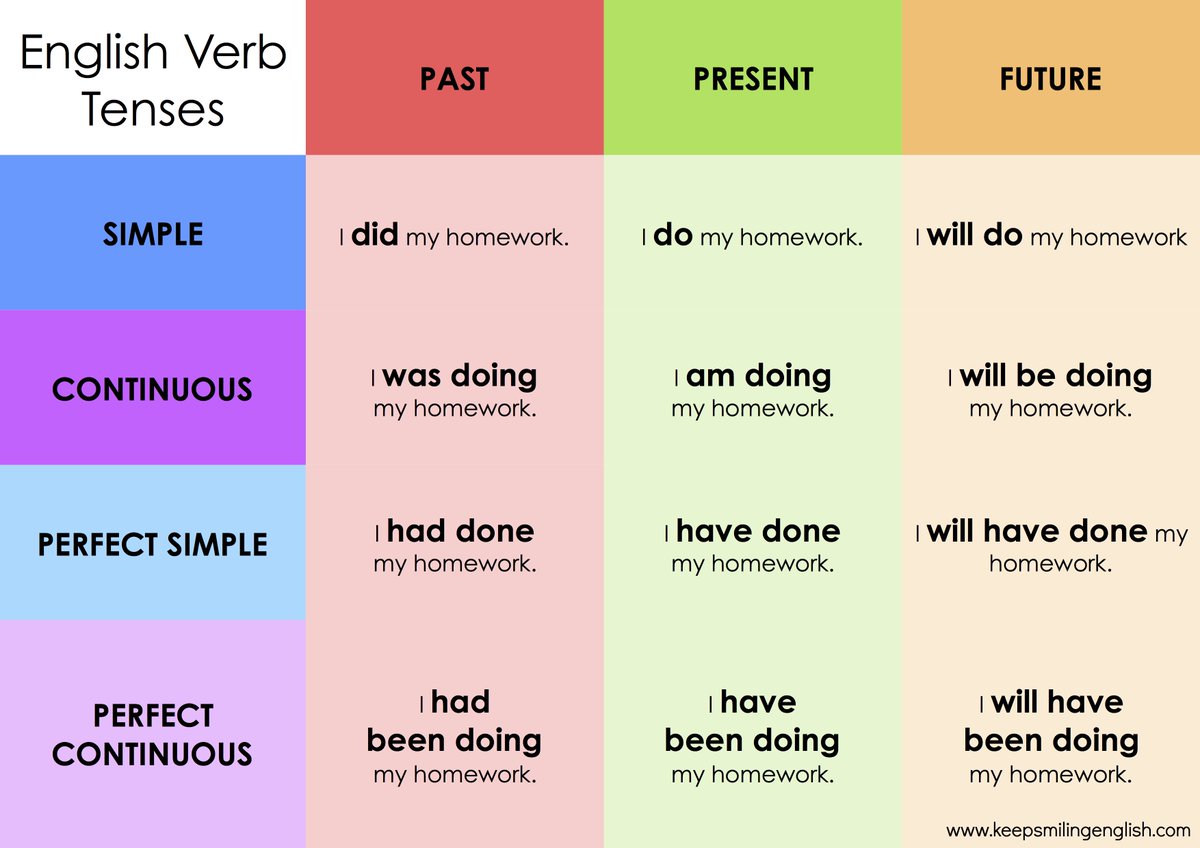 6. The present, past and past participle of verbs.
MAIN TEACHING:
Oral and Explanation Online with some written work.
1. Verb explained in detailed form along with its uses.
2. Present, past and future tense of verbs in grammar.
ASSIGNMENTS:
1. What are verbs? Explain with 2 examples in sentence form.
A word used to describe an action, state, or occurrence, and forming the main part of a sentence, such as hear, become, happen.
Examples:
- Mark eats his dinner quickly.
- We went to the market.
WATCH THE VIDEOS TO HELP YOU BETTER UNDERSTAND THE EXERCISES:-
A. Find the errors in the following sentences and correct them.
1. We are playing tennis every Sunday.
We play tennis every Sunday.
2. I own two dogs and a cat. I loved animals.
- I own two dogs and a cat. I love animals.
3. My suitcase is weighing four kilos.
4. When Mary come in i talked to mother on the phone.
5. We pass the hotel two minutes ago.
B. Read the sentences given below and say what kind of meaning is expressed by the use of the simple present tense.
1. Police nab antiques smuggler. ............................................................................................
2. Penguins live in the Antarctic. ............................................................................................
3. I believe it is the right thing to do.
............................................................................................
4. I never have aerated drinks
............................................................................................
5. We play badminton every Tuesday. ............................................................................................
6. The President declares a compensation of two lakh rupees to each of the injured persons in the accident.
.............................................................................................
7. It rains every afternoon this season
.............................................................................................
8. Our flight is at 6:30 tomorrow evening
.............................................................................................
9. Water freezes at zero degree
.............................................................................................
10. Our holiday starts on 15th June
.............................................................................................
C. Fill in the blanks with the simple present or present continuous form of the verbs given in brackets.
1. I'm ......................... (write) a letter to my friend.
2. Normally it doesn't ......................... (rain) in this part of the country, but it ......................... (rain) quite hard now.
3. Since the sun ......................... (rise) in the east and since it is behind us now, we ......................... (travel) west.
4. She ......................... (want) a new phone, so she ......................... (save) up to buy one.
5. Where is Rajat? He ......................... (be) in the kitchen. He ......................... (bake) a cake.
6. Anil ......................... (wash) his car now, so he can't ......................... (help) you with your homework.
7. I ......................... (work) as a journalist with Hindustan weekly.
8. My mother usually ......................... (enjoy) detective stories, but she ......................... (not like) the one she ......................... (read) now.
9. I cannot ......................... (disturb) her now, she ......................... (play).
10. Why ......................... (not drink) your coffee, it ......................... (get) cold.
D. Fill in the blanks with the present prefect of the verb given in brackets.
1. She ......................... Mother that she is going to the party. (tell)
2. ......................... you ......................... our new sports teacher? (meet)
3. What are you going to do? ......................... you ......................... ? (decide)
4. She ......................... yet ......................... all her birthday presents. (not open)
5. Why ......................... they ......................... the main street again? (block)
6. I ......................... (be) to Mumbai several times. I love the city.
7. Delhi government ......................... (work) hard to make it a nicer place to live.
8. I miss my family I ......................... (not see) them for a month.
9. Fatima ......................... (pay) the electricity bills already.
10. ......................... you ever ......................... (drive) a car before?
E. Complete and match the sentences in Column B with those in Column A. Use present perfect tense and already, just or yet wherever necessary.

6. The present, past and past participle of verbs.
MAIN TEACHING:
Oral and Explanation Online with some written work.
1. Verb explained in detailed form along with its uses.
2. Present, past and future tense of verbs in grammar.
ASSIGNMENTS:
1. What are verbs? Explain with 2 examples in sentence form.
A word used to describe an action, state, or occurrence, and forming the main part of a sentence, such as hear, become, happen.
Examples:
- Mark eats his dinner quickly.
- We went to the market.
WATCH THE VIDEOS TO HELP YOU BETTER UNDERSTAND THE EXERCISES:-
A. Find the errors in the following sentences and correct them.
1. We are playing tennis every Sunday.
We play tennis every Sunday.
2. I own two dogs and a cat. I loved animals.
- I own two dogs and a cat. I love animals.
3. My suitcase is weighing four kilos.
4. When Mary come in i talked to mother on the phone.
5. We pass the hotel two minutes ago.
B. Read the sentences given below and say what kind of meaning is expressed by the use of the simple present tense.
1. Police nab antiques smuggler. ............................................................................................
2. Penguins live in the Antarctic. ............................................................................................
3. I believe it is the right thing to do.
............................................................................................
4. I never have aerated drinks
............................................................................................
5. We play badminton every Tuesday. ............................................................................................
6. The President declares a compensation of two lakh rupees to each of the injured persons in the accident.
.............................................................................................
7. It rains every afternoon this season
.............................................................................................
8. Our flight is at 6:30 tomorrow evening
.............................................................................................
9. Water freezes at zero degree
.............................................................................................
10. Our holiday starts on 15th June
.............................................................................................
C. Fill in the blanks with the simple present or present continuous form of the verbs given in brackets.
1. I'm ......................... (write) a letter to my friend.
2. Normally it doesn't ......................... (rain) in this part of the country, but it ......................... (rain) quite hard now.
3. Since the sun ......................... (rise) in the east and since it is behind us now, we ......................... (travel) west.
4. She ......................... (want) a new phone, so she ......................... (save) up to buy one.
5. Where is Rajat? He ......................... (be) in the kitchen. He ......................... (bake) a cake.
6. Anil ......................... (wash) his car now, so he can't ......................... (help) you with your homework.
7. I ......................... (work) as a journalist with Hindustan weekly.
8. My mother usually ......................... (enjoy) detective stories, but she ......................... (not like) the one she ......................... (read) now.
9. I cannot ......................... (disturb) her now, she ......................... (play).
10. Why ......................... (not drink) your coffee, it ......................... (get) cold.
D. Fill in the blanks with the present prefect of the verb given in brackets.
1. She ......................... Mother that she is going to the party. (tell)
2. ......................... you ......................... our new sports teacher? (meet)
3. What are you going to do? ......................... you ......................... ? (decide)
4. She ......................... yet ......................... all her birthday presents. (not open)
5. Why ......................... they ......................... the main street again? (block)
6. I ......................... (be) to Mumbai several times. I love the city.
7. Delhi government ......................... (work) hard to make it a nicer place to live.
8. I miss my family I ......................... (not see) them for a month.
9. Fatima ......................... (pay) the electricity bills already.
10. ......................... you ever ......................... (drive) a car before?
E. Complete and match the sentences in Column B with those in Column A. Use present perfect tense and already, just or yet wherever necessary.

F. Put the verbs given in brackets in the blanks. Use the present perfect continuous tense of the verb.
1. Natasha ............................... the piano since she was four. (play)
2. I ............................... in the rain, so my clothes are wet. (walk)
3. He ............................... excuses for a long time now. (make)
4. How long ............................... you ............................... Chinese? (learn)
5. They ............................... here since 2001. (live)
6. Mrs Rao ............................... for two hours now. (teach)
7. The government ............................... hard to tackle terrorism. (work)
8. We ............................... to solve this problem since yesterday. (try)
Match the three columns correctly to make meaningful and grammatically correct sentences.
Column A Column B Column C
1. Shakespeare a. awarded i. independence in the year 1962.
2. Our maths teacher b. originated ii. into our house last night.
3. The curious bird dodo c. were iii. the park despite protests.
4. The game of chess d. gave iv. in the year 1616.
5. Algeria e. closed v. extinct around 1681.
6. The court f. broke vi. trapped in the avalanche.
7. Thirty skiers g. died vii. us a surprise test today.
8. The municipality h. gained viii. life sentence to the criminal
9. Thieves i. became ix. in India
H. Put in simple past and past continuous forms of the verbs given in brackets appropriately in the blanks in the following sentences:
1. While I .................. (have) tea, the dog .................... (jump) on the table.
2. When Rajiv .................. (talk) on the phone, someone .................. (pick) his pocket.
3. While we .................. (watch) the movie, someone .................. (steal) our car.
4. When I .................. (enter), they .................. (discuss) the science project.
5. Harish .................. (meet) Anita while he .................. (travel) to Delhi from Kolkata.
I. Fill in the blanks with the past perfect forms of the verbs given in brackets.
1. By the time he arrived at the party, Sabina .................. already .................... (leave)
2. When we got home last night, we found that somebody .................. one of the windows. (break)
3. He could not recognize the woman who smiled a him because he .................. her before. (not see)
4. Last year we went to Venice. We .................... the city when we went to Italy five years ago. (not visit)
5. The house was very quiet when i reached home. Everybody .................. to bed (go).
6. The shopkeeper gave me some money back as I .................. him extra by mistake. (pay)
7. When we visited our village after twenty years, we found that everything ...................(change)
8. The engineer opened up the machine only after he .................. carefully .................. it from the electrical point (disconnect)
J. Complete the following, using the past perfect continuous tense.
1. Her interview was quite good because she ............................ (prepare) for it for two weeks, She ............ also ........................... (work) on the questions that might be asked.
2. The boys came into the house an hour later with their clothes torn and their hair in a mess. I knew that they ........................... (fight).
3. We were exhausted at the end of the journey, as we ........................... (travel) the whole day.
4. The teacher scolded him when she realized that he ........................... (not pay) attention in class.
5. I looked at her and it seemed to me that she ........................... (cry)
K. Use going to with the appropriate verb to complete the sentences below.
dine sell paint tear
visit build fall call
1. This bag is not too strong; it is ........................ .
2. I've bought some colours; I'm ........................ .
3. He wants to invite his sister to the party; he's ........................ her.
4. We have some time free; we are ........................ the museum.
5. This house is very old; the owner is ........................ it soon.
6. A new restaurant has just opened; she is ........................ there tonight.
7. Amex Builders say that they are ........................ 500 new flats.
8. She is working too hard; she is ........................ ill this way.
L. Make correct sentences as directed. Use simple present to refer to the future.
 1. The flight/leave/at 9:30 a.m. (positive)
2. At what/time/the/movie/start (interrogative)
3. The flight/not leave/ for an hour/yet (negative)
4. We/have/a test/on Thursday (interrogative)
5. This/term/end/on March 15 (positive)
6. At what/time/you arrive/in Singapore (interrogative)
7. The/market/close/at 4 p.m./tomorrow (positive)
8. Make/sure that the/patient/not leave/the bed (negative)
1. The flight/leave/at 9:30 a.m. (positive)
2. At what/time/the/movie/start (interrogative)
3. The flight/not leave/ for an hour/yet (negative)
4. We/have/a test/on Thursday (interrogative)
5. This/term/end/on March 15 (positive)
6. At what/time/you arrive/in Singapore (interrogative)
7. The/market/close/at 4 p.m./tomorrow (positive)
8. Make/sure that the/patient/not leave/the bed (negative)
M. Complete the following sentences, using the future continuous form.
1. Deb is going to join his father's business after school. Five years from now he........................(run) a successful company and we are sure he........................(earn) a lot of money too.
N. Complete the following sentences with the future perfect form of the verbs given in the box.
disappear clear leave start
receive finish strike enter
1. Do not worry about the books; you ........................ all of them by Wednesday.
2. We can't expect to meet them if we reach after four; they ........................ by then.
3. By next Friday, the workers ........................ work for eight days.
4. By the time you visit again, all these lovely old buildings .......................... .
5. The development authority says that they ............................ construction work on three flyovers by next month.
6. By day after tomorrow, I ................................ a new novel.
7. In another few minutes, the army ................................ the enemy zone.
8. Don't worry, in another half an hour the police .......................... the jam.
O. FiIl in the blanks with the future perfect continuous form of the verbs.
1. Come July and we ................................ here for twenty years (live)
2. By the end of this term, Mr Bhatia ................................ in this company for fifteen years. (work)
3. By the end of this month, the construction of our house ................................ on for five years. (go)
4. By the end of this week, Ms Mohan ............................ us this topic for more than ten days. (teach)
5. When the time of submission comes, she ................................ on her EVS project for more than three months. (work)
P. Fill in the blanks with the tense of the verb indicated in the brackets.
Schools ................ (begin) (present perfect) tapping into grandparents as a resource in several ways. At a school in Chennai, grandparents ............ (come) (present simple) in for career counseling sessions as teachers ............ (feel) (present simple) they ............... (be) (future simple) able to guide children better. A couple of years ago, the school ................ (send) (past simple) out forms to grandparents of students asking for their interests, specializations, and job history, and then ................ (call)(past simple) them to run sessions on subjects of their choice. Recently Jayaraman, a retired marketing professional and a grandpa, ............... (speak) (past simple) to students about marketing. "I .............. (want) (past simple) to tell children that they ................ (feel) (future simple) more confident and happy if they ................ (make) (simple present) their own making career decisions."
F. Put the verbs given in brackets in the blanks. Use the present perfect continuous tense of the verb.
1. Natasha ............................... the piano since she was four. (play)
Match the three columns correctly to make meaningful and grammatically correct sentences.
Column A Column B Column C
1. While I .................. (have) tea, the dog .................... (jump) on the table.
2. When Rajiv .................. (talk) on the phone, someone .................. (pick) his pocket.
I. Fill in the blanks with the past perfect forms of the verbs given in brackets.
1. By the time he arrived at the party, Sabina .................. already .................... (leave)
2. When we got home last night, we found that somebody .................. one of the windows. (break)
3. He could not recognize the woman who smiled a him because he .................. her before. (not see)
4. Last year we went to Venice. We .................... the city when we went to Italy five years ago. (not visit)
5. The house was very quiet when i reached home. Everybody .................. to bed (go).
6. The shopkeeper gave me some money back as I .................. him extra by mistake. (pay)
7. When we visited our village after twenty years, we found that everything ...................(change)
8. The engineer opened up the machine only after he .................. carefully .................. it from the electrical point (disconnect)
J. Complete the following, using the past perfect continuous tense.
1. Her interview was quite good because she ............................ (prepare) for it for two weeks, She ............ also ........................... (work) on the questions that might be asked.
2. The boys came into the house an hour later with their clothes torn and their hair in a mess. I knew that they ........................... (fight).
3. We were exhausted at the end of the journey, as we ........................... (travel) the whole day.
4. The teacher scolded him when she realized that he ........................... (not pay) attention in class.
5. I looked at her and it seemed to me that she ........................... (cry)
K. Use going to with the appropriate verb to complete the sentences below.
visit build fall call
8. She is working too hard; she is ........................ ill this way.
L. Make correct sentences as directed. Use simple present to refer to the future.
8. Make/sure that the/patient/not leave/the bed (negative)
M. Complete the following sentences, using the future continuous form.
1. Deb is going to join his father's business after school. Five years from now he........................(run) a successful company and we are sure he........................(earn) a lot of money too.
2. ........................you.............................(discuss) the issue of clan drinking water with the mayor too?
3. They...............................(watch) television if you visit them between eight and nine.
4. She............................(vacate) this house next Saturday.
5. I..............................(write) to Krishnan soon to tell him of our plan.
6. He.............................(arrive) in Madurai at about ten tomorrow morning.
7. ...............you........................(need) the car because I have to go to the community centre for an hour?
8. Next Sunday, I................................(spend) the entire day cleaning my garage.
9. The President will first visit the Prime Minister's residence where he........................(have) dinner with the family.
10.She.................................(have) breakfast between 8 and 9 o’clock.
N. Complete the following sentences with the future perfect form of the verbs given in the box.
2. We can't expect to meet them if we reach after four; they ........................ by then.
3. By next Friday, the workers ........................ work for eight days.
4. By the time you visit again, all these lovely old buildings .......................... .
5. The development authority says that they ............................ construction work on three flyovers by next month.
6. By day after tomorrow, I ................................ a new novel.
7. In another few minutes, the army ................................ the enemy zone.
8. Don't worry, in another half an hour the police .......................... the jam.
O. FiIl in the blanks with the future perfect continuous form of the verbs.
1. Come July and we ................................ here for twenty years (live)
2. By the end of this term, Mr Bhatia ................................ in this company for fifteen years. (work)
3. By the end of this month, the construction of our house ................................ on for five years. (go)
4. By the end of this week, Ms Mohan ............................ us this topic for more than ten days. (teach)
5. When the time of submission comes, she ................................ on her EVS project for more than three months. (work)
P. Fill in the blanks with the tense of the verb indicated in the brackets.
Schools ................ (begin) (present perfect) tapping into grandparents as a resource in several ways. At a school in Chennai, grandparents ............ (come) (present simple) in for career counseling sessions as teachers ............ (feel) (present simple) they ............... (be) (future simple) able to guide children better. A couple of years ago, the school ................ (send) (past simple) out forms to grandparents of students asking for their interests, specializations, and job history, and then ................ (call)(past simple) them to run sessions on subjects of their choice. Recently Jayaraman, a retired marketing professional and a grandpa, ............... (speak) (past simple) to students about marketing. "I .............. (want) (past simple) to tell children that they ................ (feel) (future simple) more confident and happy if they ................ (make) (simple present) their own making career decisions."
R/13
6/JULY/2020 - 12/JULY/2020
ENGLISH LITERATURE
Chapter 4: EXTREME WEATHER
Synopsis of the Chapter.

Extreme weather or extreme climate events includes unexpected, unusual, severe or unseasonal weather that has been documented all around the world. The growing evidence suggests that human-induced global warming is increasing the intensity of some extreme weather events. Extreme weather has significant impact on human society as well as natural ecosystems.
EXPLAINED:
1. The whole of Chapter 4.
2. Words to know on page 59.
3. Questions and answers on page 60.
4. The exercises on Idioms with its meanings.
5. How to answer questions with reference to context.
6. Fill in the blanks.
7. True or false.
8. Match the following.
9. Meanings from the dictionary.
MAIN TEACHING:
Oral and Explanation Online with some written work.
1. The different extreme weather conditions.
2. Climate change.
3. Natural disasters.

ASSIGNMENTS:
Read the full chapter.
Learn the first 6 words to know on page 59.
Learn the next 7 words to know on page 59.
Learn the last 6 words to know on page 59.
1. Answer the following questions.
a) What are three ways of shielding themselves from the weather that humans have created?
b) How have satellites helped scientists to measure temperatures in remote areas?
c) In what ways are parts of the world 'hostile' to humans?
d) What are weather stations?
e) What are some of the ways we can find relief from very hot weather?
f) Where and when was the hottest temperature recorded?
g) Why is it hard to live a normal life if the temperature gets extremely hot?
h) What is the average daily temperature in Oymyakon?
i) What is the driest place on earth and what makes it so dry?
j) What is unusual about the weather in the UK?
k) What are two positive things and two negative things about the large amount of rainfall in Meghalaya?
l) What is a rain shadow and what creates it?
m) Which two places mentioned in the text are affected by the mountains near them? How?
 2. Answer the following questions with reference to context.
The landscape is so arid that scientists are very interested in studying it - because it is the place on earth that is most similar to the conditions on the planet Mars.
a) What does arid mean?
b) What place is being described here?
c) Why might it surprise people to learn that there is a desert here?


 6. Match the following numbers with the alphabets taken from the chapter.
Read the full chapter.
Learn the first 6 words to know on page 59.
Learn the next 7 words to know on page 59.
Learn the last 6 words to know on page 59.
1. Answer the following questions.
a) What are three ways of shielding themselves from the weather that humans have created?
b) How have satellites helped scientists to measure temperatures in remote areas?
c) In what ways are parts of the world 'hostile' to humans?
d) What are weather stations?
e) What are some of the ways we can find relief from very hot weather?
f) Where and when was the hottest temperature recorded?
g) Why is it hard to live a normal life if the temperature gets extremely hot?
h) What is the average daily temperature in Oymyakon?
i) What is the driest place on earth and what makes it so dry?
j) What is unusual about the weather in the UK?
k) What are two positive things and two negative things about the large amount of rainfall in Meghalaya?
l) What is a rain shadow and what creates it?
m) Which two places mentioned in the text are affected by the mountains near them? How?
The landscape is so arid that scientists are very interested in studying it - because it is the place on earth that is most similar to the conditions on the planet Mars.
a) What does arid mean?
b) What place is being described here?
c) Why might it surprise people to learn that there is a desert here?

3. Read the sentences below and then match the idioms in bold with the correct meaning.
1. Anna isn't coming with us because she feels a little under the weather.
2. Don't worry about me, I'm as right as rain after my knee operation.
3. He has his head in the clouds if he seriously thinks he's going to get an award today.
4. I thought my cake would win the bake-off until Jo turned up with a triple chocolate gateau and stole my thunder.
5. I'm snowed under at work right now because two of my colleagues are on holiday.
6. It was awkward in my new class until Adam broke the ice by telling us a joke.
7. Our Science exam was a breeze. I'm sure i'll get top marks.
8. Thanks for inviting me to play tennis but I can't this week. Can I take a rain check on that?
9. The children were about to arrive for the party so she sat on the sofa with a cup of coffee enjoying the calm before the storm.
10. The project has been put on ice until our boss decides what to do next.
1. Decline something now but offer to do it at a later date
2. Not feeling well
3. The quiet, peaceful period before a moment of great activity or mayhem
4. To be out of touch of reality; to have ideas that may not be sensible or practical
5. To be very easy to do
6. To feel fine and healthy
7. To have so much to do that you are having trouble doing it all
8. To postpone for another day
9. To say or do something to make someone feel relaxed or at ease in a social setting
10. When someone takes attention away from someone else.
ANSWERS:
1 - 2
2 - 6
3 - 4
4 - 10
5 - 7
6 - 9
7 - 5
8 - 1
9 - 3
10 - 8
4. True or False
a) Each part of the planet has one similar climate. FALSE
b) The weather and extreme temperatures still create problems for mankind. TRUE
c) In some places in India, the temperature can reach 50 degrees centigrade.
d) Nothing - not even bacteria - lives in the middle of the Dasht-e Lut Desert.
e) Half of the land on earth is part of the desert biome and is very dry.
f) In Meghalaya, India the average rainfall is over 11 metres.
g) In the UK the weather is always cold.
h) Satellite scans have an advantage over weather stations in another way.
i) Life does not thrive in extreme temperature.
j) The Antarctica region is a desert. FALSE

5. Fill in the blanks with the following words given.
cold, sparsely, south, four, stations, storms,
winter, hottest, Sahara desert, spiders
a) In some places four seasons are easy to identify whilst others there is a sudden jump from winter to summer.
b) Humans have to contend with heat, cold , rain, wind, storms and more.
c) Weather stations have been set up all over the world.
d) In 2013, spiders rained down on a town in Brazil.
e) The hottest and coldest parts of the world are sparsely inhabited.
f) The high temperature that day was partly due to winds from the south that blew in hot air from over the Sahara desert.
winter, hottest, Sahara desert, spiders
a) In some places four seasons are easy to identify whilst others there is a sudden jump from winter to summer.
b) Humans have to contend with heat, cold , rain, wind, storms and more.
c) Weather stations have been set up all over the world.
d) In 2013, spiders rained down on a town in Brazil.
e) The hottest and coldest parts of the world are sparsely inhabited.
f) The high temperature that day was partly due to winds from the south that blew in hot air from over the Sahara desert.
 6. Match the following numbers with the alphabets taken from the chapter.
a) Each part of the planet has its own cycles.
b) Data helps scientists to analyze
c) Where there is fresh water and trees
d) Life is tough in
e) Chile in South America
1. has a high plateau in the North of the country.
2. the coldest regions of Russia.
3. and predict the weather.
4. there can be some relief from the heat.
5. and variations in temperature.
ANSWERS:
a - 5
b - 3
c - 4
d - 2
e - 1
7. Learn the words and find meanings to the words given below from your dictionary.
a) conditioning
b) spectacular
c) blizzard
d) bizarre
e) fascinating
f) dehydration
R/12
1/JULY/2020 - 4/JULY/2020
ENGLISH COMPOSITION
Ch. 13 ACTIVE AND PASSIVE VOICE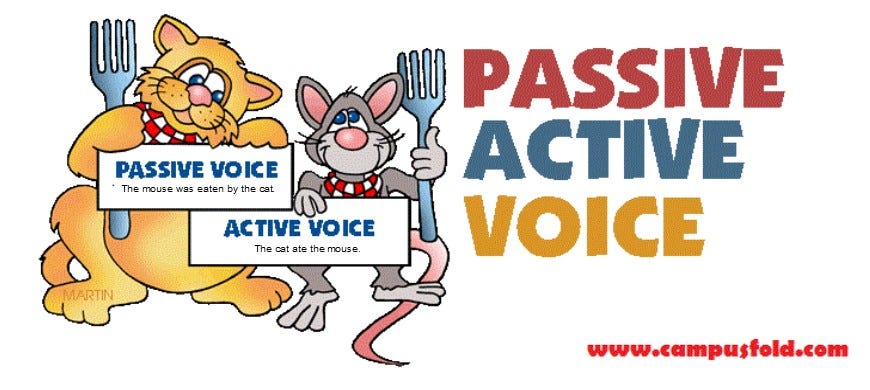
What is meant by Active Voice And Passive Voice?
Active Voice - When the subject of the sentence is the doer of the action, the verb is said to be in the active voice.
Example:
Sonia changed the flat tyre on her car
Passive Voice - In a sentence, when the subject is not the doer of the action but is acted upon by the verb, it is said to be in the passive voice.
Example:
The flat tyre was changed by Sonia.
EXPLAINED:
1. The whole of chapter 13.
2. The difference between Active voice and Passive voice.
3. The changing of various verb tenses from Active to Passive voice.
4. The rules applied for Transformation of Active into Passive voice.
5. The different structures of Passive voice.
6. Change of voice in Interrogative sentences.
7. Change of voice in Imperative sentences.
8. The usage of Passive voice.
MAIN TEACHING:
 Oral and Explanation Online with some written work.
1. Active and Passive voice meaning with its usage and differences.
2. All the exercises explained with demonstration via images also.
ASSIGNMENTS:
1. What is Active voice? Explain with two examples in sentence form.
When the subject of the sentence is the doer of the action, the verb is said to to be in the active voice.
EXAMPLES:
- Sonia changed the flat tyre on her car.
- Rohit wrote a letter to his mother.
2. What is Passive voice? Explain with two examples in sentence form.
In a sentence, when the subject is not the doer of the action but is acted upon by the verb, it is said to be in the passive voice.
EXAMPLES:
- The flat tyre was changed by Sonia.
- A letter was written by Rohit to his mother.
A. Rewrite these sentences in the passive voice.
1. Renu sings a song.
A song is sung by Renu.
2. Call in the doctor at once.
The doctor was called in at once.
3. Grandpa told us an interesting story.
An interesting story was told to us by grandpa.
4. Neha's father praised her.
Neha was praised by her father.
5. People formed a queue on the road.
A queue was formed on the road by people.
B. Change the voice in the following sentences into active or passive.
1. He waters the plants every day.
The plants are watered by him every day.
2. The thief stole the jewels.
The jewels were stolen by the thief.
3. The teacher is demonstrating an experiment.
An experiment is being demonstrated by the teacher.
4. People have forgotten the war hero.
The war hero has been forgotten (by people).
5. Robin is taking a photograph.
A photograph is being taken by Robin.
6. Amrit sells fruits and vegetables in the market.
Fruits and vegetables are being sold by Amrit in the market.
7. Shekhar has written a letter of apology.
A letter of apology had been written by Shekhar.
8. The inspector will have inspected our school by tomorrow.
Our school will have been inspected by tomorrow (by the inspector).
9. Fortunately not much damage was done by the fire.
Fortunately, the fire did not do much damage.
10. The protesters were being stopped by the police.
The police were stopping the protestors.
11. She has been given a notice by the principle.
The principal has given her a notice.
12. The house was decorated by Asha.
Alisha decorated the house.
13. His officers are displeased by his conduct.
His conduct displeases his officers.
14. The books will have been received by tomorrow.
They will have received the books by tomorrow.
15. Several people have been bitten by this dog.
This dog has bitten several people.
C. Change the voice in the following sentences from active to passive.
1. Her cousin gave her a pair of binoculars.
She was given a pair of binoculars by her cousin.
2. I know his weak points.
His weak points are known to me.
3. My father bought me a watch.
A watch was bought for me by my father.
4. Your case interests me.
I am interested in your case.
5. They selected me the leader of our group.
I was selected the leader of our group (by them).
6. Mr Kapoor teaches us English.
We are taught English by Mr Kapoor.
7. Many people considered him a genius.
He was considered a genius by many people.
8. The management appointed Mr. Kapoor the new officer.
Mr Kapoor was appointed as the new officer by the management.
9. They accepted our invitation.
Our invitation was accepted.
10. The villagers called her a genius.
She was called a genius by the villagers.
D. Change the following interrogative sentences into the passive voice.
1. Which room did they reserve for the minister?
Which room was reserved for the minister (by them)?
2. Can they write this in English?
Can this be written in English (by them)?
3. Who called the police?
Who was the police called by?
4. Has he informed his family?
Has his family been informed (by him)?
5. Is Mrs Kumar hosting the party?
Is the party being hosted by Mrs Kumar?
6. Where did they find the purse?
Where was the purse found (by them)?
7. Who teaches you Sanskrit?
Who are you taught Sanskrit by?
8. When will they build the bridge?
When will the bridge be built (by them)?
9. Is Siya cooking a Chinese dish for dinner?
Is a Chinese dish for dinner being cooked by Siya?
10. When did Shakespeare write his first play?
When was the first play written by Shakespeare?
 E. Change the following sentences into active/passive voice.
1. I eat an apple every day.
An apple is eaten by me.
2. Shyam delivered the parcel.
A parcel was delivered by Shyam.
3. A letter was written by Sheena.
Sheena wrote a letter.
4. A car was bought by him.
He bought a car.
5. My purse was lost yesterday.
I lost my purse yesterday.
6. He offered a seat to the elderly woman.
A seat was offered by him to the elderly woman.
7. Did you find my pen?
Was my pen found by you?
8. By whom were the walls painted?
Who painted the walls?
9. Twelve months make a year.
A year is made up by twelve months.
10. The fields are overgrown with grass.
Grass is overgrown in the field.
11. It is said to be a very well-researched book.
The book is very well-researched.
12. Do you like such films?
Are such films liked by you?
13. Was the window broken by you?
Did you break the window?
14. Will you teach me Mathematics?
Will Mathematics be taught to me by you?
15. When was the essay written by you?
When did you write the essay?
NOW WATCH THE VIDEOS TO HELP YOU UNDERSTAND BETTER.
Oral and Explanation Online with some written work.1. Active and Passive voice meaning with its usage and differences.
2. All the exercises explained with demonstration via images also.
ASSIGNMENTS:
1. What is Active voice? Explain with two examples in sentence form.
When the subject of the sentence is the doer of the action, the verb is said to to be in the active voice.
EXAMPLES:
- Sonia changed the flat tyre on her car.
- Rohit wrote a letter to his mother.
2. What is Passive voice? Explain with two examples in sentence form.
In a sentence, when the subject is not the doer of the action but is acted upon by the verb, it is said to be in the passive voice.
EXAMPLES:
- The flat tyre was changed by Sonia.
- A letter was written by Rohit to his mother.
1. Renu sings a song.
A song is sung by Renu.
2. Call in the doctor at once.
The doctor was called in at once.
3. Grandpa told us an interesting story.
An interesting story was told to us by grandpa.
4. Neha's father praised her.
Neha was praised by her father.
5. People formed a queue on the road.
A queue was formed on the road by people.
B. Change the voice in the following sentences into active or passive.
1. He waters the plants every day.
The plants are watered by him every day.
2. The thief stole the jewels.
The jewels were stolen by the thief.
3. The teacher is demonstrating an experiment.
An experiment is being demonstrated by the teacher.
4. People have forgotten the war hero.
The war hero has been forgotten (by people).
5. Robin is taking a photograph.
A photograph is being taken by Robin.
A photograph is being taken by Robin.
6. Amrit sells fruits and vegetables in the market.
Fruits and vegetables are being sold by Amrit in the market.
7. Shekhar has written a letter of apology.
A letter of apology had been written by Shekhar.
8. The inspector will have inspected our school by tomorrow.
Our school will have been inspected by tomorrow (by the inspector).
9. Fortunately not much damage was done by the fire.
Fortunately, the fire did not do much damage.
10. The protesters were being stopped by the police.
The police were stopping the protestors.
11. She has been given a notice by the principle.
The principal has given her a notice.
12. The house was decorated by Asha.
Alisha decorated the house.
13. His officers are displeased by his conduct.
His conduct displeases his officers.
14. The books will have been received by tomorrow.
They will have received the books by tomorrow.
15. Several people have been bitten by this dog.
This dog has bitten several people.
C. Change the voice in the following sentences from active to passive.
1. Her cousin gave her a pair of binoculars.
She was given a pair of binoculars by her cousin.
2. I know his weak points.
His weak points are known to me.
3. My father bought me a watch.
A watch was bought for me by my father.
I am interested in your case.
5. They selected me the leader of our group.
I was selected the leader of our group (by them).
6. Mr Kapoor teaches us English.
We are taught English by Mr Kapoor.
7. Many people considered him a genius.
He was considered a genius by many people.
8. The management appointed Mr. Kapoor the new officer.
Mr Kapoor was appointed as the new officer by the management.
9. They accepted our invitation.
Our invitation was accepted.
10. The villagers called her a genius.
She was called a genius by the villagers.
D. Change the following interrogative sentences into the passive voice.
1. Which room did they reserve for the minister?
Which room was reserved for the minister (by them)?
2. Can they write this in English?
Can this be written in English (by them)?
3. Who called the police?
Who was the police called by?
4. Has he informed his family?
Has his family been informed (by him)?
5. Is Mrs Kumar hosting the party?
Is the party being hosted by Mrs Kumar?
6. Where did they find the purse?
Where was the purse found (by them)?
7. Who teaches you Sanskrit?
Who are you taught Sanskrit by?
8. When will they build the bridge?
When will the bridge be built (by them)?
9. Is Siya cooking a Chinese dish for dinner?
Is a Chinese dish for dinner being cooked by Siya?
10. When did Shakespeare write his first play?
When was the first play written by Shakespeare?
1. I eat an apple every day.
An apple is eaten by me.
2. Shyam delivered the parcel.
A parcel was delivered by Shyam.
3. A letter was written by Sheena.
Sheena wrote a letter.
4. A car was bought by him.
He bought a car.
5. My purse was lost yesterday.
I lost my purse yesterday.
6. He offered a seat to the elderly woman.
A seat was offered by him to the elderly woman.
7. Did you find my pen?
Was my pen found by you?
8. By whom were the walls painted?
Who painted the walls?
9. Twelve months make a year.
A year is made up by twelve months.
10. The fields are overgrown with grass.
Grass is overgrown in the field.
11. It is said to be a very well-researched book.
The book is very well-researched.
12. Do you like such films?
Are such films liked by you?
13. Was the window broken by you?
Did you break the window?
14. Will you teach me Mathematics?
Will Mathematics be taught to me by you?
15. When was the essay written by you?
When did you write the essay?
NOW WATCH THE VIDEOS TO HELP YOU UNDERSTAND BETTER.
R/11
26/JULY/2020 - 30/JULY/2020
ENGLISH POETRY
ON THE GRASSHOPPER AND CRICKET
Poem By John Keats
Theme: Nature
 Let us first listen and understand the poem with correct pronunciation:
ABOUT THE POET:
John Keats (1795 - 1821), is considered one of the greatest of English poets. The son of a livery stable keeper, Keats attended school at Enfield, England. At the age of sixteen he was apprenticed to a surgeon. Keats gave up surgery to write poetry. His first volume of poems appeared in 1817. It included 'I Stood Tip-toe Upon a Little Hill', 'Sleep and Poetry', and the famous sonnet 'On First Looking Into Chapman's Homer'. In the selected poem we get a good idea of Keats' love for nature, and his knowledge of it at first hand.
Summary Of The Poem.
This is a fine sonnet and symbolic poem in which the grasshopper is a symbol of hot summer and the cricket is of very cold winter. The poet showcases before the reader the constant music of nature. The poem depicts the continuity of the endless flow of sweet music irrespective of change of weather season or day – night.
EXPLAINED:

- Read and explain the poem in detail.
- Words to know on Page 40.
- How to answer the questions of Ex 1 on Page 40.
- A briefing about the poet.
- How to answer questions with reference to context.
- How to correct spelling mistakes.
- Fill in the blanks.
- True or False.
- Find the meanings of words from the dictionary.
MAIN TEACHING:
Oral and Explanation Online with some written work.
- Explain the poem thoroughly.
- The summary of the poem with its meaning.
ASSIGNMENTS:

- Learn the first 5 lines of the poem on page 39.
- Learn the next 5 words to know on page 40.
- Learn the last 5 lines of the poem on Page 39.
- Learn the last 4 lines of the poem on page 39.
- Write the summary of the poem.
1. Answer the following questions.
a. Which line in the poem is similar to the first and expresses the same idea?
b. Whose voice will run from hedge to hedge? Why do you think the voice sounds in the hedges?
c. Where do the birds hide and why?
d. What does the poet mean by 'take the lead in summer luxury'?
e. Does the Grasshopper tire, and does he then behave like the birds?
f. What time of day is described in the second part of the poem?
g. What creates the silence?
h. Why does the Cricket's song sound to the poet like that of the Grasshopper's?
i. What is meant by the phrase 'He takes the lead in Summer luxury'? Where does the poet get this idea?
j. Why do you think the poet expresses the same idea twice, in the first line and the ninth?
k. What is the difference between a grasshopper and a cricket? Find out three or four differences (appearance, auditory organs, activity, feeding habits).
 2. Answer the following questions with reference to context.
a. ...he has never done with his delights
2. Answer the following questions with reference to context.
a. ...he has never done with his delights
i. To whom is the poet referring
ii. What delights might these have been?
iii. What does he do after this?
b. ...when the frost has wrought a silence
i. When does the frost do this?
ii. What does 'wrought' mean, and how might the frost have 'wrought a silence'?
iii. What effect does this have on the cricket and the poet?
SPELLINGS
3. Correct the mistakes in the following, if any.
- tigre - tiger
- strawberries - no mistakes
- somber - sombre
- leafs - leaves
- kenell - kennel
- sailers - sailors
- rockry - rockery
- fountane - fountain
- innoscent - innocent
- croocked - crooked
- newspaper - no mistakes
- solitary - no mistakes
- shruberies - shrubberies
- openning - opening
- mockry - mockery
4. Fill in the blanks from the poem.
a. When all the birds are faint with the hot sun,
b. And hide in cooling trees, a voice will run
c. That is the Grasshopper's - he takes the lead
d. In summer luxury, - he has never done
e. He rests at ease beneath some pleasant weed.
f. The poetry of earth is ceasing never:
g. Has wrought a silence, from the stove there shrills
h. The Cricket's song, in warmth increasing ever,
i. And seems to one in drowsiness half lost,
5. True of False.
a. The poet of this poem is James Keats. FALSE
b. The poem is about the Grasshopper and the Butterfly. FALSE
c. Birds hide in cooling trees. TRUE
d. The Grasshopper is among some grassy hills. TRUE
e. The poet talks about his love for nature in this poem. TRUE
6. Learn the words and find the meanings to the words given below from your dictionary.
a. Faint
b. Hedge
c. Luxury
d. Delights
e. Ceasing
f. Beneath
R/10
22/JUNE/2020 - 27/JUNE/2020
ENGLISH GRAMMAR
Ch. 3 ADJECTIVES What are Adjectives?
Adjectives are words that describes nouns. They typically serve as a modifier of a noun to denote a quality of the thing named, to indicate its quantity or extent, or to specify a thing as distinct from something else.
EXAMPLE:
~ The big dog chased the car.
EXPLAINED:
2. The classification of different Adjectives with examples.
3. Possessive Adjectives Vs Possessive Pronouns.
4. Positioning of Adjectives.
5. Order of Adjectives.
6. Comparison of Adjectives.
MAIN TEACHING:
Oral and Explanation Online with some written work.
1. Adjectives explained in detail along with its uses.
ASSIGNMENTS:
1. What are Adjectives? Explain with two examples in sentence form.
Adjectives are words that are used to describe nouns and pronouns and to quantify and identify them.
EXAMPLE:
- It seems a wise decision
- He fell unconscious to the floor
2. What are the different kinds of Adjectives? Name them with their definitions and examples.
ANSWER IN PICTURE BELOW

R/11
26/JULY/2020 - 30/JULY/2020
ENGLISH POETRY
ON THE GRASSHOPPER AND CRICKET
Poem By John Keats
ON THE GRASSHOPPER AND CRICKET
Poem By John Keats
Theme: Nature
Let us first listen and understand the poem with correct pronunciation:

ABOUT THE POET:
John Keats (1795 - 1821), is considered one of the greatest of English poets. The son of a livery stable keeper, Keats attended school at Enfield, England. At the age of sixteen he was apprenticed to a surgeon. Keats gave up surgery to write poetry. His first volume of poems appeared in 1817. It included 'I Stood Tip-toe Upon a Little Hill', 'Sleep and Poetry', and the famous sonnet 'On First Looking Into Chapman's Homer'. In the selected poem we get a good idea of Keats' love for nature, and his knowledge of it at first hand.
Summary Of The Poem.
Summary Of The Poem.
This is a fine sonnet and symbolic poem in which the grasshopper is a symbol of hot summer and the cricket is of very cold winter. The poet showcases before the reader the constant music of nature. The poem depicts the continuity of the endless flow of sweet music irrespective of change of weather season or day – night.
EXPLAINED:
EXPLAINED:

- Read and explain the poem in detail.
- Words to know on Page 40.
- How to answer the questions of Ex 1 on Page 40.
- A briefing about the poet.
- How to answer questions with reference to context.
- How to correct spelling mistakes.
- Fill in the blanks.
- True or False.
- Find the meanings of words from the dictionary.
MAIN TEACHING:
Oral and Explanation Online with some written work.
- Explain the poem thoroughly.
- The summary of the poem with its meaning.
ASSIGNMENTS:

- Learn the first 5 lines of the poem on page 39.
- Learn the next 5 words to know on page 40.
- Learn the last 5 lines of the poem on Page 39.
- Learn the last 4 lines of the poem on page 39.
- Write the summary of the poem.
1. Answer the following questions.
a. Which line in the poem is similar to the first and expresses the same idea?
b. Whose voice will run from hedge to hedge? Why do you think the voice sounds in the hedges?
c. Where do the birds hide and why?
d. What does the poet mean by 'take the lead in summer luxury'?
e. Does the Grasshopper tire, and does he then behave like the birds?
f. What time of day is described in the second part of the poem?
g. What creates the silence?
h. Why does the Cricket's song sound to the poet like that of the Grasshopper's?
i. What is meant by the phrase 'He takes the lead in Summer luxury'? Where does the poet get this idea?
j. Why do you think the poet expresses the same idea twice, in the first line and the ninth?
k. What is the difference between a grasshopper and a cricket? Find out three or four differences (appearance, auditory organs, activity, feeding habits).
2. Answer the following questions with reference to context.
a. ...he has never done with his delights
i. To whom is the poet referring
i. To whom is the poet referring
ii. What delights might these have been?
iii. What does he do after this?
b. ...when the frost has wrought a silence
i. When does the frost do this?
ii. What does 'wrought' mean, and how might the frost have 'wrought a silence'?
iii. What effect does this have on the cricket and the poet?
SPELLINGS
3. Correct the mistakes in the following, if any.
- tigre - tiger
- strawberries - no mistakes
- somber - sombre
- leafs - leaves
- kenell - kennel
- sailers - sailors
- rockry - rockery
- fountane - fountain
- innoscent - innocent
- croocked - crooked
- newspaper - no mistakes
- solitary - no mistakes
- shruberies - shrubberies
- openning - opening
- mockry - mockery
a. When all the birds are faint with the hot sun,
b. And hide in cooling trees, a voice will run
c. That is the Grasshopper's - he takes the lead
d. In summer luxury, - he has never done
e. He rests at ease beneath some pleasant weed.
f. The poetry of earth is ceasing never:
g. Has wrought a silence, from the stove there shrills
h. The Cricket's song, in warmth increasing ever,
i. And seems to one in drowsiness half lost,
5. True of False.
a. The poet of this poem is James Keats. FALSE
b. The poem is about the Grasshopper and the Butterfly. FALSE
c. Birds hide in cooling trees. TRUE
d. The Grasshopper is among some grassy hills. TRUE
e. The poet talks about his love for nature in this poem. TRUE
6. Learn the words and find the meanings to the words given below from your dictionary.
a. Faint
b. Hedge
c. Luxury
d. Delights
e. Ceasing
f. Beneath
R/10
22/JUNE/2020 - 27/JUNE/2020
Ch. 3 ADJECTIVES
What are Adjectives?Adjectives are words that describes nouns. They typically serve as a modifier of a noun to denote a quality of the thing named, to indicate its quantity or extent, or to specify a thing as distinct from something else.
EXAMPLE:
~ The big dog chased the car.
~ The beautiful princess is wearing a purple gown.
EXPLAINED:
1. The whole of Chapter 3.2. The classification of different Adjectives with examples.
3. Possessive Adjectives Vs Possessive Pronouns.
4. Positioning of Adjectives.
5. Order of Adjectives.
6. Comparison of Adjectives.
MAIN TEACHING:
Oral and Explanation Online with some written work.
1. Adjectives explained in detail along with its uses.
ASSIGNMENTS:
1. What are Adjectives? Explain with two examples in sentence form.
Adjectives are words that are used to describe nouns and pronouns and to quantify and identify them.
EXAMPLE:
- It seems a wise decision
- He fell unconscious to the floor
2. What are the different kinds of Adjectives? Name them with their definitions and examples.
ANSWER IN PICTURE BELOW

 A. Underline the adjectives in the following pair of sentences.
1. It seems a wise decision.
2. She made chocolate cake for her mother.
3. He fell unconscious on the floor.
4. He goes for walks daily to improve his health.
5. I got up early to catch an early morning train.
A. Underline the adjectives in the following pair of sentences.
1. It seems a wise decision.
2. She made chocolate cake for her mother.
3. He fell unconscious on the floor.
4. He goes for walks daily to improve his health.
5. I got up early to catch an early morning train.
B. Pick out all the adjectives in the following sentences and say to which class each of them belong.
1. The car sustained heavy damage in the accident. heavy—Qualitative
2. He has written several stories. several—Quantitative
3. A dog is very faithful to its master. faithful—Qualitative; its—Possessive
4. Every man has his duties. his—Possessive
5. He is a man of few words. few—Quantitative
6. The project was very successful. successful—Qualitative
7. Which color do you prefer? color—Qualitative
8. The way was long, the wind was cold. long; cold—Qualitative
C. Complete the following sentences using an adjective belonging to the categories specified.
1. Meera is a hard-working student.(Adjective of quality)
2. The German football team won the World Cup Championship. (use a national adjective)
3. these are the passengers going to Pune. (Demonstrative adjective)
4. Not a lot of milk is required to prepare this dish. (Adjective of quantity)
5. who finished their homework first? (Interrogative adjective)
What is the difference between Possessive Adjectives and Possessive Pronouns? Give an example of both.
A possessive adjective is an adjective that is also used to show ownership in a sentence it is placed before the noun in a sentence and used to describe it. Some are my your, his/her/its, our, your, their
Example: My favourite colour is red.
A possesive pronoun shows ownership. In a sentence, it does not come before or close to a noun. Instead, it replaces the noun to avoid repetition. Some of them are mine, ours, his/ hers, ours, yours, theirs.
Example: Sheela gave a test yesterday. These test results are hers.
D. Fill in the blanks with possessive adjective or possessive pronoun.
1. The film star is a friend of mine.
2. I lose my temper very quickly.
3. The cat is sleeping because it/she/he has just had a bowl of milk.
4. I think my keys are lost.
5. Shanta watched every movement of hers; in the dance before declaring her the winner.
6. My work is no business of yours.
7. The teacher told the children to open their books.
8. A friend of mine has invited me to London.
9. How is that cousin of yours ?
10. Jatin broke his arm while playing rugby.
E. The following items are being auctioned. Make grammatically correct sentences in your notebook by putting the adjectives in the correct sequence.
One has been done for you.
gown / new / pink / an expensive / silk
an expensive new pink silk gown (opinion-age-colour-material)
1. a/picture/wooden/frame/beautiful
a beautiful wooden picture frame
2. coins/ancient/hexagonal/some/German
some ancient hexagonal German coins
3. plastic/red/chairs/kitchen/four
four red plastic kitchen chairs
4. carved/mirror/oval/attractive/an
an attractive carved oval mirror
5. miniature/painting/a/curious
a curious miniature painting
6. cup/an/Indian/gold/antique
an antique gold Indian cup
7. Swiss/early-twentieth-century/an/fountain/pen
an early-twentieth-century Swiss fountain pen
8. copper/vessels/cooking/two/African
two African copper cooking vessels
9. colourful/satin/soft/new/cushion
new colourful soft satin cushion
10. porcelain/teapot/round/pink/Chinese
round pink Chinese porcelain teapot
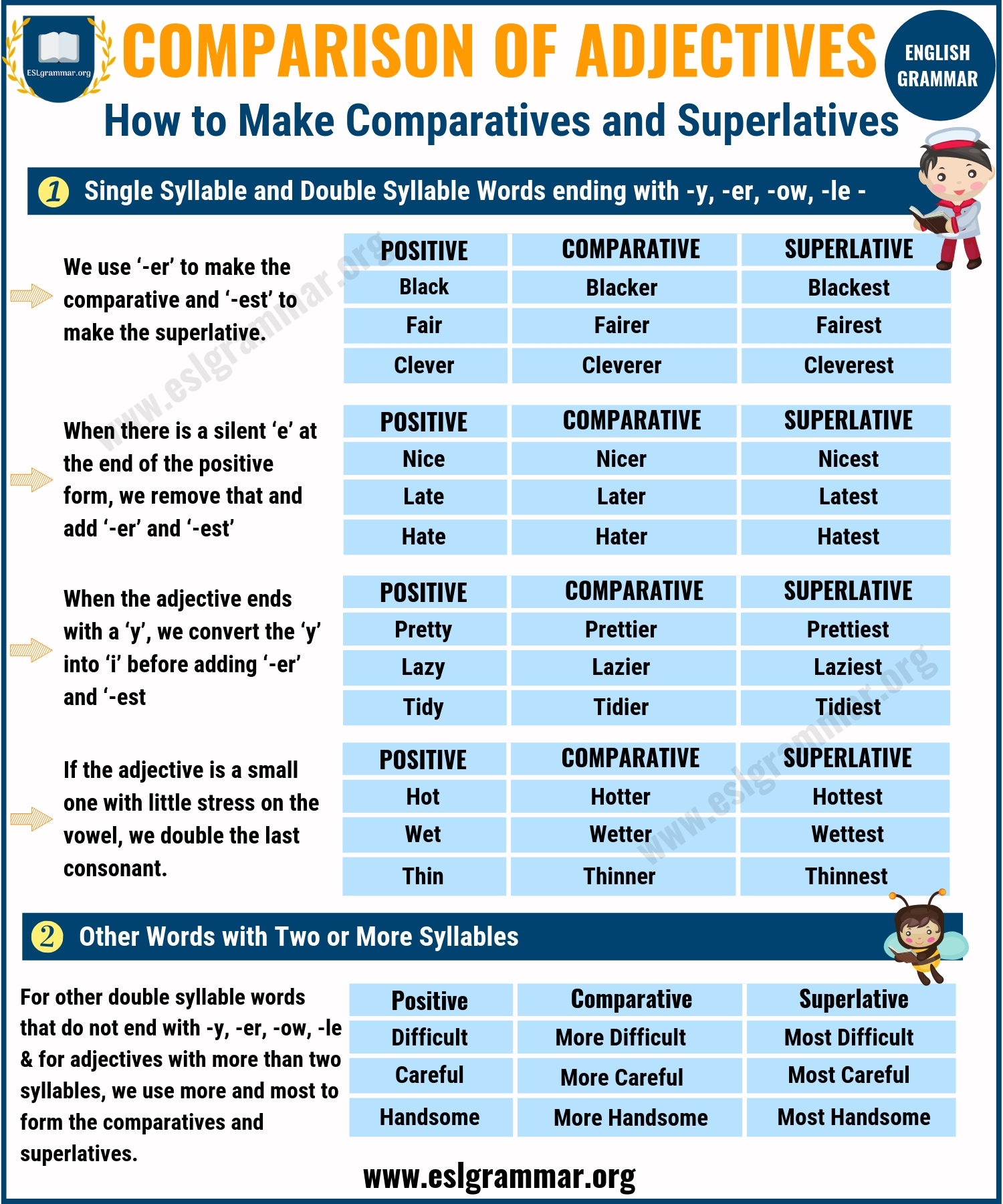 What are the three comparisons of adjectives? Explain with examples.
F. Read the passage below and underline all the adjectives in it. In your notebook, list each adjective and say which category it belongs to. Refer to the five categories mentioned at the beginning of the unit.
What are the three comparisons of adjectives? Explain with examples.
F. Read the passage below and underline all the adjectives in it. In your notebook, list each adjective and say which category it belongs to. Refer to the five categories mentioned at the beginning of the unit.
Among the many (Quantitative) girls who attended Shirley School was Cassandra Weldon. She was approaching the proud (Qualitative) position of prefect in the school. She had entered Shirley School when quite a little (Qualitative) child, had gone steadily up through the different (Qualitative) classes, until she found herself nearly at the head of the sixth (Quantitative) form. In appearance, Cassandra was a tall (Qualitative) girl, graceful (Qualitative) in her (Possessive) movements and very self-possessed (Qualitative) in manner. Her (Possessive) face was full (Qualitative) of intelligence. She had bright (Qualitative), intelligent (Qualitative), brown (Qualitative) eyes, a pleasant (Qualitative) voice, and an agreeable (Qualitative) way. Cassandra was looked up to by all (Quantitative) her (Possessive) classmates, and this not because she was rich (Qualitative), nor because she was beautiful (Qualitative), but simply because she was good (Qualitative) and honourable (Qualitative) and trustworthy (Qualitative); she possessed a large (Quantitative) amount of sympathy for everyone, her (Possessive) judgement was unfailing, and she was intelligent (Qualitative).
G. Pick out the adjectives in the following sentences and state their kind.
1. Not much milk is needed for this dish. much (Quantitative)
2. Which student of yours is going to London? which (Interrogative)
3. I bought six eggs to bake a cake. six (Quantitative)
4. All men are equal. All (Quantitative)
5. I made a silly mistake. silly (Qualitative)
6. My shoes were completely wet when I returned home. wet (Qualitative)
7. Her own mother had taught her since childhood. own (Possessive)
8. We had to take a long route to reach our destination. long (Qualitative); our (Possessive)
9. The project was a complete success. complete (Qualitative)
10. I heard some shocking news about my neighbour yesterday. some (Quantitative); shocking (Qualitative); my (Possessive)
11. Can we have some ice cream after dinner? some (Quantitative)
12. There are a dozen of bananas in the basket. dozen (Quantitative)
NOW WATCH THE VIDEOS.
R/9
16/JUNE/2020 - 20/JUNE/2020
ENGLISH LITERATURE
Chapter 3: THE WORLD-RENOWNED NOSE
Written by Vaikom Muhammad Basheer
A. Underline the adjectives in the following pair of sentences.
1. It seems a wise decision.
2. She made chocolate cake for her mother.
3. He fell unconscious on the floor.
4. He goes for walks daily to improve his health.
5. I got up early to catch an early morning train.
B. Pick out all the adjectives in the following sentences and say to which class each of them belong.
1. The car sustained heavy damage in the accident. heavy—Qualitative
2. He has written several stories. several—Quantitative
3. A dog is very faithful to its master. faithful—Qualitative; its—Possessive
4. Every man has his duties. his—Possessive
5. He is a man of few words. few—Quantitative
6. The project was very successful. successful—Qualitative
7. Which color do you prefer? color—Qualitative
8. The way was long, the wind was cold. long; cold—Qualitative
C. Complete the following sentences using an adjective belonging to the categories specified.
1. Meera is a hard-working student.(Adjective of quality)
2. The German football team won the World Cup Championship. (use a national adjective)
3. these are the passengers going to Pune. (Demonstrative adjective)
4. Not a lot of milk is required to prepare this dish. (Adjective of quantity)
5. who finished their homework first? (Interrogative adjective)
What is the difference between Possessive Adjectives and Possessive Pronouns? Give an example of both.
A possessive adjective is an adjective that is also used to show ownership in a sentence it is placed before the noun in a sentence and used to describe it. Some are my your, his/her/its, our, your, their
Example: My favourite colour is red.
A possesive pronoun shows ownership. In a sentence, it does not come before or close to a noun. Instead, it replaces the noun to avoid repetition. Some of them are mine, ours, his/ hers, ours, yours, theirs.
Example: Sheela gave a test yesterday. These test results are hers.
D. Fill in the blanks with possessive adjective or possessive pronoun.
1. The film star is a friend of mine.
2. I lose my temper very quickly.
3. The cat is sleeping because it/she/he has just had a bowl of milk.
4. I think my keys are lost.
5. Shanta watched every movement of hers; in the dance before declaring her the winner.
6. My work is no business of yours.
7. The teacher told the children to open their books.
8. A friend of mine has invited me to London.
9. How is that cousin of yours ?
10. Jatin broke his arm while playing rugby.
E. The following items are being auctioned. Make grammatically correct sentences in your notebook by putting the adjectives in the correct sequence.
One has been done for you.
gown / new / pink / an expensive / silk
an expensive new pink silk gown (opinion-age-colour-material)
1. a/picture/wooden/frame/beautiful
a beautiful wooden picture frame
2. coins/ancient/hexagonal/some/German
some ancient hexagonal German coins
3. plastic/red/chairs/kitchen/four
four red plastic kitchen chairs
4. carved/mirror/oval/attractive/an
an attractive carved oval mirror
5. miniature/painting/a/curious
a curious miniature painting
6. cup/an/Indian/gold/antique
an antique gold Indian cup
7. Swiss/early-twentieth-century/an/fountain/pen
an early-twentieth-century Swiss fountain pen
8. copper/vessels/cooking/two/African
two African copper cooking vessels
9. colourful/satin/soft/new/cushion
new colourful soft satin cushion
10. porcelain/teapot/round/pink/Chinese
round pink Chinese porcelain teapot
What are the three comparisons of adjectives? Explain with examples.
F. Read the passage below and underline all the adjectives in it. In your notebook, list each adjective and say which category it belongs to. Refer to the five categories mentioned at the beginning of the unit.
Among the many (Quantitative) girls who attended Shirley School was Cassandra Weldon. She was approaching the proud (Qualitative) position of prefect in the school. She had entered Shirley School when quite a little (Qualitative) child, had gone steadily up through the different (Qualitative) classes, until she found herself nearly at the head of the sixth (Quantitative) form. In appearance, Cassandra was a tall (Qualitative) girl, graceful (Qualitative) in her (Possessive) movements and very self-possessed (Qualitative) in manner. Her (Possessive) face was full (Qualitative) of intelligence. She had bright (Qualitative), intelligent (Qualitative), brown (Qualitative) eyes, a pleasant (Qualitative) voice, and an agreeable (Qualitative) way. Cassandra was looked up to by all (Quantitative) her (Possessive) classmates, and this not because she was rich (Qualitative), nor because she was beautiful (Qualitative), but simply because she was good (Qualitative) and honourable (Qualitative) and trustworthy (Qualitative); she possessed a large (Quantitative) amount of sympathy for everyone, her (Possessive) judgement was unfailing, and she was intelligent (Qualitative).
G. Pick out the adjectives in the following sentences and state their kind.
1. Not much milk is needed for this dish. much (Quantitative)
2. Which student of yours is going to London? which (Interrogative)
3. I bought six eggs to bake a cake. six (Quantitative)
4. All men are equal. All (Quantitative)
5. I made a silly mistake. silly (Qualitative)
6. My shoes were completely wet when I returned home. wet (Qualitative)
7. Her own mother had taught her since childhood. own (Possessive)
8. We had to take a long route to reach our destination. long (Qualitative); our (Possessive)
9. The project was a complete success. complete (Qualitative)
10. I heard some shocking news about my neighbour yesterday. some (Quantitative); shocking (Qualitative); my (Possessive)
11. Can we have some ice cream after dinner? some (Quantitative)
12. There are a dozen of bananas in the basket. dozen (Quantitative)
2. Which student of yours is going to London? which (Interrogative)
3. I bought six eggs to bake a cake. six (Quantitative)
4. All men are equal. All (Quantitative)
5. I made a silly mistake. silly (Qualitative)
6. My shoes were completely wet when I returned home. wet (Qualitative)
7. Her own mother had taught her since childhood. own (Possessive)
8. We had to take a long route to reach our destination. long (Qualitative); our (Possessive)
9. The project was a complete success. complete (Qualitative)
10. I heard some shocking news about my neighbour yesterday. some (Quantitative); shocking (Qualitative); my (Possessive)
11. Can we have some ice cream after dinner? some (Quantitative)
12. There are a dozen of bananas in the basket. dozen (Quantitative)
NOW WATCH THE VIDEOS.
R/9
16/JUNE/2020 - 20/JUNE/2020
ENGLISH LITERATURE
Chapter 3: THE WORLD-RENOWNED NOSE
Written by Vaikom Muhammad Basheer
Synopsis of the Chapter.
The World-Renowned Nose is a satire in which a person grows a nose to such a length that individuals who at the start saw it was revolted by the sight. The man's Nose became a supplier of despair and humility for him. Because of the Polemic nose, the young man became a millionaire, an actor, and a politician. Besides, his long nose brought him trouble also.
The author is making fun of the way in which we make heroes out of various people from different walks of life. It is easy for such people to gain prominent position in society. It is also easy for such people to fall from grace.
EXPLAINED:
1. The whole of Chapter 3.
2. Words to know on Page 48.
3. Questions and answers on Page 49.
4. The meanings of the italicized words in sentences.
5. How to answer questions with reference to context.
6. A briefing about the author.
7. Fill in the blanks.
8. True or False.
9. Match the following.
10. Learn the words and find the meanings.
MAIN TEACHING:
Oral and Explanation Online with some written work.
1. Explain the story.
2. The whole story being a Satire and understanding what is meant by it.
ASSIGNMENTS:
Read Chapter 3 fully.
Learn words to know on Page 48
1. Answer the following questions.
a) Does the author give us a reason why the twenty-fourth year of a person's life is significant?
b) Why was the man dismissed?
c) How did the man's decision to keep visitors out of his hut have a fortunate result?
d) How did the Government try to capture the long-nosed man?
e) How was confusion caused in the minds of the people?
f) How did the doctors prove that the nose was genuine?
g) What do you think happened in the man's first feature film?
h) The author tells us: 'Newspapers published his comments.' What comments does he make, about which subjects? What is the author trying to tell us by giving us this information?
 i) What rumours were spread about the long-nosed one and by whom? Why were the rumours spread?
j) What is satirical about the story?
i) What rumours were spread about the long-nosed one and by whom? Why were the rumours spread?
j) What is satirical about the story?
2. What do you understand by the following?
a) His daily routine was confined to these activities.
His daily routine was limited to these activities.
b) Expectant years slip by and the trees bear fruit.
Here the years are described as expectant (just as a mother-to-be is ‘expectant’ and a fruit bearing tree is expectant). The years are full of new things to hope for.
c) Conspiracies were hatched.
Many plots and schemes were planned.
d) United Front
A joining of forces with a common aim, objective or 'front'.
3. Answer the following questions with reference to context.
a) Students of history need hardly be told this.
i) What is it that students of history need not be told?
ii) How does the life of the main character of the story change?
b) As the dismissed cook sat starving in his lowly hut, he was convinced of one thing: his nose had acquired great publicity!
i) Did anyone come to explain this to him?
ii) How did the publicity change his life initially?
iii) How did it change his life in the long run?
c) As this shouting and revelry ended, the President thought of another gimmick.
i) What is a gimmick?
ii) What was the first gimmick that the President tried?
iii) Did the members of the press try any gimmicks? Why?
 4. Fill in the blanks from the chapter.
a) No lover of humanity came forward to help.
b) Good fortune dawned on the mother and son after that day!
c) That long nose reaching down to the navel was considered a sign of greatness.
d) They tried a confidence trick.
e) 'Destruction to the rubber nose of the long-nosed one!
f) The doctors surrounded the long-nosed one in the presence of the president and the cabinet ministers.
g) What would the poor intellectuals do?
4. Fill in the blanks from the chapter.
a) No lover of humanity came forward to help.
b) Good fortune dawned on the mother and son after that day!
c) That long nose reaching down to the navel was considered a sign of greatness.
d) They tried a confidence trick.
e) 'Destruction to the rubber nose of the long-nosed one!
f) The doctors surrounded the long-nosed one in the presence of the president and the cabinet ministers.
g) What would the poor intellectuals do?
5. True or False:-
6. Match the following numbers with letters to complete the following sentences.
1) When it was time for him to receive his salary
2) As the dismissed cook sat starving in his lonely hut,
3) Many protested against the inaction of the Government
4) Nine well-known writers wrote biographies of
5) One morning the army and their tanks
a) and joined revolutionary parties, out to sabotage the Government!
b) surrounded the house of the poor long-nosed one.
c) his mother would come and take it.
d) he was convinced of one thing: his nose had acquired great publicity!
e) the long-nosed one and won wealth and acclaim.
ANSWERS:
1 - c
2 - d
3 - a
4 - e
5 - b
7. Learn the words and find the meanings to the words below from your dictionary.
1) Distinguish
2) Publicity
3) Conquest
4) Enthusiastically
5) Revolutionary
6) Bejewelled
7) Fraud
8) Intellectual
R/8
Synopsis of the Chapter.
i) What rumours were spread about the long-nosed one and by whom? Why were the rumours spread?
The World-Renowned Nose is a satire in which a person grows a nose to such a length that individuals who at the start saw it was revolted by the sight. The man's Nose became a supplier of despair and humility for him. Because of the Polemic nose, the young man became a millionaire, an actor, and a politician. Besides, his long nose brought him trouble also.
The author is making fun of the way in which we make heroes out of various people from different walks of life. It is easy for such people to gain prominent position in society. It is also easy for such people to fall from grace.
EXPLAINED:
1. The whole of Chapter 3.
2. Words to know on Page 48.
3. Questions and answers on Page 49.
4. The meanings of the italicized words in sentences.
5. How to answer questions with reference to context.
6. A briefing about the author.
7. Fill in the blanks.
8. True or False.
9. Match the following.
10. Learn the words and find the meanings.
MAIN TEACHING:
Oral and Explanation Online with some written work.
1. Explain the story.
2. The whole story being a Satire and understanding what is meant by it.
ASSIGNMENTS:
Read Chapter 3 fully.
Learn words to know on Page 48
1. Answer the following questions.
a) Does the author give us a reason why the twenty-fourth year of a person's life is significant?
b) Why was the man dismissed?
c) How did the man's decision to keep visitors out of his hut have a fortunate result?
d) How did the Government try to capture the long-nosed man?
e) How was confusion caused in the minds of the people?
f) How did the doctors prove that the nose was genuine?
g) What do you think happened in the man's first feature film?
h) The author tells us: 'Newspapers published his comments.' What comments does he make, about which subjects? What is the author trying to tell us by giving us this information?
 i) What rumours were spread about the long-nosed one and by whom? Why were the rumours spread?
j) What is satirical about the story?
2. What do you understand by the following?
a) His daily routine was confined to these activities.
His daily routine was limited to these activities.
b) Expectant years slip by and the trees bear fruit.
Here the years are described as expectant (just as a mother-to-be is ‘expectant’ and a fruit bearing tree is expectant). The years are full of new things to hope for.
c) Conspiracies were hatched.
Many plots and schemes were planned.
d) United Front
A joining of forces with a common aim, objective or 'front'.
3. Answer the following questions with reference to context.
a) Students of history need hardly be told this.
i) What is it that students of history need not be told?
ii) How does the life of the main character of the story change?
b) As the dismissed cook sat starving in his lowly hut, he was convinced of one thing: his nose had acquired great publicity!
i) Did anyone come to explain this to him?
ii) How did the publicity change his life initially?
iii) How did it change his life in the long run?
c) As this shouting and revelry ended, the President thought of another gimmick.
i) What is a gimmick?
ii) What was the first gimmick that the President tried?
iii) Did the members of the press try any gimmicks? Why?
a) and joined revolutionary parties, out to sabotage the Government!
5) Revolutionary
6) Bejewelled
7) Fraud
8) Intellectual
R/8
3. Answer the following questions with reference to context.
a) Students of history need hardly be told this.
i) What is it that students of history need not be told?
ii) How does the life of the main character of the story change?
b) As the dismissed cook sat starving in his lowly hut, he was convinced of one thing: his nose had acquired great publicity!
i) Did anyone come to explain this to him?
ii) How did the publicity change his life initially?
iii) How did it change his life in the long run?
c) As this shouting and revelry ended, the President thought of another gimmick.
i) What is a gimmick?
ii) What was the first gimmick that the President tried?
iii) Did the members of the press try any gimmicks? Why?

4. Fill in the blanks from the chapter.
a) No lover of humanity came forward to help.
b) Good fortune dawned on the mother and son after that day!
c) That long nose reaching down to the navel was considered a sign of greatness.
d) They tried a confidence trick.
e) 'Destruction to the rubber nose of the long-nosed one!
f) The doctors surrounded the long-nosed one in the presence of the president and the cabinet ministers.
g) What would the poor intellectuals do?
5. True or False:-
a) The hero of our story is a cook. TRUE
b) The long-nosed one acted in a film called the Human Fly. FALSE
c) The cook became a millionaire in 6 years. TRUE
d) The long-nosed one had 3 secretaries. FALSE
e) The long nose was made of rubber. FALSE
6. Match the following numbers with letters to complete the following sentences.
1) When it was time for him to receive his salary
2) As the dismissed cook sat starving in his lonely hut,
3) Many protested against the inaction of the Government
4) Nine well-known writers wrote biographies of
5) One morning the army and their tanks
a) and joined revolutionary parties, out to sabotage the Government!
b) surrounded the house of the poor long-nosed one.
c) his mother would come and take it.
d) he was convinced of one thing: his nose had acquired great publicity!
e) the long-nosed one and won wealth and acclaim.
ANSWERS:
1 - c
2 - d
3 - a
4 - e
5 - b
7. Learn the words and find the meanings to the words below from your dictionary.
1) Distinguish
2) Publicity
3) Conquest
4) Enthusiastically5) Revolutionary
6) Bejewelled
7) Fraud
8) Intellectual
R/8

09/06/2020 - 15/06/2020
ENGLISH COMPOSITION
Ch. 9 CLAUSES
ENGLISH COMPOSITION
Ch. 9 CLAUSES
What is a clause?
A clause is a group of words that contain a finite verb and forms part of a sentence.
What is a clause?
A clause is a group of words that contain a finite verb and forms part of a sentence.
Examples:
(a) My friend who has autism is brilliant at quizzes.
(b) I cannot remember what happened last night.
EXPLAINED:
EXPLAINED:
1. The whole of chapter 19.
2. The classifications of different types of Clauses.
3. The characterization of subordinate clauses.
4. What are the functions of a Noun Clause? With examples in sentence form.
5. What is an Adjective Clause with examples.
6. What are the functions of an adjective clause?
7. Punctuating the Adjective Clause correctly.
8. What is an Adverb Clause? Explain with examples in sentence form.
9. The different types of Adverb Clauses with examples.
10. The usage of different Clauses.
2. The classifications of different types of Clauses.
3. The characterization of subordinate clauses.
4. What are the functions of a Noun Clause? With examples in sentence form.
5. What is an Adjective Clause with examples.
6. What are the functions of an adjective clause?
7. Punctuating the Adjective Clause correctly.
8. What is an Adverb Clause? Explain with examples in sentence form.
9. The different types of Adverb Clauses with examples.
10. The usage of different Clauses.
MAIN TEACHING:
Oral and Explanation Online with some written work.
All exercises of chapter 19 explained along with the help of images displayed.
 ASSIGNMENTS:
1. What is a Clause? Explain with examples in sentence form.
ASSIGNMENTS:
1. What is a Clause? Explain with examples in sentence form.
EXAMPLE
Incase things don't go as planned.
2. How many kinds of Subordinate Clauses are there?.
3. What is a Noun Clause? Explain with examples in sentence form.
A Noun Clause is a group of words (doing the work of a noun) with a subject and a verb that can be a subject, object or object of proposition in a sentence.
EXAMPLE
Rohit has informed me that our team has won the tournament.
4. What are the functions of a Noun Clause?.
In the following expressions, the verbs do not express a complete thought:
A) Combine each pair of sentences given below to form a complex sentence, following prompts provided in brackets. Refer to examples given above. One has been done for you.
1. Something happened at the party. It surprised everyone.
(Begin with 'What...'. Dependent clause: subject of the verb 'surprised')
What happened at the party surprised everyone.......................
2. Someone will score the highest marks. He (or she) will win the award
(Begin with 'Whoever....' Dependent clause: subject of the verb 'will win')
Whoever scores the highest marks will win the award.
3. He wants something. Give it to him.
(Begin with 'Give...' Dependent clause: object of the verb 'give')
Give him what he wants.
4. I was sad. He asked me something about this.
(Begin with 'He asked...' Dependent clause: object of the verb 'asked'
He asked me why I was sad.
5. I know she likes new fashion. So I sent her an invitation to the fashion show.
(Begin with 'Knowing...' Dependent clause: object of the participate 'knowing')
Knowing that she likes new fashion, I sent her an invitation to the fashion show.
6. I told him the secret. I believed he would not betray me.
(Begin with 'Believing...' Dependent clause: object of the participate 'believing')
Believing he would not betray me, I told him the secret.
7. He wrote me a letter. He hoped he would visit Kolkata soon.
(Begin with 'He wrote to say...' Dependent clause: object of the infinitive 'to say')
He wrote to say that he hoped to visit Karachi soon.
8. My sister phoned to tell me something. She said our mother was very ill.
(Begin with 'My sister phoned to inform me...' Dependent clause: object of the infinitive 'to inform')
My sister phoned to inform me that our mother was very ill.
9. Your health depends on something important. You must take care of your health.
(Begin with 'Your health...' Dependent clause: object of the preposition 'on'
Our health depends on you taking care of it.
10. You have made a suggestion. No one will agree with it.
(Begin with 'No one...' Dependent clause: object of the preposition 'with')
No one will agree to your suggestion.
5. What is an Adjective Clause? explain with examples in sentence form.
An Adjective Clause is a dependent Clause that, like an adjective, modifies a noun or pronoun. An Adjective Clause begins with words such as that, when, where, who, whom, whose, which and why.
EXAMPLE
We're going to the beach that I like best
6. What are the functions of an Adjective Clause? explain with examples.
There are five functions of and Adjective Clause.
1. Modifying the subject. Ex. The gift which Ravi brought was the best.
2. Modifying a Noun in the Predicate. Ex. She is the girl that won the Topper's Trophy.
3. Modifying the Direct Object. Ex. The dog fetched the ball that his master threw.
4. Modifying the Indirect Object. Ex. We sent flowers to Abhishek who was unwell.
5. Modifying the Object of Preposition. Ex. We walked down the road which is famous for it's cafes .
B) Fill in the blanks in the sentences given below with appropriate relative pronouns or adverbs.
C) Combine the following sets of sentences using adjective clauses.
1. The man has been sent to prison. He robbed a bank.
The man who has been sent to prison had robbed a bank.
2. The scientist won the Nobel Prize. He found a cure for cancer.
The scientist who won the Nobel prize had found the cure for cancer.
3. The bomb caused a lot of damage. It exploded in the market.
The bomb that caused a lot of damage exploded in the market.
4. A shop was robbed last night. The shop sells jewellery.
The shop that was robbed last night sells jewellery.
5. The young woman is in the cabin. She has come to meet the chairman.
The young woman who had come to meet the chairman is in the cabin.
6. The place is now in ruins. It was once known for its natural beauty.
The place, that was once known for its natural beauty, is now in ruins.
7. The athlete has been banned from games. He took drugs.
The athlete who has been banned from games had cheated.
8. The little girl has been found safe and well. She was missing since Sunday.
The little girl who was found safe and sound was missing since Sunday.
9. I returned the book. I had borrowed it from the school library.
I have returned the book that I had borrowed from the school library.
10. We struggled up the hill. It was very steep in places.
We struggled to go up the hill that was steep in places.
Punctuating the adjective clause correctly
An adjective clause perform the role of a defining clause, which means that it helps us to define or identify the person, place or object being referred to in the independent clause. If this clause is removed from the sentence, we are not sure which specific person, place or object is being referred to. The adjective clause is thus not separated from the rest of the sentence with commas. Non-defining clauses are always separated from the rest of the sentence with commas or parentheses.
Examples:
(a) My cousin, who is only 16 years old, has been admitted to Oxford University.
D) Insert commas in the sentences below wherever you think they are required.
1. My only niece who lives in China sent me a parcel by speed-post.
My only niece, who lives in China, has sent me a parcel by speedpost.
2. Do you know the man who is sitting at the corner table?
No comma required.
3. Raja who is my best friend has emigrated to Australia.
Asim, who is my best friend, has emigrated to Australia.
4. The shirt which I bought last month does not fit me any more.
The shirt which I bought last month, does not fit me any more.
5. My friend Mary whose father is English speaks four Indian languages.
My friend Mary, whose father is English, speaks four European languages.
6. She is a girl with whom I have been friends for many years.
No comma required.
7. Leonardo da Vinci who painted the Mona Lisa was a skilled engineer and inventor.
Leonardo da Vinci, who painted the Mona Lisa, was a skilled engineer and inventor.
8. The new supermarket which we visited yesterday is remarkable.
The new supermarket which we visited yesterday, is remarkable.
9. This is the school where I studied for five years.
No comma required.
10. My son who started playing the piano when he was seven is famous today.
My son, who started playing the piano when he was seven, is famous today.
7. What is an Adverb Clause? Explain with sentences in question form.
a) What is Adverb Clause of time? Explain with examples.
E) Combine the following sentences by using adverb clauses as directed.
1. I reached the station. The train had already left. (adverb clause of time)
When I reached the station, the train had already left.
2. I shall go. I shall go to the places as you, (adverb clause of place)
I shall go to the same hill station where you are going.
3. She walks home. She wants to get some exercise. (adverb clause of reason)
She walks home as she wants to get some exercise.
4. He is tall. I am taller. (adverb clause of comparison)
I am taller than he is.
5. The child cried in fear. He saw a snake. (adverb clause of reason)
The child cried in fear because he saw a snake.
6. Ravi is kind. Gita is equally kind. (adverb clause of reason)
Gita is as kind as Ravi.
7. He is happy. He got the job. (adverb clause of reason)
He is happy because he got the job.
8. You should not go out. You are very weak (adverb clause of comparison)
You should not go out, because you are very weak.
9. The bell rang. The teacher left the class immediately. (adverb clause of time)
When the bell rang, the teacher left the class immediately.
10.I went to the same school as my father. He had studied there 30 years ago. (adverb clause of place)
I went to the same school where my father studied 30 years ago.
d) What is Adverb Clause of Purpose? Explain with examples.
A clause which is used to tell you about the purpose of the verb in the main clause is called Adverb Clause of Purpose.
EXAMPLE
He arrived earlier, so that he would not be late.
F) Combine the following sentences by using adverb clause of purpose and the conjunctions so that, that, in order to or lest.
1. We left home early. We could reach the station in time.
We left home early so that we could reach the station in time.
2. Wear a pullover. You don't catch a cold.
Wear a pullover so that you don’t catch a cold.
3. You must ride carefully. You should fall down.
You must ride carefully lest you fall down.
4. Ships carry lifeboats. Crew can escape if the ship sinks.
Ships carry lifeboats so that the crew can escape if the ship sinks.
5. I always keep candles in the house. There should be a power cut.
I always keep candles in the house lest there should be a power cut.
6. You must study diligently. You can do well in your final exams.
You must study diligently so you can do well in your final exams.
7. We need to meet him at once. We must persuade him to change his mind
We must meet him once so as to persuade him to change his mind.
8. Set the alarm clock. You may oversleep.
Set the alarm clock lest you may oversleep.
9. The farmers staged a demonstration. They wanted to put forward their demands.
The farmers staged a demonstration to put forward their demands.
10.Talk to him with respect. He should not feel insulted.
Talk to him with respect so that he doesn’t feel insulted.
e) What is adverb clause of result/consequence? Explain with examples.
An adverb clause of result is used to say what happens or what may happen as a result of the action mentioned in the main clause.
EXAMPLE
It was such a nice dress that she bought it.
G) Complete the following sentences by adding an adverb clause of result. Use the conjunctions so ... that, such ... that.
f) What is adverb Clause of concession/contrast? Explain with examples.
An adverb of concession offers a statement which contrasts with the main idea.
EXAMPLE
I would like to go out although it is raining.
H) Link the following contrasting statements together by changing one into an adverb clause of concession.
g) What is adverb Clause of manner? Explain with examples.
EXAMPLE
Krish walked past as if he hadn't seen us.
I) Match the Clauses columns A and B to form complex sentences using adverbial clauses of manner. You will need to add an appropriate subordinating conjunction (as, as if, as though, like).
in her new dress (c) a ghost was behind him.
he walked around (d) I had gone mad.
1 - c
2 - e
3 - a
4 - b
5 - d
h) What is adverb Clause of condition? Explain with examples.
Adverb clauses of condition are introduced by the subordinating conjunctions if, whether, provided that, so long as and unless.
- If I like it, I will buy it.
- If you heat ice, it melts.
J) Fill in the blanks in the sentences that follow with appropriate subordinating conjunctions.
K) Combine the following sentences using if or unless.
L) Read through the following paragraph. Make the writing more interesting by using a variety of complex sentence structures, using the noun, adjective and adverbial dependent clauses you have practiced in this chapter.
My sixteen-year-old brother Ravi is a famous musician. He displayed interest in playing the piano early in his life. He was seven years old at that time. He owns a piano. It belonged to his grandfather. His grandfather gave him this piano. He knew how serious he was about his music. Ravi is busy preparing for his school-leaving examinations. He still finds time to practice his music. He also does live concerts. He has many fans. They are in all the places he goes to. They love him a lot. They consider him a member of their family. He achieved much fame at an early age. His family is surprised by this.
NOW WATCH THE VIDEO.
R/7
ENGLISH POETRY
WHERE THE MIND IS WITHOUT FEAR
Poem by Rabindranath Tagore
1. What is a Clause? Explain with examples in sentence form.
A clause is group of words that contains a finite verb and forms part of a sentence.
EXAMPLE
Incase things don't go as planned.
2. How many kinds of Subordinate Clauses are there?.
There are three kinds of Subordinate Clauses.
1.The Noun Clause
2.The Adjective Clause
3.The Adverb Clause
3. What is a Noun Clause? Explain with examples in sentence form.
A Noun Clause is a group of words (doing the work of a noun) with a subject and a verb that can be a subject, object or object of proposition in a sentence.
EXAMPLE
Rohit has informed me that our team has won the tournament.
4. What are the functions of a Noun Clause?.
There are seven functions of a Noun Clause.
1.Subject of a Verb: Who will be selected for the post is not certain.
2.Object of a Verb: I forgot what you had told me.
3.Object of a Participle: Learning that I was ill he came to visit me.
4.Object of an Infinitive: He came to tell me that the school was closed.
5.Object of Preposition: They somehow live on what they earn.
6.Complement of an Intransitive Verb of Incomplete Predication: Life is what we make it.
7.In Apposition (Addition) to a Noun or Pronoun: The news that a plane had crashed came as a shock to me.
In the following expressions, the verbs do not express a complete thought:
The boy is..... The man was..... They are thus called verbs of incomplete predication. Words added to complete the meaning of a verb of incomplete predication are called its complement.
The boy is clever. The man was old and grey.
A) Combine each pair of sentences given below to form a complex sentence, following prompts provided in brackets. Refer to examples given above. One has been done for you.
1. Something happened at the party. It surprised everyone.
(Begin with 'What...'. Dependent clause: subject of the verb 'surprised')
What happened at the party surprised everyone.......................
2. Someone will score the highest marks. He (or she) will win the award
(Begin with 'Whoever....' Dependent clause: subject of the verb 'will win')
Whoever scores the highest marks will win the award.
3. He wants something. Give it to him.
(Begin with 'Give...' Dependent clause: object of the verb 'give')
Give him what he wants.
4. I was sad. He asked me something about this.
(Begin with 'He asked...' Dependent clause: object of the verb 'asked'
He asked me why I was sad.
5. I know she likes new fashion. So I sent her an invitation to the fashion show.
(Begin with 'Knowing...' Dependent clause: object of the participate 'knowing')
Knowing that she likes new fashion, I sent her an invitation to the fashion show.
6. I told him the secret. I believed he would not betray me.
(Begin with 'Believing...' Dependent clause: object of the participate 'believing')
Believing he would not betray me, I told him the secret.
7. He wrote me a letter. He hoped he would visit Kolkata soon.
(Begin with 'He wrote to say...' Dependent clause: object of the infinitive 'to say')
He wrote to say that he hoped to visit Karachi soon.
8. My sister phoned to tell me something. She said our mother was very ill.
(Begin with 'My sister phoned to inform me...' Dependent clause: object of the infinitive 'to inform')
My sister phoned to inform me that our mother was very ill.
9. Your health depends on something important. You must take care of your health.
(Begin with 'Your health...' Dependent clause: object of the preposition 'on'
Our health depends on you taking care of it.
10. You have made a suggestion. No one will agree with it.
(Begin with 'No one...' Dependent clause: object of the preposition 'with')
No one will agree to your suggestion.
5. What is an Adjective Clause? explain with examples in sentence form.
An Adjective Clause is a dependent Clause that, like an adjective, modifies a noun or pronoun. An Adjective Clause begins with words such as that, when, where, who, whom, whose, which and why.
EXAMPLE
We're going to the beach that I like best
6. What are the functions of an Adjective Clause? explain with examples.
There are five functions of and Adjective Clause.
1. Modifying the subject. Ex. The gift which Ravi brought was the best.
2. Modifying a Noun in the Predicate. Ex. She is the girl that won the Topper's Trophy.
3. Modifying the Direct Object. Ex. The dog fetched the ball that his master threw.
4. Modifying the Indirect Object. Ex. We sent flowers to Abhishek who was unwell.
5. Modifying the Object of Preposition. Ex. We walked down the road which is famous for it's cafes .
B) Fill in the blanks in the sentences given below with appropriate relative pronouns or adverbs.
1. My sister, who lives in Mumbai, has just completed her graduation.
2. This is the place where we met for the first time.
3. She is the girl with whom I travelled to Japan last year.
4. I will never forget the time when we met for the first time.
5. The police spoke to the man whose son had met with an accident.
6. I would like to see the book that you bought at the book fair.
7. Do you remember how you saved me when I was drowning?
8. This is the same car in which I travelled to Dehradun last year.
9. This holiday we plan to visit the town where we were born.
10. My English teacher, with whom I had a good relationship, has retired.
C) Combine the following sets of sentences using adjective clauses.
1. The man has been sent to prison. He robbed a bank.
The man who has been sent to prison had robbed a bank.
2. The scientist won the Nobel Prize. He found a cure for cancer.
The scientist who won the Nobel prize had found the cure for cancer.
3. The bomb caused a lot of damage. It exploded in the market.
The bomb that caused a lot of damage exploded in the market.
4. A shop was robbed last night. The shop sells jewellery.
The shop that was robbed last night sells jewellery.
5. The young woman is in the cabin. She has come to meet the chairman.
The young woman who had come to meet the chairman is in the cabin.
6. The place is now in ruins. It was once known for its natural beauty.
The place, that was once known for its natural beauty, is now in ruins.
7. The athlete has been banned from games. He took drugs.
The athlete who has been banned from games had cheated.
8. The little girl has been found safe and well. She was missing since Sunday.
The little girl who was found safe and sound was missing since Sunday.
9. I returned the book. I had borrowed it from the school library.
I have returned the book that I had borrowed from the school library.
10. We struggled up the hill. It was very steep in places.
We struggled to go up the hill that was steep in places.
Punctuating the adjective clause correctly
An adjective clause perform the role of a defining clause, which means that it helps us to define or identify the person, place or object being referred to in the independent clause. If this clause is removed from the sentence, we are not sure which specific person, place or object is being referred to. The adjective clause is thus not separated from the rest of the sentence with commas. Non-defining clauses are always separated from the rest of the sentence with commas or parentheses.
An adjective clause perform the role of a defining clause, which means that it helps us to define or identify the person, place or object being referred to in the independent clause. If this clause is removed from the sentence, we are not sure which specific person, place or object is being referred to. The adjective clause is thus not separated from the rest of the sentence with commas. Non-defining clauses are always separated from the rest of the sentence with commas or parentheses.
Examples:
(a) My cousin, who is only 16 years old, has been admitted to Oxford University.
(b) Dinosaurs, which are now completely extinct, dominated the earth millions of years ago.
(c) Meteors, that fly around space, sometimes crash to the earth.
D) Insert commas in the sentences below wherever you think they are required.
1. My only niece who lives in China sent me a parcel by speed-post.
My only niece, who lives in China, has sent me a parcel by speedpost.
2. Do you know the man who is sitting at the corner table?
No comma required.
3. Raja who is my best friend has emigrated to Australia.
Asim, who is my best friend, has emigrated to Australia.
4. The shirt which I bought last month does not fit me any more.
The shirt which I bought last month, does not fit me any more.
5. My friend Mary whose father is English speaks four Indian languages.
My friend Mary, whose father is English, speaks four European languages.
6. She is a girl with whom I have been friends for many years.
No comma required.
7. Leonardo da Vinci who painted the Mona Lisa was a skilled engineer and inventor.
Leonardo da Vinci, who painted the Mona Lisa, was a skilled engineer and inventor.
8. The new supermarket which we visited yesterday is remarkable.
The new supermarket which we visited yesterday, is remarkable.
9. This is the school where I studied for five years.
No comma required.
10. My son who started playing the piano when he was seven is famous today.
My son, who started playing the piano when he was seven, is famous today.
7. What is an Adverb Clause? Explain with sentences in question form.
8. How many types of Adverb Clauses are there? Name them.
a) What is Adverb Clause of time? Explain with examples.
b) What is Adverb Clause of Place? Explain with examples.
c) What is Adverb Clause of Reason? Explain with examples.
d) What is Adverb Clause of Degree or Comparison? Explain with examples.

1. I reached the station. The train had already left. (adverb clause of time)
When I reached the station, the train had already left.
2. I shall go. I shall go to the places as you, (adverb clause of place)
I shall go to the same hill station where you are going.
3. She walks home. She wants to get some exercise. (adverb clause of reason)
She walks home as she wants to get some exercise.
4. He is tall. I am taller. (adverb clause of comparison)
I am taller than he is.
5. The child cried in fear. He saw a snake. (adverb clause of reason)
The child cried in fear because he saw a snake.
6. Ravi is kind. Gita is equally kind. (adverb clause of reason)
Gita is as kind as Ravi.
7. He is happy. He got the job. (adverb clause of reason)
He is happy because he got the job.
8. You should not go out. You are very weak (adverb clause of comparison)
You should not go out, because you are very weak.
9. The bell rang. The teacher left the class immediately. (adverb clause of time)
When the bell rang, the teacher left the class immediately.
10.I went to the same school as my father. He had studied there 30 years ago. (adverb clause of place)
I went to the same school where my father studied 30 years ago.
d) What is Adverb Clause of Purpose? Explain with examples.
A clause which is used to tell you about the purpose of the verb in the main clause is called Adverb Clause of Purpose.
EXAMPLE
He arrived earlier, so that he would not be late.
F) Combine the following sentences by using adverb clause of purpose and the conjunctions so that, that, in order to or lest.
1. We left home early. We could reach the station in time.
We left home early so that we could reach the station in time.
2. Wear a pullover. You don't catch a cold.
Wear a pullover so that you don’t catch a cold.
3. You must ride carefully. You should fall down.
You must ride carefully lest you fall down.
4. Ships carry lifeboats. Crew can escape if the ship sinks.
Ships carry lifeboats so that the crew can escape if the ship sinks.
5. I always keep candles in the house. There should be a power cut.
I always keep candles in the house lest there should be a power cut.
6. You must study diligently. You can do well in your final exams.
You must study diligently so you can do well in your final exams.
7. We need to meet him at once. We must persuade him to change his mind
We must meet him once so as to persuade him to change his mind.
8. Set the alarm clock. You may oversleep.
Set the alarm clock lest you may oversleep.
9. The farmers staged a demonstration. They wanted to put forward their demands.
The farmers staged a demonstration to put forward their demands.
10.Talk to him with respect. He should not feel insulted.
Talk to him with respect so that he doesn’t feel insulted.
e) What is adverb clause of result/consequence? Explain with examples.
An adverb clause of result is used to say what happens or what may happen as a result of the action mentioned in the main clause.
EXAMPLE
It was such a nice dress that she bought it.
G) Complete the following sentences by adding an adverb clause of result. Use the conjunctions so ... that, such ... that.
1. This place is_________beautiful_____________________
This place is so beautiful that we have been taking pictures all day.
2. There was_________a noise________________________
There was such a noise that I was scared.
3. My mother is_________a good cook__________________
My mother is such a good cook that she can make the tastiest dishes with the simplest ingredients.
4. They had_________much money____________________
They had so much money that they bought a yacht for their cat.
5. Tie up your shoe laces_____________________________
Tie up your shoelaces so that you don’t trip.
6. The artists were_________late that the show___________
The artists were so late that the show was almost cancelled.
7. The storm was_________severe_____________________
The storm was so severe that the ships flipped upside down.
8. They fought_________fiercely_______________________
They fought so fiercely that every body had to say to stop the fight.
9. His explanation was_________convincing _____________
His explanation was so convincing that everyone listened attentively.
10. He spoke in_________a quiet manner_________________
He spoke in such a quiet manner that the teacher had to come to his place to listen.
f) What is adverb Clause of concession/contrast? Explain with examples.
An adverb of concession offers a statement which contrasts with the main idea.
EXAMPLE
I would like to go out although it is raining.
H) Link the following contrasting statements together by changing one into an adverb clause of concession.
1. The rich have money. They want to make more money
Although the rich have money, they want to make more money.
2. The teacher gave him sixty marks. He deserved less.
The teacher gave him sixty marks even though he deserved less.
3. You may say anything. I don't believe a word of it.
Although you may say it’s true, I don’t believe a word of it.
4. He is poor. He is happy.
Even though he is poor, he is happy.
5. Life has been very difficult for him. He has never given up hope.
Although life has been very difficult for him, he has never given up hope.
6. It is raining heavily. I shall go to school.
Even if it is raining heavily, I shall go to school.
7. She lent me money. She herself did not have much.
She lent me money even though she did not have much herself.
8. He drove very carefully. He couldn't avoid an accident.
Although he drove very carefully, he couldn’t avoid an accident.
9. I will not help you. You may beg me to.
I will not help you even if you beg me to.
10. It doesn't matter how much you may want to be in Olympic team. You cannot achieve this without years of dedicated training.
It doesn’t matter how much you may want to be in the Olympic team because you cannot achieve this without years of dedicated training.
g) What is adverb Clause of manner? Explain with examples.
Adverb clauses of manner show us how something happens
EXAMPLE
Krish walked past as if he hadn't seen us.
I) Match the Clauses columns A and B to form complex sentences using adverbial clauses of manner. You will need to add an appropriate subordinating conjunction (as, as if, as though, like).
Column A Column B
1. The child ran (a) she was a fashion model.
2. The sky is grey (b) he was in a trance.
3. She walked around
in her new dress (c) a ghost was behind him.
in her new dress (c) a ghost was behind him.
4. In a state of shock,
he walked around (d) I had gone mad.
he walked around (d) I had gone mad.
5. He stared at me (e) a storm is on the way
1 - c
2 - e
3 - a
4 - b
5 - d
h) What is adverb Clause of condition? Explain with examples.
Adverb clauses of condition are introduced by the subordinating conjunctions if, whether, provided that, so long as and unless.
- If I like it, I will buy it.
- If you heat ice, it melts.
J) Fill in the blanks in the sentences that follow with appropriate subordinating conjunctions.
1. She will speak to you if you approach her in a calm manner.
2. You may not leave the room unless you have completed this assignment.
3. You may use the library if the librarian allows you to.
4. We will go on our picnic if it does not rain.
5. Whether or not my father gives me permission, I am going to the concert.
6. He will not give you permission until you ask politely.
7. If you do your work quietly, no one will object to you working in this room.
8. We will be unable to work outdoors if the heat wave continues.
9. unless everyone is present this meeting cannot begin.
10.You may stay with me if you are in the city.
K) Combine the following sentences using if or unless.
1. You are hungry. Why don't you cook something?
If you are hungry, why don’t you cook something?
2. We can catch the first bus. We can be in Agra by 10 a.m.
If we can catch the first bus, we can be in Agra by 10 a.m.
3. Please tell me. You take out books from my bag.
Please tell me if you take out books from my bag.
4. I can't sleep. I get up and read.
If I can’t sleep, I get up and read.
5. We won't reach on time. We have to speed up.
If we don’t speed up, we won’t reach on time.
6. You can't leave. The rain stops.
You can’t leave unless the rain stops.
L) Read through the following paragraph. Make the writing more interesting by using a variety of complex sentence structures, using the noun, adjective and adverbial dependent clauses you have practiced in this chapter.
My sixteen-year-old brother Ravi is a famous musician. He displayed interest in playing the piano early in his life. He was seven years old at that time. He owns a piano. It belonged to his grandfather. His grandfather gave him this piano. He knew how serious he was about his music. Ravi is busy preparing for his school-leaving examinations. He still finds time to practice his music. He also does live concerts. He has many fans. They are in all the places he goes to. They love him a lot. They consider him a member of their family. He achieved much fame at an early age. His family is surprised by this.
NOW WATCH THE VIDEO.
NOW WATCH THE VIDEO.
R/7
ENGLISH POETRY
WHERE THE MIND IS WITHOUT FEAR
Poem by Rabindranath Tagore
 Rabindranath Tagore is a poet from Bengal. Born in 1861 he wrote poems in Bangla and in English. Tagore was the only Indian to be awarded the Nobel Prize which he won in 1913 for literature for his collection of songs called Gitanjali. Tagore also had the honour of being the composer of the Indian National Anthem, 'Jana Gana Mana'.
 Summary Of The Poem.
The poet is appealing to God to waken his countrymen to clear reason, truth and understanding. He is asking God to show people of the world the way to a better life. Speaking of freedom from colonization and what it takes to achieve that. The poet wants a place where people will be fearless.
 EXPLAINED:
1. Read and explain the poem in detail.
2. Words to know taken from the poem.
3. How to answer the questions of Ex 1 Page 26.
4. A briefing about the poet.
5. The meanings of the following on Page 26.
MAIN TEACHING:
Oral and Explanation Online with some written work.
1. Explain the poem thoroughly.
2. The summary of the poem.
ASSIGNMENTS:
1. Learn the first 5 lines of the poem on page 24.
2. Learn the next 5 lines of the poem on page 24.
3. Learn the last 5 lines of the poem on Page 24.
4. Write the summary of the poem.
1. Answer the following questions.
a. To whom are the words of the poet addressed?
Hint:- On page 24 last line.
b. What is the main topic or idea of the poem? In which part of the poem is it to be found?
Hint:- In the last two lines of the poem.
c. How does the poet describe reason?
Hint:- In the sixth line of the poem.
d. How does he describe habit?
Hint:- In the sixth and seventh line of the poem.
e. Which other word does the poet use to address 'Father'? To whom does 'Father' refer?
Hint:- In the seventh line of the poem.
2. What is meant by the following?
a. holding the head high
b. narrow domestic walls
c. tireless striving stretches its arms towards perfection
d. ever-widening thought and action
3. Describe briefly, in your own words, Tagore's idea of the 'heaven of freedom'.
4. True or False.
a. This poem is a prayer. True
b. The poet is talking to his father at Shantiniketan. False
c. This poem was written by Sri Aurobindo Ghosh. False
d. The poet is talking about his country India. True
e. The name of the poem is 'Where the heart is without fear'. False
5. Find words in the poem which have a similar meaning to the following.
a. endeavour
b. good sense
c. national
d. tedious
e. learning
f. expanding
g. pieces
h. paradise
i. faultlessness
j. extends
6. Match the numerals with the correct alphabets to make complete sense:
i. Where the mind is without fear
ii. Where the world has not been broken up
iii. Where the clear stream of reason has not lost its
iv. Where the mind is led forward by thee into
v. Into that heaven of freedom, my Father,
a. way into the dreary desert sand of dead habit;
b. ever-widening thought and action
c. and the head is held high;
d. let my country awake.
e. into fragments by narrow domestic walls;
Answers:
i - c
ii - e
iii - a
iv - b
v - d
7. Fill in the blanks:
a. Where the mind is without fear and the head is held high;
b. Where knowledge is free;
c. Where the world has not been broken up into fragments by narrow domestic walls;
d. When timeless striving stretches its arms towards perfection;
e. Where the clear stream of reason has not lost its way into the dreary desert sand of dead habit;
f. Into that heaven of freedom, my Father, let my country awake.
8. Find the meanings to the words below from your dictionary.
a. fragments
b. domestic
c. depth
d. tireless
e. striving
f. perfection
g. dreary
h. ever-widening
NOW WATCH THE VIDEOS.
Rabindranath Tagore is a poet from Bengal. Born in 1861 he wrote poems in Bangla and in English. Tagore was the only Indian to be awarded the Nobel Prize which he won in 1913 for literature for his collection of songs called Gitanjali. Tagore also had the honour of being the composer of the Indian National Anthem, 'Jana Gana Mana'.

Summary Of The Poem.
The poet is appealing to God to waken his countrymen to clear reason, truth and understanding. He is asking God to show people of the world the way to a better life. Speaking of freedom from colonization and what it takes to achieve that. The poet wants a place where people will be fearless.
The poet is appealing to God to waken his countrymen to clear reason, truth and understanding. He is asking God to show people of the world the way to a better life. Speaking of freedom from colonization and what it takes to achieve that. The poet wants a place where people will be fearless.

EXPLAINED:
1. Read and explain the poem in detail.
2. Words to know taken from the poem.
3. How to answer the questions of Ex 1 Page 26.
4. A briefing about the poet.
5. The meanings of the following on Page 26.
1. Read and explain the poem in detail.
2. Words to know taken from the poem.
3. How to answer the questions of Ex 1 Page 26.
4. A briefing about the poet.
5. The meanings of the following on Page 26.
MAIN TEACHING:
Oral and Explanation Online with some written work.
1. Explain the poem thoroughly.
2. The summary of the poem.
Oral and Explanation Online with some written work.
1. Explain the poem thoroughly.
2. The summary of the poem.
ASSIGNMENTS:
1. Learn the first 5 lines of the poem on page 24.
2. Learn the next 5 lines of the poem on page 24.
3. Learn the last 5 lines of the poem on Page 24.
4. Write the summary of the poem.
1. Learn the first 5 lines of the poem on page 24.
2. Learn the next 5 lines of the poem on page 24.
3. Learn the last 5 lines of the poem on Page 24.
4. Write the summary of the poem.
1. Answer the following questions.
a. To whom are the words of the poet addressed?
Hint:- On page 24 last line.
b. What is the main topic or idea of the poem? In which part of the poem is it to be found?
Hint:- In the last two lines of the poem.
c. How does the poet describe reason?
Hint:- In the sixth line of the poem.
d. How does he describe habit?
Hint:- In the sixth and seventh line of the poem.
e. Which other word does the poet use to address 'Father'? To whom does 'Father' refer?
Hint:- In the seventh line of the poem.
2. What is meant by the following?
a. holding the head high
b. narrow domestic walls
c. tireless striving stretches its arms towards perfection
d. ever-widening thought and action
a. holding the head high
b. narrow domestic walls
c. tireless striving stretches its arms towards perfection
d. ever-widening thought and action
3. Describe briefly, in your own words, Tagore's idea of the 'heaven of freedom'.
4. True or False.
a. This poem is a prayer. True
b. The poet is talking to his father at Shantiniketan. False
c. This poem was written by Sri Aurobindo Ghosh. False
d. The poet is talking about his country India. True
e. The name of the poem is 'Where the heart is without fear'. False
4. True or False.
a. This poem is a prayer. True
b. The poet is talking to his father at Shantiniketan. False
c. This poem was written by Sri Aurobindo Ghosh. False
d. The poet is talking about his country India. True
e. The name of the poem is 'Where the heart is without fear'. False
5. Find words in the poem which have a similar meaning to the following.
a. endeavour
b. good sense
c. national
d. tedious
e. learning
f. expanding
g. pieces
h. paradise
i. faultlessness
j. extends
6. Match the numerals with the correct alphabets to make complete sense:
i. Where the mind is without fear
ii. Where the world has not been broken up
iii. Where the clear stream of reason has not lost its
iv. Where the mind is led forward by thee into
v. Into that heaven of freedom, my Father,
a. way into the dreary desert sand of dead habit;
b. ever-widening thought and action
c. and the head is held high;
d. let my country awake.
e. into fragments by narrow domestic walls;
Answers:
a. endeavour
b. good sense
c. national
d. tedious
e. learning
f. expanding
g. pieces
h. paradise
i. faultlessness
j. extends
6. Match the numerals with the correct alphabets to make complete sense:
i. Where the mind is without fear
ii. Where the world has not been broken up
iii. Where the clear stream of reason has not lost its
iv. Where the mind is led forward by thee into
v. Into that heaven of freedom, my Father,
a. way into the dreary desert sand of dead habit;
b. ever-widening thought and action
c. and the head is held high;
d. let my country awake.
e. into fragments by narrow domestic walls;
Answers:
i - c
ii - e
iii - a
iv - b
v - d
7. Fill in the blanks:
a. Where the mind is without fear and the head is held high;
b. Where knowledge is free;
c. Where the world has not been broken up into fragments by narrow domestic walls;
d. When timeless striving stretches its arms towards perfection;
e. Where the clear stream of reason has not lost its way into the dreary desert sand of dead habit;
f. Into that heaven of freedom, my Father, let my country awake.
8. Find the meanings to the words below from your dictionary.
a. fragments
b. domestic
c. depth
d. tireless
e. striving
f. perfection
g. dreary
h. ever-widening
NOW WATCH THE VIDEOS.
R/6
ENGLISH GRAMMAR

A. Read the paragraph below and replace the italicized words with pronouns.
1. What are Personal Pronouns? Explain with examples in sentence form.
2. What are Demonstrative Pronouns? Explain with examples in sentence form.
Demonstrative Pronouns are used to point out something.
Example:
NOW WATCH THE VIDEOS.
Ch. 2 PRONOUNS

What is a Pronoun?
A pronoun is a word that is used instead of a noun or a noun phrase.
For example - He agreed to look after the baby.
EXPLAINED:
1. The whole of Chapter 2.
2. The different classifications of Pronouns with examples
3. The usage of Pronouns in sentences.
3. The usage of Pronouns in sentences.

TOPIC:- Pronouns explained in detail along with its uses.
1. Personal Pronouns are used in a sentence or phrase that refers to a specific person or object.
1. Personal Pronouns are used in a sentence or phrase that refers to a specific person or object.
Examples:
a) I want you to read this book.
b) We enjoyed hearing her sing.
Examples:
a) This is my house.
b) Are those Kumar's children?
are used to ask questions. They include
Examples:
a) We have these three colours.
Which would you prefer?
b) What do you want to eat?.
Examples:
a) Each of you must carry a pen.
b) Everything is topsy-turvy here?
are used to refer back to the subject.
Examples:
a) Rohan hurt himself when he fell.
b) I will do this myself?
Examples:
a) The child whom you were talking to is my nephew.
b) The person whose son has won the Spelling Bee is my neighbour.
Examples:
a) The candidates found the test very difficult; many could not finish it.
b) I used to have plenty of stamps earlier; now only a few are left.
Examples:
a) Someone has been stealing flowers from our garden.
b) Nothing is visible on the stage from the back here.
Examples:
a) Are you sure this book is yours?
b) Ours is the largest democracy in the world.
10. Emphatic Pronouns are used to put emphasis on the subject. Their form is the same as reflexive pronouns, e.g. myself, herself, himself, etc.
Examples:
a) I assure you that this project will be finished in this month itself.
b) Nobody prevented me; I myself refused to go to the party.
ASSIGNMENTS:
What is a Pronoun? Explain with examples in a sentence.
What is a Pronoun? Explain with examples in a sentence.
A. Read the paragraph below and replace the italicized words with pronouns.
Chandan is a student of this school. Chandan studies in Class VIII. Chandan's younger sister also studies in this school. Chandan's younger sister's name is Charu. Charu is in Class III. Chandan and Charu are good children. I like Chandan and Charu.
Chandan is a student of this school. He studies in Class VIII. Chandan's younger sister also studies in this school. Chandan's younger sister's name is Charu. She is in Class III. They are good children. I like them.
1. What are Personal Pronouns? Explain with examples in sentence form.
Personal Pronouns is a pronoun in a sentence or phrase that refers to a specific person or object.
Example:
- He went on a bike.
- She went shopping.
2. What are Demonstrative Pronouns? Explain with examples in sentence form.
Demonstrative Pronouns are used to point out something.
Example:
- This is my house.
- Are those Mrs Kumar's children?
3. What are Interrogative Pronouns? Explain with examples in sentence form.
Interrogative Pronouns are used to ask questions. They include what, which, how, who, whose, whom.
Example:
- We have these three colours. Which would you prefer?
- What do you want to eat?
4. What are Distributive Pronouns? Explain with examples in sentence form.
Distributive pronouns are used for persons or things taken as single or in groups. They include each, eachother, one, one another, some, someone, anyone, everyone, no one, anything, everything, either, neither.
Example:
- Each of you must carrya a pen.
- Everything is topsy-turvy here
5. What are Reflexive Pronouns? Explain with examples in sentence form.
Reflexive Pronouns are used to refer back to the subject. They include myself, yourself, themselves, herself, ourselves, himself, itself.
Example:
- Rohan hurt himself when he fell.
- I will do this myself?
6. What are Relative Pronouns? Explain with examples in sentence form.
Relative Pronouns are used to refer to nouns or pronouns mentioned before. They also function as conjunctions and join sentences together. They include who, whom, which, whose, that.
Example:
- The child whom you were talking too is my nephew
- The person whose son has won the Spelling Bee is my neighbour.
7. What are Number and Quantity Pronouns? Explain with examples in sentence form.
Pronouns of Number and Quantity include words and phrases such as many, much, few, little, a little, a few, etc.
Example:
- The candidates found the test very difficult; many could not finish it.
- I used to have plenty of stamps earlier; now only a few are left.
8. What are Indefinite Pronouns? Explain with examples in sentence form.
Indefinite Pronouns are pronouns that do not refer to any person amount or thing in particular. They include anything, something, anyone, everyone.
Example:
- Somone has been stealing flowers from our garden.
- Nothing is visible on the stage from back here.
9. What are Possessive Pronouns? Explain with examples in sentence form.
Posseseive Pronouns are used to indicate possesion. They include mine, ours, yours, his, hers, theirs.
Example: - Are you sure this book is yours?
- Ours is the largest democracy in the world.
10.What are Emphatic Pronouns? Explain with examples in sentence form.
Emphatic Pronouns are used to put emphasis on the subject. Their form is the same as reflexive pronouns. They include myself, herself, himself, etc.
Example:
- I assure you that this project will be finished within this month itself
- Nobody prevented me; I myself refused to go to the party.
B. Use appropriate pronouns to fill in the blanks in the sentences below.
1. Tracy is in the hospital; someone told me she is quite ill.
2. I went to buy new books, but they were all sold out.
3. Amu and Rina are so naughty that they keep everyone on their toes.
4. Someone stole my watch on the bus! Thank God, it was a cheap one.
5. Sushma saw her uncle and ran to meet him .
6. Mother is not at home, so I will have to make breakfast for myself.
7. I heard the phone ringing in the house, but nobody answered it.
8. Can you believe it? We decorated the entire house ourselves.
9. We often go swimming. It really is good fun.
10.The song was quite mediocre, still it became popular.
11. We were on a hilltop when the villagers signalled to us from below.
12. She rarely stands by her word; one can't really trust her.
13. These trees on the hill are going to be cut down.
14. Which of these books belong to you?
15. For tomorrow's picnic all of you must carry a water bottle.
C. Correct the errors related to pronouns in the following sentences.
1. This is mine own car.
This is my own car.
2. Every one of these two boys was awarded.
Both of these two boys were awarded./Each of these two boys was awarded.
3. We had to wait because someone had lost its ticket.
We had to wait because someone had lost his/her ticket.
4. Everyone have to leave their bags outside.
Everyone has to leave their bags outside.
5. I can't go to the party. I haven't got nothing decent to wear.
I can’t go to the party. I haven’t got anything decent to wear.
6. If you want to have the pie, you can heat them in the microwave.
If you want to have the pie, you can heat it in the microwave.
7. Is it a post office somewhere close by, please?.
Is there a post office somewhere close by, please?
8. The two friends still see themselves occasionally .
The two friends still see each other occasionally.
9. I gave the books to they.
I gave the books to them.
10.Is that the cars that have been confiscated by the police?
Are these the cars that have been confiscated by the police?
11.They painted the whole house theirselves.
They painted the whole house themselves.
12.The man which is talking to the policeman robbed my house.
The man who is talking to the policeman robbed my house.
13.This used to be a busy area; now only a little amount of people live here.
This used to be a busy area, now only a few people live here
14. I can't see nothing because of the mist.
I can’t see anything because of the mist.
15. May I borrow that pen of yours please?
May I borrow that pen of yours please?
R/5
ENGLISH LITERATURE
Ch. 2 THE SILVER LINING
Ch. 2 THE SILVER LINING
Written by Chaman Nahal

Synopsis of the Chapter.
‘The Silver Lining’ is a story written by an Indian English novelist Chaman Nahal.
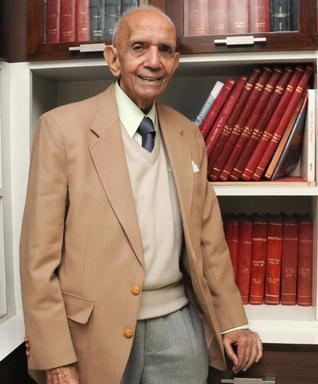 The Silver Lining' describes the story of a handicapped child and their parents' unhappy moments, until a guest who is similarly handicapped brings a ray of hope into their child's life. His views about judging a man's outward appearance is that 'A happy man who puts on an appearance of happiness may be crushed deeply within; while an idiot may be truly happy.'
EXPLAINED:
1. The whole of Chapter 2.
2. Words to know on Page 35.
3. Questions and answers on Page 35.
4. The meaning of comments on the italicized words in sentences.
5. How to answer questions with reference to context.
6. A briefing about the author.
MAIN TEACHING:
Oral and Explanation Online with some written work.
1. Explain the story.
2. Discuss and share how Mr David was the silver lining in the story.
ASSIGNMENTS:
Read Chapter 2 and learn the words to know on Page 35.
ambiguous obscure; of double meaning
anguish deep pain
1. Answer the following questions on Pages 35 & 36:
a. Why does the author believe that it is difficult to assess the range and quality of human emotions?
Hint:- First paragraph on the left of Page 30
b. In what ways was the Bhandari Guest house a suitable place to stay?
Hint:- Second paragraph on the left of Page 30
c. Which phrase tells us that the author is somewhat critical of North Indian men?
Hint:- First paragraph on the right of Page 30
d. What makes the author say he felt as if he had known the family for years?
Hint:- First paragraph on the right of Page 30
e. In what manner did the author try to make friends with Promodni? What was the reaction from:
i. Promodni? ii. Her parents?
Hint:- Left and right of Page 31
g. What first impressions did the Bhandaris have about Mr David? How did they regard him at first and in what manner did their opinion change? Use selected words and phrases from the text in your answer.
Hint:- Pages 33 & 34
h. Mr Bhandari squeezed his wife's arm and said, apologetically, 'I'm sorry, Mr Dhanda.'
Hint:- Second paragraph of Page 31
i. Why do you think the Bhandaris agreed, 'after some trepidation', to try out the author's suggestion of a way to deal with the questions of visitors?
Hint:- Page 32
2. Comment on the italicized words in the following sentences:
a. Mrs Bhandari, the landlady, took me in hand the moment I arrived.
3. Answer the following questions with reference to context:
a. I vaguely felt I had wronged her and her parents.
i. Why did the speaker feel like this? What had he done?
Hint:- Third and fourth paragraph of Page 31
ii. What did he do to make the situation better?
Hint:- Second paragraph on the left of Page 32

b. At this time he discovered the sealed envelope containing the typed chit lying on the table, addressed to him by name.
i. Who discovered the envelope?
Hint:- Second paragraph on the left of Page 33
ii. What had happened immediately prior to this?
Hint:- Pages 32 & 33
iii. What was in the envelope, and what did it say?
Hint:- Second paragraph on the left of Page 32
iv. What did the person do immediately after this??
Hint:- Bottom left & top right of Page 33
c. She looked the happiest woman in the world
i. Whom is this statement about?
ii. Why was the person happy?
Hint:- Bottom left & top right of page 34
iii. What did she do to show her pleasure?
Hint:- Last paragraph of Page 34
4. True or False:
a. The landlady was from North India. False
b. Promodni was nine years old. False
c. Mr Dhanda was a guest at the guest house. True
d. Mr David was deaf and blind. False
e. Promodni was accepted as Mr David's first pupil. True
5. Fill in the blanks from chapter 2:
a. But it was the hostess particularly, and her husband and their little daughter who really proved to be the centre of attraction to me.
b. But she was behaving a bit too timidly for one, and was trying to avoid me.
c. I suddenly became aware of an awkward pause in the room, and, turning to look at the Bhandaris, I discovered that both of them were frowning, a painful look on their faces.
d. You are requested to please give her time to approach you and make your acquaintance.
e. He had emphatically stated that the girl could, in course of time, live almost as normal a life as any one of us who had the power of hearing and speech.
6. There are number of words in the story for which meanings have not been given in the words to know section. here are some of them. Look up the words in your dictionary and then use them in sentences of your own:
a. hailing
b. apologetically
c. forwardness
d. hospitality
e. sympathetic
f. intimate
g. confirmation
h. disconcerted
i. inferred
j. apprehensive
NOW WATCH THE VIDEOS
The Silver Lining' describes the story of a handicapped child and their parents' unhappy moments, until a guest who is similarly handicapped brings a ray of hope into their child's life. His views about judging a man's outward appearance is that 'A happy man who puts on an appearance of happiness may be crushed deeply within; while an idiot may be truly happy.'
anguish deep pain
compatible suited to; in accord with
cuisine style of cooking
deigned thought fit (to do something)
din noise
emphatically forcibly expressing; with feeling and stress
fleeting passing rapidly
humdrum commonplace; dull
humiliation lowering of the dignity or self-respect
incoherent not easily followed or understood
nonchalantly (pronounced non'shallently) unexcitedly; calmly and coolly
profuse lavish; plentiful
self conscious conscious (aware) of oneself; shy
swarthy dark in colour
trepidation alarm
untempered not restrained; not moderated
1. Answer the following questions on Pages 35 & 36:
Hint:- First paragraph on the left of Page 30
Hint:- Second paragraph on the left of Page 30
Hint:- First paragraph on the right of Page 30
Hint:- First paragraph on the right of Page 30
e. In what manner did the author try to make friends with Promodni? What was the reaction from:
i. Promodni? ii. Her parents?
i. Promodni? ii. Her parents?
Hint:- Left and right of Page 31
Hint:- Pages 33 & 34
h. Mr Bhandari squeezed his wife's arm and said, apologetically, 'I'm sorry, Mr Dhanda.'
Hint:- Second paragraph of Page 31
Hint:- Page 32
a. Mrs Bhandari, the landlady, took me in hand the moment I arrived.
b. I couldn't help smiling.
c. And, at the very first meeting or soon afterwards, they would run into the child....
d. 'He shouldn't have ignored our request like this,' the landlord put in, more mildly.
e. It took us time to digest the news.
f. And then both parents broke into the incoherent statements of profuse apologies....
g. She almost broke down with gratitude....Hint:- Third and fourth paragraph of Page 31
Hint:- Second paragraph on the left of Page 32
Hint:- Second paragraph on the left of Page 33
Hint:- Pages 32 & 33
Hint:- Second paragraph on the left of Page 32
Hint:- Bottom left & top right of Page 33
c. She looked the happiest woman in the world
i. Whom is this statement about?
ii. Why was the person happy?
Hint:- Bottom left & top right of page 34
Hint:- Bottom left & top right of page 34
iii. What did she do to show her pleasure?
Hint:- Last paragraph of Page 34
Hint:- Last paragraph of Page 34
b. But she was behaving a bit too timidly for one, and was trying to avoid me.
c. I suddenly became aware of an awkward pause in the room, and, turning to look at the Bhandaris, I discovered that both of them were frowning, a painful look on their faces.
d. You are requested to please give her time to approach you and make your acquaintance.
e. He had emphatically stated that the girl could, in course of time, live almost as normal a life as any one of us who had the power of hearing and speech.
j. apprehensive
R/4
ENGLISH COMPOSITION
What is a conjunction?
NOW WATCH THE VIDEO
Examples:
(a) This is a sweet and sour dish. (joining two adjectives)
(b) She couldn't take any photos because she forgot to bring her camera. (joining two clauses)
EXPLAINED:
1. The whole of chapter 12
2. The classifications of different types of Conjunctions with examples.
3. What are Coordinating and Subordinating Conjunctions with examples.
4. What are Correlative Conjunctions with examples.
5. What are Conjunctive Adverbs with examples.
6. The usage of Conjunctions with examples.
ENGLISH COMPOSITION
Ch. 12 CONJUNCTIONS
What is a conjunction?
A conjunction is a word that joins words, phrases, clauses or sentences.
NOW WATCH THE VIDEO
Examples:
(a) This is a sweet and sour dish. (joining two adjectives)
(b) She couldn't take any photos because she forgot to bring her camera. (joining two clauses)
EXPLAINED:
1. The whole of chapter 12
2. The classifications of different types of Conjunctions with examples.
3. What are Coordinating and Subordinating Conjunctions with examples.
4. What are Correlative Conjunctions with examples.
5. What are Conjunctive Adverbs with examples.
6. The usage of Conjunctions with examples.
MAIN TEACHING:
Oral and Explanation Online with some written work.
All exercises of chapter 12 explained.
ASSIGNMENTS:
Let's Remember
A) Read the paragraph below, There are five errors of conjunctions in it. Spot the errors and correct them by rewriting the paragraph in your notebook.
Zubin was late in reaching the meeting point so that his bicycle had a flat tyre half way through his ride. His friends, Paras and Mohit had been waiting patiently for quite some time, until they were now beginning to get restless. Zubin was well-known for not keeping his promise. Although he was not very punctual by habit. They decided that since Zubin did not appear in another fifteen minutes, they would go to the magic show without him. Just then, they spotted him, speeding up to them, shouting but waving one hand wildly to catch their attention.
Zubin was late in reaching the meeting point as his bicycle had a flat tyre half way on his ride. His friends, Paras and Mohit, had been waiting patiently for quite some time, but they were now beginning to get restless. Zubin was well-known for not keeping his promise. Moreover, he was not very punctual by habit. They decided that if Zubin did not appear for another fifteen minutes, they would go to the magic show without him. Just then, they spotted him, speeding up to them, shouting, and waving one hand wildly to catch their attention.
Classifications of different Conjunctions:-
1. What is a Conjunction? explain with examples.
A Conjunction is word that joins words, phrases, clauses or sentences.
Example:
- This is a sweet and sour dish. (joining two adjectives)
- She couldnt take any photos because she forgot to bring her camera (joining two clauses)
2. What are Coordinating Conjunctions? Explain with examples.
Coordinating Conjuctions are Conjunctions that join words, prhases, clauses that have the same importance.
Example:
- And - I've been to London and Paris.
3. What are Subordinating Conjunctions? Explain with examples.
Subordinating Conjunctions are Conjunctions that join one or more dependant clauses to the main clause.
Example:
Time: when, while, after, before.
-
I had my breakfast before I went to school.
-
The train had left the platform after I arrived
4. What are Correlative Conjunctions? Explain with examples.
Correlative Conjunctions function as Coordinating Conjunctions but they are always used in pairs. They include either... or neither, not only... but also, both... and, wether... or
Example:
- Not only was the test unfairly long but also the questions were very difficult.
- Candidates can opt for either a paper and pencil test or a computer based test
5. What are Conjunctive Adverbs? Explain with examples.
These Conjunctions play a vital role in the flow of thoughts through a paragraph. Conjunctive Adverbs, when correctly used, give a paragraph a logical and coherent flow. These include words such as therefore, thus, yet, otherwise, hence, moreover, however, besides, etc..
Example:
- She had been absent for ten days. Moreover, she hadn't informed anyone at school
- He knew that the competition was going to be tough. However, he was determined to win this time.
 Usage of conjunctions:-
Conjunctions are used to form compound and complex sentences by joining two dependent clauses or joining an independent clause to one or more dependent clauses.
Usage of conjunctions:-
Conjunctions are used to form compound and complex sentences by joining two dependent clauses or joining an independent clause to one or more dependent clauses.
Examples: (a) Mary and Sarah reached the bus stop on time but was late (compound)
(b) While Mary waited at the bus station, she realized that the bus was late. (complex)
B) Fill in the blanks in the sentences below with appropriate conjunctions, choosing from those given in the box.
either .... or because after if
since therefore even though neither ... nor
whenever not only ... but also so that else
1. Slide the key inside underneath the door after locking it carefully from outside.
2. You always dump your clothes on the bed whenever I tell you to hang them.
3. It would be futile to suggest alternatives to her because she has the habit of doing what she thinks is right.
4. She went out without an umbrella even though it had started to rain.
5. There were neither doctors nor nurses in the hospital at that time.
6. I pulled down my cap so that I could somewhat protect my forehead from the cold wind.
7. Not only were the streets deserted but also it was very dark everywhere.
8. I could show you a few nice houses since you are willing to pay a high rent.
9. either you tell her the truth or I will.
10. Drive faster else we will not make it to the station in time.
11. If you decide to participate in the Maths Olympiad, you will need to work out a schedule for preparations.
12. The path ahead is narrow and very slippery therefore we need to walk very slowly and very carefully.
Let's Revise
C) Join the following sentences using suitable conjunctions. Write them in your notebook.
1. I'll be so glad. This job is finished.
I’ll be so glad when this job is finished.
2. I will go to the market. I have finished my work.
I will go to the market when I have finished my work.
3. We went very early. We got the best seats.
We went very early; so we got the best seats.
4. We didn't like the film at all. We watched it till the end.
Although we didn’t like the film at all, we watched it till the end.
5. We drove very slowly. It was raining very hard.
We drove very slowly as it was raining very hard.
6. I cannot sing. I cannot play any musical instruments.
I can neither sing, nor play any musical instruments.
7. I made a lot of friends. At the time I was in Mumbai.
I made a lot of friends when I was in Lahore.
8. You could stay at home. You could come with me.
You could stay at home or come with me.
9. You must tell the truth. You'll be punished.
You must tell the truth; else you’ll be punished.
10. He was tired. He still went to the party.
He was tired but he still went to the party.
11. You do that again. I'll be very angry.
If you do that again, I’ll be very angry.
12. She was hungry, She hadn't eaten anything.
She was hungry since she hadn’t eaten anything.
13. I don't like coffee. I can have some tea.
I don’t like coffee, but I can have some tea.
14. I don't like Reena. She always spreads lies about other people.
I don’t like Fariha as she always spreads lies about other people.
15. The children must have gone to bed. The house would not have been so quiet.
The children must have gone to bed; otherwise, the house would not have been so quiet.
16. Incidents of burglary have increased in our locality. We have decided to keep a dog.
Since incidents of burglary have increased in our locality, we have decided to keep a dog.
17. He always helps me if I ask him. We are not best of friends.
Although we are not the best of friends, he always helps me if I ask him.
18. Visitors to the library have showed interest. We are now introducing a daily membership scheme.
As visitors to the library have showed interest, we are now introducing a daily membership scheme.
19. Talk softly on the phone. Go to the other room.
Talk softly on the phone; else go to the other room.
20. They did not send us our order. They did not refund our money.
Neither did they send us our order, nor did they refund our money.
MAIN TEACHING:
Oral and Explanation Online with some written work.
All exercises of chapter 12 explained.
All exercises of chapter 12 explained.
ASSIGNMENTS:
Let's Remember
A) Read the paragraph below, There are five errors of conjunctions in it. Spot the errors and correct them by rewriting the paragraph in your notebook.
Zubin was late in reaching the meeting point so that his bicycle had a flat tyre half way through his ride. His friends, Paras and Mohit had been waiting patiently for quite some time, until they were now beginning to get restless. Zubin was well-known for not keeping his promise. Although he was not very punctual by habit. They decided that since Zubin did not appear in another fifteen minutes, they would go to the magic show without him. Just then, they spotted him, speeding up to them, shouting but waving one hand wildly to catch their attention.
Zubin was late in reaching the meeting point as his bicycle had a flat tyre half way on his ride. His friends, Paras and Mohit, had been waiting patiently for quite some time, but they were now beginning to get restless. Zubin was well-known for not keeping his promise. Moreover, he was not very punctual by habit. They decided that if Zubin did not appear for another fifteen minutes, they would go to the magic show without him. Just then, they spotted him, speeding up to them, shouting, and waving one hand wildly to catch their attention.
Zubin was late in reaching the meeting point as his bicycle had a flat tyre half way on his ride. His friends, Paras and Mohit, had been waiting patiently for quite some time, but they were now beginning to get restless. Zubin was well-known for not keeping his promise. Moreover, he was not very punctual by habit. They decided that if Zubin did not appear for another fifteen minutes, they would go to the magic show without him. Just then, they spotted him, speeding up to them, shouting, and waving one hand wildly to catch their attention.
Classifications of different Conjunctions:-
1. What is a Conjunction? explain with examples.
A Conjunction is word that joins words, phrases, clauses or sentences.
A Conjunction is word that joins words, phrases, clauses or sentences.
Example:
- This is a sweet and sour dish. (joining two adjectives)
- She couldnt take any photos because she forgot to bring her camera (joining two clauses)
2. What are Coordinating Conjunctions? Explain with examples.
Coordinating Conjuctions are Conjunctions that join words, prhases, clauses that have the same importance.
Coordinating Conjuctions are Conjunctions that join words, prhases, clauses that have the same importance.
Example:
- And - I've been to London and Paris.
3. What are Subordinating Conjunctions? Explain with examples.
Subordinating Conjunctions are Conjunctions that join one or more dependant clauses to the main clause.
Time: when, while, after, before.
Subordinating Conjunctions are Conjunctions that join one or more dependant clauses to the main clause.
Example:
- I had my breakfast before I went to school.
- The train had left the platform after I arrived
4. What are Correlative Conjunctions? Explain with examples.
Correlative Conjunctions function as Coordinating Conjunctions but they are always used in pairs. They include either... or neither, not only... but also, both... and, wether... or
Correlative Conjunctions function as Coordinating Conjunctions but they are always used in pairs. They include either... or neither, not only... but also, both... and, wether... or
Example:
- Not only was the test unfairly long but also the questions were very difficult.
- Candidates can opt for either a paper and pencil test or a computer based test
5. What are Conjunctive Adverbs? Explain with examples.
These Conjunctions play a vital role in the flow of thoughts through a paragraph. Conjunctive Adverbs, when correctly used, give a paragraph a logical and coherent flow. These include words such as therefore, thus, yet, otherwise, hence, moreover, however, besides, etc..
These Conjunctions play a vital role in the flow of thoughts through a paragraph. Conjunctive Adverbs, when correctly used, give a paragraph a logical and coherent flow. These include words such as therefore, thus, yet, otherwise, hence, moreover, however, besides, etc..
Example:
- She had been absent for ten days. Moreover, she hadn't informed anyone at school
- He knew that the competition was going to be tough. However, he was determined to win this time.
Usage of conjunctions:-
Conjunctions are used to form compound and complex sentences by joining two dependent clauses or joining an independent clause to one or more dependent clauses.
Examples: (a) Mary and Sarah reached the bus stop on time but was late (compound)
(b) While Mary waited at the bus station, she realized that the bus was late. (complex)
B) Fill in the blanks in the sentences below with appropriate conjunctions, choosing from those given in the box.
either .... or because after if
since therefore even though neither ... nor
whenever not only ... but also so that else
1. Slide the key inside underneath the door after locking it carefully from outside.
2. You always dump your clothes on the bed whenever I tell you to hang them.
3. It would be futile to suggest alternatives to her because she has the habit of doing what she thinks is right.
4. She went out without an umbrella even though it had started to rain.
5. There were neither doctors nor nurses in the hospital at that time.
6. I pulled down my cap so that I could somewhat protect my forehead from the cold wind.
7. Not only were the streets deserted but also it was very dark everywhere.
8. I could show you a few nice houses since you are willing to pay a high rent.
9. either you tell her the truth or I will.
10. Drive faster else we will not make it to the station in time.
11. If you decide to participate in the Maths Olympiad, you will need to work out a schedule for preparations.
12. The path ahead is narrow and very slippery therefore we need to walk very slowly and very carefully.
Let's Revise
C) Join the following sentences using suitable conjunctions. Write them in your notebook.
1. I'll be so glad. This job is finished.
I’ll be so glad when this job is finished.
I’ll be so glad when this job is finished.
2. I will go to the market. I have finished my work.
I will go to the market when I have finished my work.
I will go to the market when I have finished my work.
3. We went very early. We got the best seats.
We went very early; so we got the best seats.
We went very early; so we got the best seats.
4. We didn't like the film at all. We watched it till the end.
Although we didn’t like the film at all, we watched it till the end.
Although we didn’t like the film at all, we watched it till the end.
5. We drove very slowly. It was raining very hard.
We drove very slowly as it was raining very hard.
We drove very slowly as it was raining very hard.
6. I cannot sing. I cannot play any musical instruments.
I can neither sing, nor play any musical instruments.
I can neither sing, nor play any musical instruments.
7. I made a lot of friends. At the time I was in Mumbai.
I made a lot of friends when I was in Lahore.
I made a lot of friends when I was in Lahore.
8. You could stay at home. You could come with me.
You could stay at home or come with me.
You could stay at home or come with me.
9. You must tell the truth. You'll be punished.
You must tell the truth; else you’ll be punished.
You must tell the truth; else you’ll be punished.
10. He was tired. He still went to the party.
He was tired but he still went to the party.
11. You do that again. I'll be very angry.
If you do that again, I’ll be very angry.
He was tired but he still went to the party.
11. You do that again. I'll be very angry.
If you do that again, I’ll be very angry.
12. She was hungry, She hadn't eaten anything.
She was hungry since she hadn’t eaten anything.
She was hungry since she hadn’t eaten anything.
13. I don't like coffee. I can have some tea.
I don’t like coffee, but I can have some tea.
I don’t like coffee, but I can have some tea.
14. I don't like Reena. She always spreads lies about other people.
I don’t like Fariha as she always spreads lies about other people.
15. The children must have gone to bed. The house would not have been so quiet.
The children must have gone to bed; otherwise, the house would not have been so quiet.
I don’t like Fariha as she always spreads lies about other people.
15. The children must have gone to bed. The house would not have been so quiet.
The children must have gone to bed; otherwise, the house would not have been so quiet.
16. Incidents of burglary have increased in our locality. We have decided to keep a dog.
Since incidents of burglary have increased in our locality, we have decided to keep a dog.
Since incidents of burglary have increased in our locality, we have decided to keep a dog.
17. He always helps me if I ask him. We are not best of friends.
Although we are not the best of friends, he always helps me if I ask him.
Although we are not the best of friends, he always helps me if I ask him.
18. Visitors to the library have showed interest. We are now introducing a daily membership scheme.
As visitors to the library have showed interest, we are now introducing a daily membership scheme.
As visitors to the library have showed interest, we are now introducing a daily membership scheme.
19. Talk softly on the phone. Go to the other room.
Talk softly on the phone; else go to the other room.
Talk softly on the phone; else go to the other room.
20. They did not send us our order. They did not refund our money.
Neither did they send us our order, nor did they refund our money.
Neither did they send us our order, nor did they refund our money.
R/3
ENGLISH POETRY
WHEN I HEARD THE LEARN'D ASTRONOMER
WHEN I HEARD THE LEARN'D ASTRONOMER
Poem by Walt Whitman
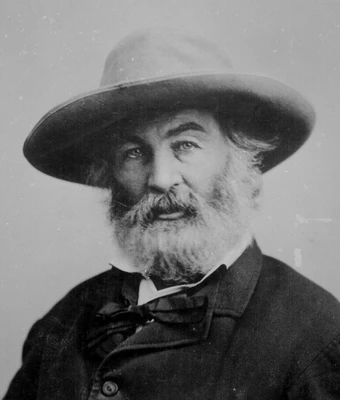
Walt Whitman (1819 - 1892) was a poet who worked as a journalist, a teacher and a government clerk. His major work, Leaves of Grass, was a volume of poems that he kept adding to throughout his life. He wrote in free verse and, although he did not invent it, he is known as 'the father of free verse'. Whitman continues to be one of the most influential American poets.

Summary Of The Poem.
The narrator recounts a day sitting through an astronomy lecture, listening to the astronomer's dry mathematical descriptions of the stars, and watching their arrangement into charts, columns, and figures.
During the lecture he becomes "tired and sick" and wanders off into the "mystical moist night-air" to silently gaze up at the stars.
EXPLAINED:
- Read and explained the poem in detail.
- Words to know on Page 12.
- How to answer the questions of exercise 1 on page 12.
- A briefing about the poet.
MAIN TEACHING:
Oral and Explanation Online with some written work.
- Explain the poem thoroughly.
- Describe the time period and setting
ASSIGNMENTS:
- Learn the first four lines of the poem on Page 11.
- Learn words to know on Page 12.
- Learn the last four lines of the poem on Page 11.
- Write the summary of the poem.
1. Answer the following questions.
a. In the first half of the poem, where is the poet? Hint:- Line 4
b. In the first half of the poem, who is the poet with and what is he doing? Hint:- Line 1 & line 4
c. Which words or phrases show that the astronomer is respected by the poet and audience? Hint:- Line 4
d. What scientific tools and methods does the astronomer use? Hint:- Line 2 & line 3
e. In the second half of the poem, where is the poet? Hint:- Line 7 & 8
f. In the second half of the poem, who is the poet with and what is he doing?Hint:- Line 6 & line 7
g. What words and images in the first half of the poem are a contrast to 'the perfect silence' in the final line. Hint:- Line 1 & line 4
Answer the following question in no less than 50 words.
h. What is the message of this poem?
UNDERSTANDING THE POEM
The poem does not have a rhyme scheme.
2. Count the syllables in each line. What do you notice about the pattern in the first four lines? What do you think is suggested by this?
3. What do you notice about the number of syllables in each line of the last four lines? What does this suggest about the poet's feelings?
4. Note that the poem consists of one sentence. What has the poet done to signal a change in the poets thoughts and feelings? What are the different thoughts and feelings he has in the two halves of the poem?
5. The poet uses a rhetorical device called anaphora in this poem
Anaphora is the repetition of a word or phrase at the beginning of successive clauses. It is often used in poetry and in speeches to emphasize an idea or create a particular impact
When is repeated at the start of the first four lines. The repetition shows us that the lecturer is dragging on and not captivating the poet.
How does Whitman use the repetition and sounds in the second half of the poem to convey that the poet is captivated by the stars in the night sky?
NOW WATCH THE VIDEO
Walt Whitman (1819 - 1892) was a poet who worked as a journalist, a teacher and a government clerk. His major work, Leaves of Grass, was a volume of poems that he kept adding to throughout his life. He wrote in free verse and, although he did not invent it, he is known as 'the father of free verse'. Whitman continues to be one of the most influential American poets.
Summary Of The Poem.
The narrator recounts a day sitting through an astronomy lecture, listening to the astronomer's dry mathematical descriptions of the stars, and watching their arrangement into charts, columns, and figures.
During the lecture he becomes "tired and sick" and wanders off into the "mystical moist night-air" to silently gaze up at the stars.
EXPLAINED:
- Read and explained the poem in detail.
- Words to know on Page 12.
- How to answer the questions of exercise 1 on page 12.
- A briefing about the poet.
MAIN TEACHING:
Oral and Explanation Online with some written work.
- Explain the poem thoroughly.
- Describe the time period and setting
- Learn the first four lines of the poem on Page 11.
- Learn words to know on Page 12.
- Learn the last four lines of the poem on Page 11.
- Write the summary of the poem.
a. In the first half of the poem, where is the poet? Hint:- Line 4
b. In the first half of the poem, who is the poet with and what is he doing? Hint:- Line 1 & line 4
c. Which words or phrases show that the astronomer is respected by the poet and audience? Hint:- Line 4
d. What scientific tools and methods does the astronomer use? Hint:- Line 2 & line 3
e. In the second half of the poem, where is the poet? Hint:- Line 7 & 8
f. In the second half of the poem, who is the poet with and what is he doing?Hint:- Line 6 & line 7
f. In the second half of the poem, who is the poet with and what is he doing?Hint:- Line 6 & line 7
g. What words and images in the first half of the poem are a contrast to 'the perfect silence' in the final line. Hint:- Line 1 & line 4
Answer the following question in no less than 50 words.
h. What is the message of this poem?
UNDERSTANDING THE POEM
The poem does not have a rhyme scheme.
2. Count the syllables in each line. What do you notice about the pattern in the first four lines? What do you think is suggested by this?
3. What do you notice about the number of syllables in each line of the last four lines? What does this suggest about the poet's feelings?
4. Note that the poem consists of one sentence. What has the poet done to signal a change in the poets thoughts and feelings? What are the different thoughts and feelings he has in the two halves of the poem?
5. The poet uses a rhetorical device called anaphora in this poem
Anaphora is the repetition of a word or phrase at the beginning of successive clauses. It is often used in poetry and in speeches to emphasize an idea or create a particular impact
When is repeated at the start of the first four lines. The repetition shows us that the lecturer is dragging on and not captivating the poet.
How does Whitman use the repetition and sounds in the second half of the poem to convey that the poet is captivated by the stars in the night sky?
R/2
ENGLISH GRAMMAR
Ch. 1 NOUNS
What is a Noun?
A noun is used to identify any of a class of people, places or things. For example, tree, child, dog, teacher etc..
They may also indicate abstract ideas or feelings. For example happiness, honesty etc..
 EXPLAINED:
- The whole of chapter 1.
- The classifications of different types of nouns with examples.
- What is Nominalization with examples.
- How to change words into nouns by adding a suffix.
- Difference made by usage of nouns.
- The possessive form of nouns with examples.
- Correct use of apostrophes.
MAIN TEACHING:
Oral and Explanation Online with some written work.
- Nouns Explained.
ASSIGNMENTS:
A) Underline the nouns in the following sentences below.
- Anita drew some funny cartoons in her painting class.
- Basketball and cricket are Rohan's favourite games.
- My friend keeps his two dogs in a kennel.
- Sandeep lives in Chennai with his mother, father and sister.
- The teacher asked the students to leave their notebooks in a pile on her table.
- These cotton dresses are quite inexpensive.
- The captain steered the ship towards the island.
- Kathy fed bananas to the elephants at the zoo.
- Old songs were played on the radio on Monday night.
- My mother got me a bouquet of red carnations on my birthday.
ENGLISH GRAMMAR
Ch. 1 NOUNS
/tree-against-white-background-887508916-5c0f078ac9e77c0001c1bf28.jpg)

What is a Noun?
A noun is used to identify any of a class of people, places or things. For example, tree, child, dog, teacher etc..
They may also indicate abstract ideas or feelings. For example happiness, honesty etc..
EXPLAINED:
- The whole of chapter 1.
- The classifications of different types of nouns with examples.
- What is Nominalization with examples.
- How to change words into nouns by adding a suffix.
- Difference made by usage of nouns.
- The possessive form of nouns with examples.
- Correct use of apostrophes.
MAIN TEACHING:
Oral and Explanation Online with some written work.
- Nouns Explained.
ASSIGNMENTS:
A) Underline the nouns in the following sentences below.
- Anita drew some funny cartoons in her painting class.
- Basketball and cricket are Rohan's favourite games.
- My friend keeps his two dogs in a kennel.
- Sandeep lives in Chennai with his mother, father and sister.
- The teacher asked the students to leave their notebooks in a pile on her table.
- These cotton dresses are quite inexpensive.
- The captain steered the ship towards the island.
- Kathy fed bananas to the elephants at the zoo.
- Old songs were played on the radio on Monday night.
- My mother got me a bouquet of red carnations on my birthday.
Learn the different types of nouns and how they can be used Page 7 & 8
B) Pick out the nouns in the sentences below and say what kind they are.
- The ship (concrete), along with its crew (collective), has been saved.
- The height (abstract) of Mt Everest (proper) is 8848 metres (abstract).
- The National Museum (proper noun) has a good collection (collective) of artefacts. (concrete)
- The audience (collective) received the play (concrete) with a thunderous applause (concrete).
- Modern buildings (concrete) are mostly made of concrete (material) and steel (material).
- Forgiveness (abstract) is a noble virtue (abstract).
- The accused (concrete) declared his innocence (abstract) to the jury (collective).
- She bought her furniture (collective) at the flea market (concrete).
- I did not get good sleep (abstract) at night (concrete).
- Annie (proper) painted the wall (concrete) green.
C) Fill in the blanks with nouns formed from the words given in brackets.
- There is a vacancy for an accountant at this firm. (vacant)
- Only fools are softened by flattery (flatter)
- What choice do I have in this matter? (choose)
- He ignored the advice I gave him. (advise)
- His observations during the experiment provided valuable insight to the team. (observe)
- Increase (increase) in the temperature is an indication (indicate) of climate change in this world.
- His refusal (refuse) of the invitation added to my dissapointment. (disappoint)
- It is generally the carelessness (careless) of the drivers that leads to road accidents.
- The government has made several policies to uplift farmers from poverty (poor)
- The lawyer took permission (permit) for a few days of absence (absent) from the court.
D) Sort the underlined nouns in the following conversation and list them in the appropriate columns below.
"Hello Ria, Let's go to a restaurant and have some coffee."
"That's a good suggestion. Shall we go to Bistro? It's a nice place. I went there on my birthday with my family".
"When was your birthday and what did you do on that day?"
"It was on 23rd June. I had a party with my friends and family, and had a lot of fun.
I got many presents too. Aunt Jennifer gave me a ring made of gold and diamonds.
And my sister gave me a big bouquet of red roses."
PROPER NOUNS
Ria
Bistro
June
CONCRETE NOUNS
restaurant
place
roses
ABSTRACT NOUNS
suggestion
birthday
fun
day
COLLECTIVE NOUNS
family
party
friends
presents
bouquet
MATERIAL NOUNS
coffe
gold
diamonds
ring
What is Nominalization? Explain with examples.
Nominalization are nouns that are created from adjectives or verbs
Examples:
excite - excitement
wide - width
What is a suffix simple definition? Give a few examples.
A suffixes such as -ure, -tion, -ing, -sion, ment, -ence, -th is a group of letters at the end of a word that make another word.
Examples:
fail - failure
combine - combination
wrote - writing
E) Change the following words into nouns by adding a suffix.
1. difficult - difficulty 4. rough - roughness 7. serious - seriousness
2. anxious - anxiety 5. judge - judgement 8. perform - performance
3. refer - reference 6. responsible - responsibility 9. modest - modesty
Countable and Uncountable Nouns
F) Read the following sentences, Identify whether the underlined nouns are Countable (C) or Uncountable (UC).
1. The children are playing in the garden. (C)
2. I don't like milk. (UC)
3. I prefer tea. (UC)
4. Scientists say that the environment is threatened by pollution. (C)
5. My mother uses butter to prepare cakes. (UC)
6. There are a lot of windows in our classroom. (C)
7. We need some glue to fix this vase. (UC)
8. The waiters in this restaurant are very professional. (C)
9. My father drinks two big glasses of water every morning. (C)
10. The bread my mother bakes is delicious. (C)
The Possessive Form of Nouns
A noun that expresses ownership or relationship indicates possession.
The possessive form of nouns can be formed in two ways.
1. The noun + apostrophe + s form is usually used with the names of living things or personified objects.
Examples: (a) This is Mary's farm house.
(b) Nature's laws should be respected.
2. The of + noun form is used with the names of non-living things.
Examples: (a) The roof of this building is leaking.
(b) The walls of this room are quite bare.
Uses of 'of + noun'
(a) Of + noun is used with inanimate possessors or things.
Example: The walls of this house have developed cracks in several places.
(b) Of + noun is also used when the noun is followed by a phrase or a clause.
Examples: The patients waited in the queue, obeying the directions of the clerk at the reception desk.
The result of the test which had been postponed, will be declared today.
G) Rewrite the italicized phrases in the sentences below using the possessive form of nouns with apostrophe and s in your notebook.
1. The daughter of my sister-in-law is graduating today.
my sister-in-law's daughter
2. The new film of the actor sank without a trace.
the actor’s new film
3. What is the special offer for this month?
this month’s special offer
4. This photo was taken in the garden of my neighbour.
my neighbour’s garden
5. I'm looking at the programme list of the day.
today’s programme list
6. It was impossible to have silence even for a moment.
even a moment’s silence
7. She has been given her salary only for two weeks.
only two weeks’ salary
8. This is a necklace that belonged to my grandmother.
my grandmother’s necklace
9. This book is about the last year of the President in office.
the President’s last year in office
10. The film shows the revolt of the people against the monarch.
the people’s revolt against the monarch
H) Fill in the blanks with the appropriate form of possessive nouns. Use's / of + noun.
1. We have to reach the principal’s (principle, office) in 15 minutes.
2. The leaves of the trees (leaves, trees) turn red in autumn.
3. Have you seen the mess in the children’s room (children, room)?
4. The teacher’s notes (teacher, notes) are available online.
5. All the migratory birds’ flight routes (birds, flight routes) are mapped scientifically.
6. My picture will appear on the cover of the magazine (cover, magazine)
next month.
7. The climate of a country affects the structures of houses (structure, houses)
constructed there.
8. All my brother’s old bikes (brother, old bikes) have been sold.
9. I must confirm the price of the cupboard (price, cupboard) before placing the order.
10. A new wing is being added to the students’ hostel (students, hostel).
I) A few of the following sentences have errors of apostrophe use. Spot them and rewrite them correctly.
1. That man cannot be relied upon - he is a wolf in a sheeps' clothing.
That man cannot be relied upon—he is a wolf in a sheep’s clothing
2. My aunt is the president of the Rotary Club.
This sentence is correct.
3. I have requested my boss for three weeks' leave next month.
I have requested my boss for three weeks leave next month.
4. She is giving a party on the occasion of her brother's-in-law promotion.
She is giving a party on the occasion of her brother-in-law’s promotion.
5. I reached work late today because of the auto-drivers' strike.
I reached work late today because of the auto-driver's strike.
6. My father studied in a boys' school till Class X.
My father studied in a boys school till Class X.
7. Last night the Mehra's house was burgled.
This sentence is correct.
8. I was offered a high-profile job in my father-in-law's firm.
This sentence is correct.
9. I stayed in Charles' house for the holidays.
I stayed in Charles’s house for the holidays.
10. An Achilles' heel is a person's weak spot.
An Achilles heel is a person’s weak spot.
B) Pick out the nouns in the sentences below and say what kind they are.
- The ship (concrete), along with its crew (collective), has been saved.
- The height (abstract) of Mt Everest (proper) is 8848 metres (abstract).
- The National Museum (proper noun) has a good collection (collective) of artefacts. (concrete)
- The audience (collective) received the play (concrete) with a thunderous applause (concrete).
- Modern buildings (concrete) are mostly made of concrete (material) and steel (material).
- Forgiveness (abstract) is a noble virtue (abstract).
- The accused (concrete) declared his innocence (abstract) to the jury (collective).
- She bought her furniture (collective) at the flea market (concrete).
- I did not get good sleep (abstract) at night (concrete).
- Annie (proper) painted the wall (concrete) green.
C) Fill in the blanks with nouns formed from the words given in brackets.
- There is a vacancy for an accountant at this firm. (vacant)
- Only fools are softened by flattery (flatter)
- What choice do I have in this matter? (choose)
- He ignored the advice I gave him. (advise)
- His observations during the experiment provided valuable insight to the team. (observe)
- Increase (increase) in the temperature is an indication (indicate) of climate change in this world.
- His refusal (refuse) of the invitation added to my dissapointment. (disappoint)
- It is generally the carelessness (careless) of the drivers that leads to road accidents.
- The government has made several policies to uplift farmers from poverty (poor)
- The lawyer took permission (permit) for a few days of absence (absent) from the court.
D) Sort the underlined nouns in the following conversation and list them in the appropriate columns below.
"Hello Ria, Let's go to a restaurant and have some coffee."
"That's a good suggestion. Shall we go to Bistro? It's a nice place. I went there on my birthday with my family".
"When was your birthday and what did you do on that day?"
"It was on 23rd June. I had a party with my friends and family, and had a lot of fun.
I got many presents too. Aunt Jennifer gave me a ring made of gold and diamonds.
And my sister gave me a big bouquet of red roses."
PROPER NOUNS
RiaBistro
June
CONCRETE NOUNS
restaurantplace
roses
ABSTRACT NOUNS
suggestion
birthday
fun
day
COLLECTIVE NOUNS
family
party
friends
presents
bouquet
family
party
friends
presents
bouquet
MATERIAL NOUNS
coffe
gold
diamonds
ring
coffe
gold
diamonds
ring
Nominalization are nouns that are created from adjectives or verbs
Examples:
excite - excitement
wide - width
What is a suffix simple definition? Give a few examples.
Examples:
fail - failure
combine - combination
wrote - writing
E) Change the following words into nouns by adding a suffix.
1. difficult - difficulty 4. rough - roughness 7. serious - seriousness
2. anxious - anxiety 5. judge - judgement 8. perform - performance
3. refer - reference 6. responsible - responsibility 9. modest - modesty
Countable and Uncountable Nouns
F) Read the following sentences, Identify whether the underlined nouns are Countable (C) or Uncountable (UC).
1. The children are playing in the garden. (C)
2. I don't like milk. (UC)
2. I don't like milk. (UC)
3. I prefer tea. (UC)
4. Scientists say that the environment is threatened by pollution. (C)
5. My mother uses butter to prepare cakes. (UC)
6. There are a lot of windows in our classroom. (C)
7. We need some glue to fix this vase. (UC)
8. The waiters in this restaurant are very professional. (C)
9. My father drinks two big glasses of water every morning. (C)
10. The bread my mother bakes is delicious. (C)
The Possessive Form of Nouns
A noun that expresses ownership or relationship indicates possession.
The possessive form of nouns can be formed in two ways.
1. The noun + apostrophe + s form is usually used with the names of living things or personified objects.
Examples: (a) This is Mary's farm house.
(b) Nature's laws should be respected.
2. The of + noun form is used with the names of non-living things.
Examples: (a) The roof of this building is leaking.
(b) The walls of this room are quite bare.
Uses of 'of + noun'
(a) Of + noun is used with inanimate possessors or things.
Example: The walls of this house have developed cracks in several places.
(b) Of + noun is also used when the noun is followed by a phrase or a clause.
Examples: The patients waited in the queue, obeying the directions of the clerk at the reception desk.
The result of the test which had been postponed, will be declared today.
G) Rewrite the italicized phrases in the sentences below using the possessive form of nouns with apostrophe and s in your notebook.
1. The daughter of my sister-in-law is graduating today.
my sister-in-law's daughter
my sister-in-law's daughter
2. The new film of the actor sank without a trace.
the actor’s new film
the actor’s new film
3. What is the special offer for this month?
this month’s special offer
this month’s special offer
4. This photo was taken in the garden of my neighbour.
my neighbour’s garden
my neighbour’s garden
5. I'm looking at the programme list of the day.
today’s programme list
today’s programme list
6. It was impossible to have silence even for a moment.
even a moment’s silence
even a moment’s silence
7. She has been given her salary only for two weeks.
only two weeks’ salary
only two weeks’ salary
8. This is a necklace that belonged to my grandmother.
my grandmother’s necklace
my grandmother’s necklace
9. This book is about the last year of the President in office.
the President’s last year in office
the President’s last year in office
10. The film shows the revolt of the people against the monarch.
the people’s revolt against the monarch
the people’s revolt against the monarch
H) Fill in the blanks with the appropriate form of possessive nouns. Use's / of + noun.
1. We have to reach the principal’s (principle, office) in 15 minutes.
2. The leaves of the trees (leaves, trees) turn red in autumn.
3. Have you seen the mess in the children’s room (children, room)?
4. The teacher’s notes (teacher, notes) are available online.
5. All the migratory birds’ flight routes (birds, flight routes) are mapped scientifically.
6. My picture will appear on the cover of the magazine (cover, magazine)
next month.
7. The climate of a country affects the structures of houses (structure, houses)
constructed there.
8. All my brother’s old bikes (brother, old bikes) have been sold.
9. I must confirm the price of the cupboard (price, cupboard) before placing the order.
10. A new wing is being added to the students’ hostel (students, hostel).
I) A few of the following sentences have errors of apostrophe use. Spot them and rewrite them correctly.
1. That man cannot be relied upon - he is a wolf in a sheeps' clothing.
That man cannot be relied upon—he is a wolf in a sheep’s clothing
2. My aunt is the president of the Rotary Club.
This sentence is correct.
3. I have requested my boss for three weeks' leave next month.
I have requested my boss for three weeks leave next month.
4. She is giving a party on the occasion of her brother's-in-law promotion.
She is giving a party on the occasion of her brother-in-law’s promotion.
5. I reached work late today because of the auto-drivers' strike.
I reached work late today because of the auto-driver's strike.
6. My father studied in a boys' school till Class X.
My father studied in a boys school till Class X.
7. Last night the Mehra's house was burgled.
This sentence is correct.
8. I was offered a high-profile job in my father-in-law's firm.
This sentence is correct.
9. I stayed in Charles' house for the holidays.
I stayed in Charles’s house for the holidays.
10. An Achilles' heel is a person's weak spot.
An Achilles heel is a person’s weak spot.
R/1
 ENGLISH LITERATURE
Theme: Misconception
 ENGLISH LITERATURE
Ch. 1 A SHOT IN THE DARK
Theme: Misconception
Theme: Misconception
Synopsis of the Chapter.
‘A Shot in the Dark’ is a short story by British writer Hector Hugh Munro (1870 – 1916). He is also known by the pen name Saki.
‘A Shot in the Dark’ is the story of Philip Sletherby who has lately befriended Mrs. Saltpen Jago, an affluent and influential lady. Sletherby intends to achieve a position in society using Mrs. Jago’s influence.
On a train journey to meet Mrs. Jago, Sletherby gets a young unkempt man named Bertie, as his travelling companion. Bertie claims to be Mrs. Jago’s second son. But Sletherby has his own doubts as the crest on Bertie does not match with that of Mrs. Jago. Moreover, he is not able to tell the correct colour of his mother’s hair. Bertie also asks to borrow 3 pounds, which Sletherby promptly refuses.
But later, after reaching Mrs. Jago’s estate, he finds that there are two crests for Mrs. Jago’s estate, one matching with the one he had seen on Bertie. He also learns that Mrs Jago had of late, changed the colour of her hair!
 EXPLAINED:
1. Read the whole of chapter 1.
2. Words to know on Page 19.
3. How to answer questions with reference to context.
4. A briefing about the author.
Main Teaching:
ASSIGNMENTS:
1a)Answer the following questions on Page 19 Section 1.
a. What position does Philip Sletherby hope to get?
Ans. Philip Sletherby hopes to become the member of parliament for the county of Chalkshire
b. Who is Philip Sletherby on his way to visit? Why?
Ans. Philip Sletherby is on his way to visit Mrs Saltpen-Jago because if she approves of him, she will support his ambition to become the MP for Chalkshire.
c. What is meant by 'on approval'?
Ans. In the chapter approval means that Mr Sletherby was an aggreament with the party managers that if he is able to win her hostess's (Mrs Saltpen Jago) support he can win the election.
d. How does Bertie know that Philip Sletherby is going to visit Bertie's mother?
Ans.Bertie knows that Philip Sletherby is going to visit Bertie’s mother because he hears Sletherby’s club acquaintance saying that through the train window.
e. Where is Bertie going?
Ans. Bertie is going from London to the countryside to go fishing for the weekend.
f. What are the six items Bertie has in his pockets?
Ans. The six items Bertie has in his pockets are: a sixpenny coin, a cigarette-case, a matchbox, a key, a silver pencil case, and a railway ticket.
g. What has Bertie forgotten and what does he want Philip Sletherby to do?
Ans. Bertie has forgotten his coin-purse/money. He wants Philip Sletherby to lend him some money.
h. What are the two reasons why Philip Sletherby does not help Bertie?
Ans. Philip Sletherby does not help Bertie because the crest he describes is different to the one Sletherby saw on the letter he received and because he says that his mother has dark hair.
1b) Answer the following questions in no less than 50 words.
i. Who is the other man travelling to Brill Manor and what are the three things we learn about him?
Ans. The other man travelling to Brill Manor is Claude People. We learn that: he is an important lawyer; he has travelled on the same train; he is noisy/talks a lot; he is not the sort of man to notice an absorbed silence; he likes and knows about cars, and he knows Mrs Saltpen-Jago well.
j. Which part or parts of the story show us that Philip Sletherby thinks highly of himself?
Ans. The part of the story that show us that Philip Sletherby thinks highly of himself is the paragraph at the top of page 9 in which Sletherby imagines impressing others with his story.
k. Which parts of the story show us that it was written and is set in the past?
Ans. The language used shows us that the story was written a while ago, the references to the coin purse the sending of letters, the old-fashioned phrasing, the description of the car (and the horse-drawn carriages of their grandfathers).
2.)Answer the following questions with reference to context:
a. Phillip Sletherby settled himself down in an almost empty railway carriage, with the pleasant feeling of starting off on an agreeable and profitable trip.
i. Explain which word best describes how this character is feeling?
a) Irritated b) Smug c) Embarrassed
ii. How does he feel at the end of the story?
Ans. Shocked/unwell/irritated
iii.How does he hope to profit from the trip?
Ans. He hopes to secure the nomination of Mrs Saltpen-Jago so that he can become the MP for Chalkshire.
b. There was a tinge of coldness in his voice.
i. What does the statement mean?
Ans. Cold is used as a synonym for hostility/unfriendliness here.
ii. Who is this describing?
iii.Why does he feel as he does?
Ans. Sletherby believes that Bertie lied to him and he is unable to disguise his feelings when he hears Bertie’s description of his family crest.
c. The train moved on, leaving the so-called son of the Saltpen-Jago family cursing, furiously on the platform.
i. Whose perspective is being expressed here?
ii. What is meant by 'so-called'?
Ans. Sletherby does not believe that he is Mrs Saltpen-Jago’s son.
iii. Why is Bertie 'cursing furiously'?
Ans. He thought he would be able to borrow money to fund his weekend trip but now he has been left stranded.
3.) Learn words to know on Page 19 from the reader.
‘A Shot in the Dark’ is a short story by British writer Hector Hugh Munro (1870 – 1916). He is also known by the pen name Saki.
‘A Shot in the Dark’ is the story of Philip Sletherby who has lately befriended Mrs. Saltpen Jago, an affluent and influential lady. Sletherby intends to achieve a position in society using Mrs. Jago’s influence.
On a train journey to meet Mrs. Jago, Sletherby gets a young unkempt man named Bertie, as his travelling companion. Bertie claims to be Mrs. Jago’s second son. But Sletherby has his own doubts as the crest on Bertie does not match with that of Mrs. Jago. Moreover, he is not able to tell the correct colour of his mother’s hair. Bertie also asks to borrow 3 pounds, which Sletherby promptly refuses.
1. Read the whole of chapter 1.
2. Words to know on Page 19.
3. How to answer questions with reference to context.
4. A briefing about the author.
Main Teaching:
Oral and Explanation Online with some written work.
1. Explained the story.
2. Described time period and setting.
3. Spoke about how the theme of MISCONCEPTION relates to the story.
ASSIGNMENTS:
1a)Answer the following questions on Page 19 Section 1.
a. What position does Philip Sletherby hope to get?
Ans. Philip Sletherby hopes to become the member of parliament for the county of Chalkshire
b. Who is Philip Sletherby on his way to visit? Why?
Ans. Philip Sletherby is on his way to visit Mrs Saltpen-Jago because if she approves of him, she will support his ambition to become the MP for Chalkshire.
c. What is meant by 'on approval'?
Ans. In the chapter approval means that Mr Sletherby was an aggreament with the party managers that if he is able to win her hostess's (Mrs Saltpen Jago) support he can win the election.
d. How does Bertie know that Philip Sletherby is going to visit Bertie's mother?
Ans.Bertie knows that Philip Sletherby is going to visit Bertie’s mother because he hears Sletherby’s club acquaintance saying that through the train window.
Ans.Bertie knows that Philip Sletherby is going to visit Bertie’s mother because he hears Sletherby’s club acquaintance saying that through the train window.
e. Where is Bertie going?
Ans. Bertie is going from London to the countryside to go fishing for the weekend.
f. What are the six items Bertie has in his pockets?
Ans. The six items Bertie has in his pockets are: a sixpenny coin, a cigarette-case, a matchbox, a key, a silver pencil case, and a railway ticket.
g. What has Bertie forgotten and what does he want Philip Sletherby to do?
Ans. Bertie has forgotten his coin-purse/money. He wants Philip Sletherby to lend him some money.
Ans. Bertie has forgotten his coin-purse/money. He wants Philip Sletherby to lend him some money.
h. What are the two reasons why Philip Sletherby does not help Bertie?
Ans. Philip Sletherby does not help Bertie because the crest he describes is different to the one Sletherby saw on the letter he received and because he says that his mother has dark hair.1b) Answer the following questions in no less than 50 words.
i. Who is the other man travelling to Brill Manor and what are the three things we learn about him?
Ans. The other man travelling to Brill Manor is Claude People. We learn that: he is an important lawyer; he has travelled on the same train; he is noisy/talks a lot; he is not the sort of man to notice an absorbed silence; he likes and knows about cars, and he knows Mrs Saltpen-Jago well.j. Which part or parts of the story show us that Philip Sletherby thinks highly of himself?
Ans. The part of the story that show us that Philip Sletherby thinks highly of himself is the paragraph at the top of page 9 in which Sletherby imagines impressing others with his story.
k. Which parts of the story show us that it was written and is set in the past?
k. Which parts of the story show us that it was written and is set in the past?
Ans. The language used shows us that the story was written a while ago, the references to the coin purse the sending of letters, the old-fashioned phrasing, the description of the car (and the horse-drawn carriages of their grandfathers).
2.)Answer the following questions with reference to context:
2.)Answer the following questions with reference to context:
a. Phillip Sletherby settled himself down in an almost empty railway carriage, with the pleasant feeling of starting off on an agreeable and profitable trip.
i. Explain which word best describes how this character is feeling?
a) Irritated b) Smug c) Embarrassed
i. Explain which word best describes how this character is feeling?
a) Irritated b) Smug c) Embarrassed
ii. How does he feel at the end of the story?
Ans. Shocked/unwell/irritated
iii.How does he hope to profit from the trip?
Ans. He hopes to secure the nomination of Mrs Saltpen-Jago so that he can become the MP for Chalkshire.b. There was a tinge of coldness in his voice.
i. What does the statement mean?
Ans. Cold is used as a synonym for hostility/unfriendliness here.
ii. Who is this describing?iii.Why does he feel as he does?
Ans. Sletherby believes that Bertie lied to him and he is unable to disguise his feelings when he hears Bertie’s description of his family crest.
c. The train moved on, leaving the so-called son of the Saltpen-Jago family cursing, furiously on the platform.
i. Whose perspective is being expressed here?
ii. What is meant by 'so-called'?
Ans. Sletherby does not believe that he is Mrs Saltpen-Jago’s son.
iii. Why is Bertie 'cursing furiously'?
Ans. He thought he would be able to borrow money to fund his weekend trip but now he has been left stranded.
3.) Learn words to know on Page 19 from the reader.
4.) Fill in the blanks from Chapter 1:
- The County of Chalkshire was immediate personal interest to Philip Sletherby.
- He was searching _furiously and ineffectually for some elusive or non-existent object.
- We have the right to use both, but I always use the demi lion because after all we are really Saltpens.
- It's graceful lines and symmetrical design masked the fact that it was an enormous wheeled structure.
- Good appearance too, till she made that idiotic change.
5.) True or False:
- Honoria Jago had asked Philip Sletherby to come down to her country house for the following Friday to Sunday. False
- Philip Sletherby had a newspaper on his lap. False
- From time to time Bertie dug a six-penny coin out of a waistcoat pocket.True
- On the platform Philip Sletherby was greeted sedately by a tall footman.True
- Philip Sletherby's eyes were fixed on the door panel on which were displayed four crests.False
6.) Match the numerals with the correct alphabets to make complete sense:
i. Sletherby was under serious consideration...
ii. He had scarcely glanced...
iii. His travelling companion was a young man...
iv. She's supposed to be like me...
v. Claude People captured Sletherby's attention...
a. ...by switching his remarks to the personality of their hostess.
b. ...of about twenty two, with dark hair.
c. ...at a couple of pages.
d. ...by the party managers as his possible successor
e. ...She has the same dark brown hair and high colour; it runs in her family.
Answers:
i - d
ii - c
iii - b
iv - e
v - a
- The County of Chalkshire was immediate personal interest to Philip Sletherby.
- He was searching _furiously and ineffectually for some elusive or non-existent object.
- We have the right to use both, but I always use the demi lion because after all we are really Saltpens.
- It's graceful lines and symmetrical design masked the fact that it was an enormous wheeled structure.
- Good appearance too, till she made that idiotic change.
5.) True or False:
- Honoria Jago had asked Philip Sletherby to come down to her country house for the following Friday to Sunday. False
- Philip Sletherby had a newspaper on his lap. False
- From time to time Bertie dug a six-penny coin out of a waistcoat pocket.True
- On the platform Philip Sletherby was greeted sedately by a tall footman.True
- Philip Sletherby's eyes were fixed on the door panel on which were displayed four crests.False
6.) Match the numerals with the correct alphabets to make complete sense:
i. Sletherby was under serious consideration...
ii. He had scarcely glanced...
iii. His travelling companion was a young man...
iv. She's supposed to be like me...
v. Claude People captured Sletherby's attention...
a. ...by switching his remarks to the personality of their hostess.
b. ...of about twenty two, with dark hair.
c. ...at a couple of pages.
d. ...by the party managers as his possible successor
e. ...She has the same dark brown hair and high colour; it runs in her family.
i - d
ii - c
iii - b
iv - e
v - a
Comments
Post a Comment